
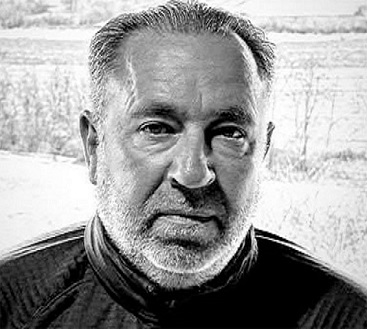
Andrew Wilson Orlando
HABARI DAILY I Kampala, Uganda I His testimony might be as watertight as it is explosive, but whether it will withstand the intense scrutiny of the defence remains one of the biggest questions in the treason trial of veteran opposition politician Dr Kizza Besigye.
For several days, Andrew Wilson Orlando, a British-American private security investigator, has taken the witness stand at the High Court in Kampala, delivering a detailed account of how he allegedly infiltrated Besigye’s circle and secretly recorded conversations about weapons, military training and an alleged plan to overthrow President Yoweri Museveni’s government.
Orlando is the prosecution’s primary state witness in the case in which Besigye, Obeid Lutale and Capt Denis Oola are accused of plotting to overthrow the Ugandan government by force.
The allegations remain unproven, and Besigye has consistently rejected claims that he sought to seize power through violence. Orlando’s testimony, however, has provided the prosecution with its most detailed account yet of the alleged conspiracy.
The witness told Justice Emmanuel Baguma that his operation began after he was approached by Joel Wakayima, a Ugandan based in Switzerland, who allegedly sought his assistance in obtaining weapons and organising military training.
Wealthy foreign financier
Instead of supplying the weapons, Orlando said he contacted Ugandan security agencies, specifically the Chieftaincy of Military Intelligence, and agreed to work as a covert informant.
He then allegedly transformed himself into a wealthy foreign financier with access to huge sums of money, weapons and military equipment.
At the centre of his undercover operation was a fictitious company and an imaginary network of financiers.
Orlando told court that he dangled a $5 million financial package before Besigye and his associates, claiming that the money could be deposited on a Dubai bank account with Besigye listed as a signatory.
He said the money did not actually exist.
The financial offer was accompanied by promises of military hardware, including drones, hand grenades and surface-to-air missiles, as well as paramilitary training for between 40 and 60 people.
The hand grenades, he testified, were given the code name “pineapples”.
The proposed training was to take place in Kisumu, Kenya, according to Orlando, who said the operation was intended to establish the group’s capacity to obtain weapons and prepare personnel for an alleged armed campaign.
He told court that complications arose over the transportation of the weapons because authorities were monitoring Kisumu’s main airport. According to the witness, alternative routes were subsequently discussed, including an airfield in the Democratic Republic of Congo.
Orlando alleged that Besigye told him he had contacts who could help receive a consignment there and claimed that the opposition politician had previously used the same airport to receive a similar shipment.
But by that stage, Orlando said, he had already decided not to provide any weapons. Instead, he began giving Besigye and Wakayima excuses for delaying the delivery while continuing to gather evidence for Ugandan security agencies.
It was the covert recording operation that became one of the most striking aspects of his testimony.
Mobile power bank
Orlando told court that he used hidden audio-visual equipment concealed inside ordinary objects, including a mobile power bank, to secretly record meetings.
One of the most significant encounters, he said, occurred on November 28, 2023, in Geneva, Switzerland, where he met Besigye and Wakayima.
Orlando testified that Besigye suggested that they continue their discussions at his apartment. He declined, he said, because he had already prepared his own apartment with covert recording equipment.
Moving the meeting elsewhere, he explained, would have compromised his ability to record the discussions.
According to Orlando, the conversation eventually covered weapons, military training and plans for an alleged armed operation.
He said he asked Besigye whether the group had the capacity to capture and maintain control of Kampala.
Besigye, according to the witness, allegedly responded that he had support from senior serving military officers.
The testimony then took an even more dramatic turn when Orlando alleged that the discussions included a plan to assassinate President Museveni using drones.
He said the participants discussed how responsibility for such an attack would be presented to the public.
Besigye’s political standing
According to Orlando, there was concern that directly linking Besigye to the killing would damage his political standing.
He alleged that the possibility of blaming the Allied Democratic Forces, or ADF, was therefore discussed.
The witness further alleged that discussions went beyond the President and included possible attacks on strategic infrastructure and public places.
He testified that there were discussions about using a drone to interfere with a commercial aircraft at Entebbe International Airport, followed by an attempt to blame the government and use the resulting confusion to create civil unrest.
Orlando said the broader objective was allegedly to create sufficient chaos for the military to intervene and eventually take over government.
Another allegation involved Café Javas on Acacia Avenue in Kampala. Orlando told court that Wakayima allegedly proposed detonating a hand grenade at the popular restaurant because government officials were believed to frequent the area.
He also testified about discussions concerning counterfeit $5,000 notes, which he said were intended to facilitate the Kisumu operation and potentially destabilise Uganda’s economy.
Robert Kyagulanyi Ssentamu dragged in
The witness further told court that he repeatedly suggested involving National Unity Platform leader Robert Kyagulanyi Ssentamu, popularly known as Bobi Wine, in the alleged plans.
According to Orlando, Besigye rejected the idea.
The prosecution also relies on Orlando’s account of events surrounding the proposed Kisumu training.
He said a meeting was planned for June 2024 to finalise arrangements but that he deliberately failed to deliver the promised weapons and support.
The prosecution’s amended indictment separately alleges that Besigye solicited and received $5,000 between June 14 and July 24, 2024, and used the money to facilitate the movement of 36 people from Uganda to Kisumu for training allegedly linked to the plot.
Orlando said he later travelled to Kisumu, where several people were arrested, including 36 Ugandans who were subsequently returned to Uganda and charged with terrorism-related offences.
He also told court that Besigye was in Nairobi around the time of those arrests. The witness’s account stretches across several countries. He described another meeting with Besigye in Athens, Greece, on September 29, 2024.
According to Orlando, the meeting took place in the basement of Athens International Airport after Besigye returned from the United States and was preparing to attend a conference in Greece.
Orlando said he travelled with an associate who remained at a distance, providing security while recording the encounter.
Audio and video recordings
The prosecution says these meetings in Uganda, Kenya, Switzerland and Greece form part of a broader conspiracy between 2023 and November 2024 to overthrow the government by force. The State intends to supplement Orlando’s testimony with audio and video recordings, social media communications, telephone data and immigration records.
But Orlando’s evidence is also likely to face fierce challenges from the defence. Besigye and his lawyers have accused him of being an agent provocateur — a person who encourages or facilitates conduct in order to create evidence of an offence — and of fabricating or manufacturing a case against the opposition politician.
Besigye’s wife, Winnie Byanyima, has publicly described Orlando as a “mercenary for hire” who was operating under a pretext to frame her husband. Orlando rejected such accusations, arguing that they were intended to intimidate and discredit him as a witness.
That battle over credibility could ultimately become as important as the allegations themselves.
For the prosecution, Orlando presents a witness who says he was not merely told about an alleged conspiracy but personally infiltrated the network, offered money and weapons, attended meetings and secretly recorded conversations.
For the defence, the same circumstances may provide grounds to question whether the alleged conspiracy existed independently of the operation he conducted.
High Court’s verdict
The High Court has yet to determine the truth of the competing accounts. Besigye, who is being tried in absentia after being allowed to remain away from court because of his health, has repeatedly denied seeking to overthrow the government through violence.
As Orlando’s testimony continues to unfold, the court will ultimately have to determine whether the recordings and other evidence corroborate his account or whether his undercover operation crossed the line into manufacturing the very conspiracy he now describes.







About the Author