
INSIGHT: Why Did Desmond Kamurasi Decline To Become New Omukama Of Tooro After Being Elected By The Babiito?

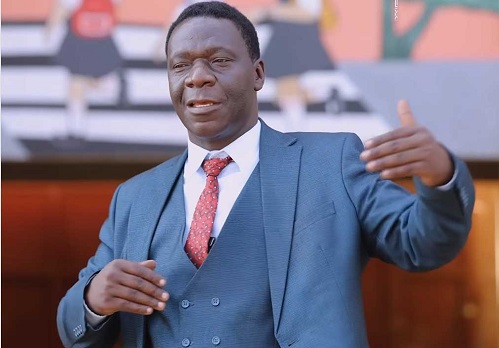
George Desmond Kamurasi
HABARI DAILY I Kampala, Uganda I George Desmond Kamurasi’s destiny has been well mapped out, until a decision by the Babiito Royal Succession Committee thrust him into an unexpected position: that of the man chosen to inherit the Tooro throne from his late cousin, Omukama Oyo Nyimba Kabamba Iguru Rukidi IV.
But just days after securing overwhelming support from the committee, the 36-year-old UK-based royal reportedly declined the kingship, preferring the life he had built in England with his wife, child and career to the demanding responsibilities of becoming Omukama.
The development threw Tooro’s succession process into a dramatic twist and reopened debate over what should determine the choice of a traditional ruler — royal blood, cultural connection, personal willingness or all three.
Kamurasi wins the succession vote
Kamurasi’s name emerged from a meeting of the 21-member Royal Succession Committee in Fort Portal on September 4, 2026.
Of the 18 members who attended the meeting, 15 reportedly voted for him, making him the preferred candidate to succeed Oyo, who died aged 34 after battling cancer. The committee had been constituted by the Babiito royal clan on August 28 to oversee the traditional succession process.
Journalist Andrew Mwenda first announced Kamurasi’s selection, saying the committee had settled on him after days of consultations.
The decision, however, was not itself the final public installation of a king. According to the succession arrangements announced by the Babiito, the formal proclamation was expected after Oyo’s burial. The late king is scheduled to be buried on September 12.
Yet before that formal stage could be reached, Kamurasi reportedly indicated that he did not want the throne.
International reports have since described him as hesitant to abandon his established life in London. Kamurasi is a goalkeeper and captain of SE Dons, a lower-tier English football club, and has also worked as a primary school football coach in London. He lives in South-East London with his wife and son.
His reported decision has transformed what appeared to be a straightforward succession process into another chapter in Tooro’s royal history.
Why he reportedly rejected the throne
At the heart of Kamurasi’s reported decision is his attachment to the family and professional life he has established in Britain.
Unlike a royal who has spent years preparing publicly for the throne, Kamurasi lived largely outside the spotlight surrounding the Tooro monarchy. His adult life was shaped in England, where he studied, pursued his interests, built a football career and started his own family.
Accepting the Tooro throne would therefore require a fundamental change in his circumstances.
He would have to leave behind a relatively private existence and assume responsibility for a kingdom whose leadership carries substantial cultural expectations. Although traditional kings in Uganda no longer exercise political authority under the modern constitutional order, they remain important cultural symbols and custodians of the identity and traditions of their communities.
Reports indicate that Kamurasi would rather remain close to his wife and son than take on that responsibility.
His hesitation is particularly significant because the position of Omukama is not simply a title. It requires constant participation in cultural functions, engagement with subjects and royal institutions, and a strong connection with the kingdom’s traditions and language.
Questions over his connection to Tooro
Kamurasi’s reported reluctance has coincided with reservations from some members of the Babiito community about his suitability.
Some sources told Habari Daily that sections of the royal clan were uncomfortable with the prospect of handing the kingdom to someone who had spent much of his life away from Uganda and Tooro.
One source, whose lineage is in Tooro, questioned Kamurasi’s familiarity with the kingdom’s culture and language.
“Any prospective king is supposed to be a part of his people, their culture and kingdom norms. Tradition surpasses any consideration when selecting a king in Tooro. Going by those analogies, Desmond was the wrong choice for the king,” the source said.
The concerns touch on a sensitive issue in the succession debate: whether royal lineage alone is sufficient.
Kamurasi has undisputed royal ancestry. But some members of the clan reportedly questioned whether a prospective king who does not speak fluent Rutooro and has spent many years abroad could easily reconnect with the people and traditions he would be expected to represent.
The debate is particularly relevant because the Babiito themselves have stressed that succession is governed by customary procedures. The Babiito constituted the 21-member committee specifically to identify a successor and oversee the cultural process.
A royal lineage stretching generations
Kamurasi’s selection was nevertheless rooted in a powerful royal history. He was born in Uganda on August 28, 1990, to George Desmond “Jimmy” Mugenyi, a member of the Babiito royal family and younger brother of former Tooro King Olimi Kaboyo.
That makes Kamurasi a first cousin of the late King Oyo. His connection goes further. He is a grandson of King George Kamurasi Rukidi III, placing him within one of the branches of the royal family historically associated with the Tooro throne.
The succession history of his father also helped strengthen his claim. According to accounts surrounding the royal succession, Mugenyi was named in his father’s will as second in line to succeed his elder brother, King Olimi Kaboyo.
Although Mugenyi never became king, the reference established the historical importance of his branch of the Babiito family.
Mugenyi later became particularly important in Oyo’s early life. When King Olimi Kaboyo died in 1995, Oyo was only three years old when he inherited the throne. Mugenyi was appointed guardian to the young monarch and became one of the adults involved in guiding the child king.
Oyo eventually grew into one of Uganda’s most recognisable traditional rulers, reigning for more than three decades until his death in 2026.
From palace lineage to English football
The contrast between Kamurasi’s royal ancestry and his personal life in Britain is at the centre of the current controversy.
While his family history placed him close to the Tooro throne, he did not spend his adult years publicly positioning himself as a future king.
Instead, he developed an identity far removed from the traditional palace environment. Reports have identified him as a football goalkeeper and coach in London, with his sporting career becoming a significant part of his public identity in Britain. His selection therefore came as a surprise not only because of the unexpected nature of his candidacy but also because of the very different life he had built abroad.
He is married to Abbey Rooke, known as Abbey Kamurasi, whom he met in the United Kingdom, and they have one child.
That family life is now understood to be one of the central reasons behind his reported refusal of the throne.
Succession takes another turn
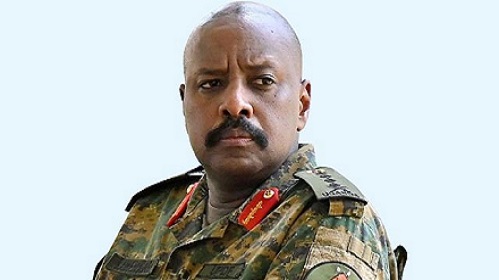
Kamurasi’s reported rejection has forced the Babiito to revisit the succession question. By September 9, reports indicated that the royal clan had turned to another branch of the royal family and selected Prince Edward Rukidi Kijanangoma as the successor. Kijanangoma, a former Uganda Broadcasting Corporation presenter, is the son of the late Prince Christopher Paul Kijanangoma and grandson of King George David Rukidi Kamurasi III.
The development means Kamurasi’s brief emergence as the preferred successor may ultimately become a remarkable footnote in Tooro’s royal history.
For Kamurasi, royal blood opened the door to the Tooro throne. But his life in England, his wife and child, his career and his apparent desire for personal stability appear to have persuaded him not to walk through it.
About the Author