
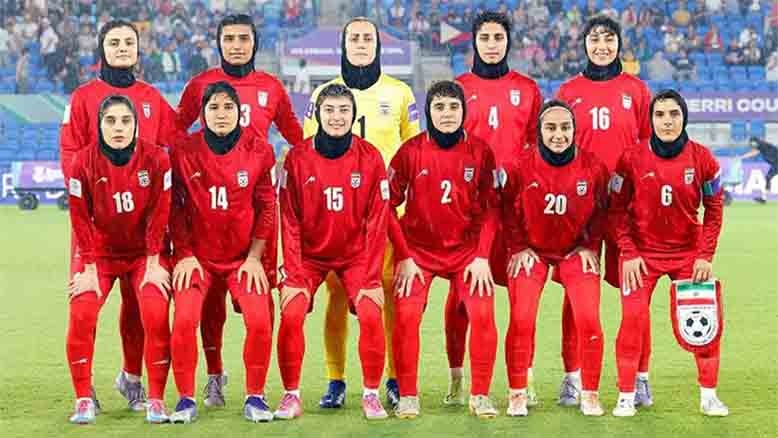
The Iranian women’s football team before their Asian Cup match against the Philippines. Five of these were granted Australian visas, while others opted to return to their war ravaged country for fear of their families being dehumanised
HABARI DAILY I Kampala, Uganda I Five members of the Iran women’s national football team are beginning an uncertain new chapter after being granted humanitarian visas in Australia following controversy surrounding their refusal to sing the national anthem during the AFC Women’s Asian Cup.
The Australian government confirmed on Tuesday that the players had been moved to a safe location by police after expressing fears about returning to Iran. The decision followed days of negotiations and growing concern among supporters and activists about the players’ safety.
Tony Burke, Australia’s Immigration Minister, said the players had requested protection after their team’s elimination from the tournament.
“They want to be clear they are not political activists. They are athletes who want to be safe,” Burke said, adding that discussions about their situation had been ongoing for several days.
The five players were identified as Fatemeh Pasandideh, Zahra Ghanbari, Zahra Sarbali, Atefeh Ramazanzadeh and Mona Hamoudi. According to Burke, they had been quietly relocated from their hotel on Monday after indicating they wished to remain in Australia.
The group had initially been scheduled to return home with the rest of the squad after the tournament. However, fears about potential reprisals escalated after the team declined to sing Iran’s national anthem ahead of their match against South Korea women’s national football team last week.
The gesture triggered backlash in Iran, where one conservative commentator reportedly accused the players of being “wartime traitors” and called for harsh punishment.
Burke told parliament that Australian authorities had taken steps to ensure the players had opportunities to seek help during their stay.
“A police officer was inside the team’s hotel and worked to create the maximum amount of opportunities for players to seek assistance,” he said.
Reports indicated that members of the squad were closely monitored during their stay in Australia. According to sources quoted by SBS News, the players were unable to walk around the hotel unaccompanied and were escorted to a conference room for meals.
Once the five players signalled they wanted to remain in Australia, police moved them to a secure location. Burke said he personally met the group there and approved their humanitarian visa applications shortly after.
The process was completed at around 1:30 a.m. local time on Tuesday.
Australia’s humanitarian visa programme offers permanent protection to refugees and people facing humanitarian risks. Successful applicants are allowed to live, work and study in the country.
Burke also extended the same opportunity to other members of the squad.
“Australia has taken the Iranian women’s soccer team into our hearts. These women are tremendously popular in Australia,” he said.
“But we realise they are in a terribly difficult situation with the decisions they are making.”
The incident also drew attention from Donald Trump, the President of the United States, who urged Australia to offer asylum to the players. Posting on his Truth Social platform, Trump said the United States would consider taking them if Australia did not.
Later, he said he had spoken to Anthony Albanese, Australia’s prime minister, noting that five players had already been granted protection.
Trump suggested that some players might still choose to return to Iran out of concern for their families.
The controversy unfolded during matches in Brisbane, where Iran played several games in the tournament, including a match against the Philippines women’s national football team.
In later games, the Iranian players sang the national anthem and saluted the flag, a move that critics believe may have been the result of pressure from officials accompanying the delegation.
The tense atmosphere extended to the stands, where hundreds of members of Australia’s Iranian community protested during the anthem. Many booed loudly and unfurled the Lion and Sun flag, the symbol used by Iran before the 1979 Islamic Revolution.
For the five players now under Australia’s protection, the immediate concern is safety. But their future remains uncertain.
It is still unclear whether their families in Iran could face repercussions as a result of their decision to stay abroad. Meanwhile, the rest of the team was taken to Gold Coast Airport and expected to travel onward to Sydney before returning home.
As the political and sporting drama continues to unfold, the five athletes now face the challenge of building new lives far from home while the global spotlight remains firmly on their story.







About the Author