

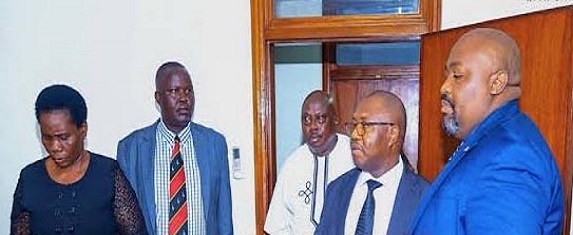
Some of the officials engaged in the vetting exercise
HABARI DAILY I Kampala, Uganda I The cows have now come back to roost, as panic and tension grip Uganda’s Parliament following the commencement of a comprehensive staff validation and verification exercise aimed at cleaning up the institution’s human resource records and establishing whether employees were recruited and promoted through proper procedures.
The exercise, ordered by Speaker of Parliament Jacob Marksons Oboth in conjunction with the Public Service Commission, covers all categories of parliamentary employees, from Clerk to Parliament Adolf Mwesige to the lowest-ranking members of staff.
The verification drive has reportedly unsettled employees, particularly after they were instructed to present extensive documentation covering their academic qualifications, recruitment, postings, transfers and promotions throughout their careers.
The exercise is intended to strengthen accountability and ensure that public resources are spent on legitimately appointed and qualified personnel.
Nursery school records cause shock
One of the most striking requirements is the demand for employees to account for their educational journeys from nursery school to their highest academic qualifications.
The requirement has raised anxiety among staff members who must assemble records documenting their progression through the education system and demonstrate that the qualifications they presented during recruitment and subsequent promotions are authentic.
Employees are also expected to explain how they entered Parliament’s workforce, including whether their positions were publicly advertised and filled through the prescribed recruitment procedures.
Their career histories are also under scrutiny, with officials expected to account for promotions, transfers and other changes in employment status since joining the parliamentary payroll.
The depth of the documentation required has reportedly surprised some workers, turning what might ordinarily be considered a routine human resource exercise into a test of their professional and academic histories.
The verification process is expected to establish whether personnel records are complete, consistent and supported by authentic documents.
Allegations of irregular recruitment fuel anxiety
The exercise follows allegations that more than 300 employees were recruited during the 11th Parliament without following the required procedures, including claims that some appointments were made without publicly advertised vacancies or the necessary academic qualifications. These allegations remain subject to verification and should not be taken as proof of wrongdoing by individual employees.
The prospect of uncovering irregular appointments has heightened anxiety, especially among employees whose academic qualifications may not correspond directly with their current positions or whose recruitment files could be incomplete.
Speaker Oboth has made it clear that no employee will be exempted. Announcing the exercise, he said: “Everyone, from the Clerk to Parliament, will speak to their documents and how they were recruited.”
The message signals a determination to establish whether parliamentary appointments were made on merit and whether employees meet the requirements for the jobs they occupy.
Officials defend the exercise
However, Parliament’s acting director of Communication and Public Affairs, Grace Gidudu, played down the suggestion that the exercise was intended to target particular individuals.
She described it as a routine human resource management practice designed to establish staff qualifications, job placements, job descriptions and employment histories, while confirming that personnel files contain the necessary documents.
“We’ve been getting staff over the years, so this is just a routine validation exercise to know the staff and what qualifications they have. Nothing much about it,” Gidudu said.
Her comments suggest that employees with genuine qualifications and properly documented appointments have little reason to fear the process, even as the review could expose weaknesses in recruitment and record-keeping.
Calls for transparency and accountability
Civil society leaders have welcomed the verification drive while warning that its credibility will depend on how it is conducted.
Sarah Bireete, the Director of the Centre for Constitutional Governance, said the exercise should be transparent, independent and fair, with clear criteria and publicly disclosed findings.
Julius Mukunda, the Executive Director of the Civil Society Budget Advocacy Group, also backed the review, saying Parliament needed to clean up its payroll. However, he argued that the institution should consider a salary review commission to address broader questions concerning recruitment, remuneration and retirement procedures.
The four-day exercise is expected to cover various parliamentary offices and departments, with employees required to present appointment letters, identification documents, original academic papers and relevant professional qualifications. Some parliamentary committee proceedings could be affected as staff attend verification sessions.
The exercise is expected to help Parliament establish reliable personnel records, address irregularities and reassure Ugandans that public funds are paying appropriately recruited and qualified workers.







About the Author