
Michael Wanyama
HABARI DAILY I Kampala, Uganda I A total of 2,790 students have been selected to benefit from the government Students’ Loan Scheme for the 2026/27 academic year, following a competitive selection exercise that attracted more than 10,000 applications.
The number of applications rose by nearly half compared with the previous academic year, highlighting the growing demand among Ugandan students for government financial support to access higher education.
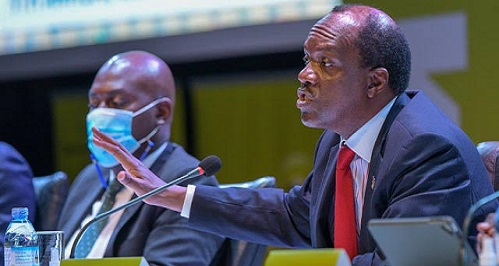
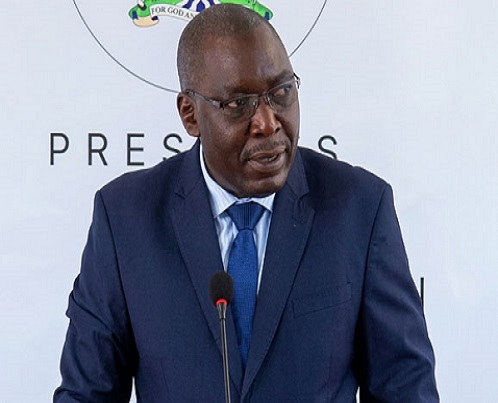
Michael Wanyama, Commissioner, Higher Education Students’ Financing Scheme, who represented the Permanent Secretary in the Ministry of Education and Sports, Dr Kedrace Turyagyenda, at a press briefing at the Uganda Media Centre yesterday, said the ministry received 10,615 applications for the new academic year.
This was an increase of 3,490 applications from the 7,125 applications received in the 2025/26 academic year, representing a 48.9 per cent growth.
“Ladies and gentlemen, the demand for student loans has been increasing year by year. This time round, we received a total of 10,615 applications, way above the 7,125 by 3,490 received last academic year,” Mr Wanyama said.
The commissioner said the increasing number of students seeking support demonstrates that the loan scheme is playing an important role in the government’s efforts to broaden access to higher education.
“Hon. Minister, it is now clear that the intended objective of widening and broadening access to Higher Education is being achieved, as demonstrated by the increasing number of students on the Loan Scheme,” he said.
Only 2,790 applicants make the cut
Although 10,615 students applied for the loans, only 8,005 applicants, representing 75.4 per cent, were found eligible after the screening process. Another 2,610 applicants, representing 24.6 per cent, were declared ineligible.
The successful applicants therefore represent 34.8 per cent of the eligible applications, with the ministry saying the selection was based on a combination of merit, financial need, geographical equity and affirmative-action considerations.
The ministry said the largest number of applicants who failed to qualify were disqualified because they submitted incomplete applications.
Of the 2,610 applications that did not meet the requirements, 1,452 were incomplete, meaning the applicants had failed to submit all the required documents.
Another 279 applicants had applied for programmes that were not eligible for financing under the scheme, while 87 were continuing students, yet the scheme was considering first-year students. The remaining applicants were excluded for failure to meet other eligibility requirements.
Women take slight majority
Women constitute a slight majority among the successful beneficiaries, with 1,400 female students, representing 50.2 per cent of the total. Male beneficiaries number 1,390, accounting for 49.8 per cent.
The number of women benefiting from the scheme has also increased significantly from the previous academic year. According to the ministry, 862 female students were supported in 2025/26, compared with 1,400 selected for the 2026/27 academic year.
The new intake will also include 64 students with disabilities, who will pursue both science and humanities courses. Of the students with disabilities, 46 are male and 18 are female.
The ministry said persons with disabilities were allowed to apply for any accredited undergraduate degree or diploma programme, including humanities, unlike the general applicants whose applications were restricted to programmes approved for financing.
Degrees and diplomas
The majority of successful applicants will pursue undergraduate degree programmes. A total of 2,019 students will pursue undergraduate degrees, while 771 will undertake diploma programmes.
Among the degree programmes, Bachelor of Science with Education attracted the largest number of beneficiaries, with 581 students selected.
Engineering programmes follow with 498 beneficiaries, while 313 students will pursue Computer Science. Another 284 students will study Health Care Management.
The ministry said the relatively high number of students taking Bachelor of Science with Education also contributed to the ability of the scheme to accommodate more students within the available budget because the programme costs less than many other programmes.
New three-tier selection model
The selection of beneficiaries for the 2026/27 academic year was conducted using a new three-tier loan award selection model, which the ministry said was adopted in line with recommendations from Parliament.
Under the model, 30 per cent of applicants were selected according to the District Quota system. Another 30 per cent were allocated to districts and cities proportionate to their share of eligible applicants.
The remaining 40 per cent were selected according to the applicants’ socio-economic vulnerability. The ministry said the system was intended to ensure that students from different parts of the country and from disadvantaged socio-economic backgrounds had an opportunity to benefit.
Wanyama said the loan award selection process had a national outlook and resulted in beneficiaries being registered from all districts.
“We are pleased to report that, every part of the Country has had a fair share of representation, with emphasis on District quota,” he said.
He cited Amudat, Buvuma, Kalangala, Karenga, Kotido and Moroto among districts that had previously recorded low participation but had learners selected for support this year.
Selection based on vulnerability
The ministry said applicants were subjected to a uniform scorecard based on socio-economic indicators. Eligible applications were assessed using the approved Proxy Means Test (PMT) scorecard embedded in the Integrated Loan Management Information System (ILMIS).
The system considered several factors, including the applicant’s socio-economic background, academic performance and household characteristics.
It also considered vulnerability factors such as disability and parental loss, as well as geographical and other affirmative-action factors.
Wanyama said the PMT score was generated automatically by the system to eliminate human interference in the scoring process.
“The PMT score was generated automatically by the system thus; ensuring no human interference,” he said.
He added that the selection was guided by the principles of merit and financial need, geographical equity, inclusion of women and persons with disabilities, transparency and accountability and optimal use of public resources.
Demand rises as application goes online
The surge in applications comes as the ministry continues to rely on an online application system to reach students across the country.
Applications for the 2026/27 academic year were invited through print media, social media platforms and higher learning institutions.
The call for applications was published on May 25, 2026, with the initial deadline set for July 17.
The deadline was later extended to July 31 to accommodate prospective applicants who had been affected by delayed admissions in some higher education institutions.
The ministry subsequently conducted sensitisation through community radio and television stations, as well as Facebook, YouTube, X and WhatsApp.
Wanyama said social media had become an effective and cost-efficient tool for sensitising students about the scheme.
Applications were submitted exclusively through the Integrated Loan Management Information System, enabling students to apply from any part of the country.
The ministry said the online system offers convenience, flexibility and speed while allowing applications to be processed faster with minimum errors.
Loan scheme targets disadvantaged students
The Higher Education Students’ Financing Scheme was established under the Higher Education Students’ Financing Act No. 2 of 2014, as amended in 2024.
It is a department under the Ministry of Education and Sports mandated to administer the Students’ Loan Scheme and facilitate access to higher education for eligible Ugandan citizens at affordable rates.
The scheme seeks to increase equitable access to higher education, support qualified students who cannot afford higher education, ensure regional balance in the provision of higher education services, support programmes considered critical to national development and maintain a sustainable revolving loan fund.
For the 2026/27 intake, applicants were required to be Ugandan citizens, admitted to accredited programmes and accredited higher learning institutions.
They also had to have fully submitted the required documents, be aged 35 years or below, and not be beneficiaries of another scholarship or funding programme.
The annual tuition fees for the programme could not exceed the approved cap of Sh7.6 million. The programmes approved for financing this year include Science, Technology, Engineering and Mathematics (STEM) programmes and Tourism and Hotel Management.
Sh10.72 billion budget to support new cohort
The government has set aside Sh10.720 billion for first-year students under the new cohort. The amount had initially been earmarked to support 2,400 students but will now finance all 2,790 successful applicants.
The ministry attributed the increase partly to the lower unit cost associated with the programmes being pursued by many of the beneficiaries.
“The budget for the first-year students stands at UShs. 10.720 billion that had been earmarked to fund a total of 2,400 students but will now support a total of 2,790, due to the increased number of applicants with a low unit cost,” the statement said.
The loans will cover tuition fees, functional fees and research fees payable to tertiary institutions.
Students with disabilities will also receive support for aids and appliances.
However, the money will not be handed directly to students.
Instead, the loan funds will be disbursed directly to the respective higher learning institutions where the beneficiaries are enrolled.
More universities join scheme
The number of universities admitting students under the loan scheme has also increased.
For the 2026/27 academic year, 33 universities will admit students under the scheme, up from 25 universities in the previous academic year.
The participating institutions include 11 public universities and 22 private chartered universities, in addition to other tertiary institutions offering diploma courses.
The expansion of participating institutions gives successful applicants a wider choice of accredited institutions in which to pursue their studies.
Successful students to sign agreements
The successful applicants will be notified through SMS messages, the Ministry of Education and Sports website and its social media platforms once the results are officially released.
They will then be required to sign loan agreements with the ministry. The agreements will be dispatched to the respective tertiary institutions and administered by ministry officials.
Once the agreements have been executed, the loan amounts will be disbursed to the respective higher learning institutions. Congratulating the successful applicants, Wanyama said their selection had been based on the approved criteria. “To the 2,790 Students selected on merit, congratulations, and we wish you success in your studies,” he said.







About the Author