
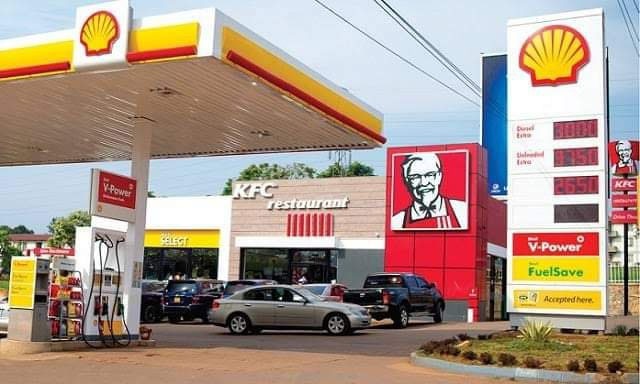
A Shell petrol station in downtown Kampala
HABARI DAILY I Kampala, Uganda I Tanzania may come to the rescue of Uganda when it comes to fuel security, as government moves to diversify import routes in response to supply disruptions triggered by the ongoing Middle East conflict.
The Ministry of Energy and Mineral Development, together with the Uganda National Oil Company Limited (UNOC), says the global situation has affected shipments passing through the Strait of Hormuz, a critical chokepoint that handles roughly 20 percent of the world’s oil supply.
Despite these disruptions, Uganda’s fuel reserves remain stable. As of March 27, 2026, the country had approximately 81 million litres of petrol, 80 million litres of diesel, and 18.5 million litres of Jet A-1 fuel. These volumes translate into stock cover of 22 days for petrol, 23 days for diesel, and up to 30 days for aviation fuel—sufficient to meet national demand into the end of April.
However, in a strategic shift aimed at strengthening energy security, Uganda is increasingly turning to Tanzania’s ports to complement traditional supply routes through Kenya. While most imports continue to arrive via Mombasa, additional volumes will now be handled through the Tanzanian ports of Tanga, Dar es Salaam, and Mtwara.
This multi-port approach is expected to significantly enhance supply resilience by reducing reliance on a single corridor and mitigating risks associated with geopolitical instability. The Ministry notes that confirmed vessel deliveries scheduled between late March and April 2026 will bring in substantial volumes of petroleum products, mainly through Mombasa but supported by Tanzanian routes.
In total, Uganda expects to receive about 195 million litres of petrol, 155 million litres of diesel, and 24 million litres of Jet A-1 starting early April. These additional supplies will extend national fuel reserves by up to 52 days for petrol, 44 days for diesel, and 39 days for Jet A-1, providing a critical buffer against global supply shocks.
Energy experts say the diversification of supply routes is a prudent move, particularly at a time when geopolitical tensions continue to disrupt global trade flows. By leveraging Tanzania’s multiple ports, Uganda is not only securing alternative entry points but also enhancing logistical flexibility for inland distribution.
The government has reassured key stakeholders—including the transport sector, aviation industry, and business community—that fuel supply remains secure, stable, and continuous. Officials attribute this stability to UNOC’s supply partners, who are sourcing petroleum products from alternative global markets beyond the Middle East.
At the same time, authorities acknowledge that global uncertainties could still impact domestic fuel prices. The Ministry and UNOC say they are closely monitoring factors such as foreign exchange fluctuations and international oil prices, which ultimately influence pump prices in Uganda.
UNOC, with guidance from the Ministry, continues to work closely with international suppliers to maintain steady inflows of petroleum products. This coordinated approach has so far ensured uninterrupted supply despite ongoing global market volatility.
Government has also cautioned the public against misinformation circulating on social media, noting that some reports are intended to create unnecessary panic and could be exploited for speculative gains.
With the adoption of alternative supply routes through Tanzania and continued imports via Kenya, Uganda appears to be reinforcing its energy security framework. The strategy underscores a broader commitment to safeguarding the country’s fuel supply chain amid an increasingly uncertain global environment.
TotalEnergies, Shell (operated by Vivo Energy), Rubis, MOGAS, Hass Petroleum, and Oryx are major petrol station networks in Uganda, offering widespread coverage, particularly in Kampala. As of March 2026, petrol prices in Kampala range between Shs5,350 and Shs5,399 per litre. Fuel supply remains stable with over 20 days of stock cover.







About the Author