

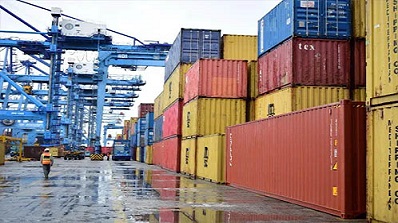
Mechandise imported into the country
HABARI DAILY I Kampala, Uganda I Uganda’s merchandise import bill rose significantly in May 2026, reflecting increased demand for machinery, vehicles, petroleum products and other key industrial inputs, according to the Performance of the Economy Report for June 2026 released by the Ministry of Finance, Planning and Economic Development.
The report shows that the country’s import bill increased by 12.5 percent on an annual basis, rising from US$1.30 billion in May 2025 to US$1.46 billion in May 2026.
According to the report, the increase was “mainly on account of the increase in formal private sector imports over this period.”
It adds that “the major drivers of this increase were machinery equipment, vehicles, gold, petroleum products, plastics, rubber, among others.”
The Ministry notes that the growth in imports mirrors increased economic activity, with businesses bringing in more capital equipment and industrial raw materials to support production and investment.
Over the course of the 2025/26 financial year, Uganda’s import expenditure also registered substantial growth.
The report indicates that cumulative imports between July 2025 and May 2026 amounted to US$15.92 billion, representing a 20.4 percent increase compared to US$13.23 billion recorded during the corresponding period of the previous financial year.
“The increase is on account of an increase in both volumes and prices of imports over this period,” the report states.
Despite the strong year-on-year growth, the report points to a slight slowdown compared to the previous month.
On a month-on-month basis, Uganda’s import bill declined by 3.2 percent, falling from US$1.51 billion in April 2026 to US$1.46 billion in May 2026.
The Ministry attributes the decline to reduced formal private sector imports. “This decline was mainly on account of a reduction in private sector formal imports during the month, specifically gold, base metals, machinery equipment and vehicles as both volumes and values reduced between the two months,” the report explains.
Private sector imports continued to dominate Uganda’s import basket.
Formal private sector imports stood at US$1.44 billion during May 2026, while oil imports increased to US$193.58 million, representing a 20.6 percent increase compared to May 2025. Non-oil imports amounted to US$1.25 billion, while government imports totalled US$7.4 million.
The report further shows that the East African Community (EAC) remained Uganda’s largest source of merchandise imports, accounting for 45.2 percent of all imports during May 2026.
Asia followed with 35.6 percent, while the European Union accounted for 9.3 percent of total imports.
On a country-by-country basis, Kenya, Tanzania, India and China remained Uganda’s leading suppliers of imported goods during the month.
The continued growth in imports underscores Uganda’s expanding demand for industrial equipment, transport assets and energy products as economic activity gathers pace, even as policymakers seek to boost domestic production and narrow the country’s trade deficit.







About the Author