
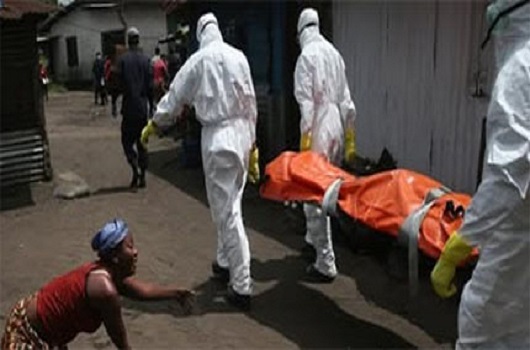
An Ebola victim’s dead body being shipped away by health workers
HABARI DAILY I Kampala, Uganda I The World Health Organization has declared the ongoing Ebola outbreak affecting the Democratic Republic of the Congo and Uganda a Public Health Emergency of International Concern (PHEIC), warning that the rapidly evolving situation poses a significant regional threat due to cross-border transmission, insecurity and growing uncertainty about the scale of infections.
In a statement issued on Sunday, May 17, 2026, WHO Director-General Tedros Adhanom Ghebreyesus said the outbreak was extraordinary and required urgent international coordination, although it had not yet met the criteria to be classified as a pandemic emergency under the International Health Regulations (IHR).
“As of 16 May 2026, eight laboratory-confirmed cases, 246 suspected cases and 80 suspected deaths have been reported in Ituri Province of the Democratic Republic of the Congo across at least three health zones, including Bunia, Rwampara and Mongbwalu,” Dr Tedros said.
1 death confirmed in Uganda
He added that the disease had already spread across borders into Uganda.
“In addition, two laboratory confirmed cases (including one death) with no apparent link to each other have been reported in Kampala, Uganda, within 24 hours of each other, on 15 and 16 May 2026, among two individuals travelling from the Democratic Republic of the Congo,” he stated.
According to WHO, a third suspected case involving an individual who travelled from Ituri to Kinshasa later tested negative after confirmatory tests conducted by the Institut National de Recherche Biomédicale (INRB).
Dr Tedros warned that unusual clusters of community deaths linked to symptoms associated with Bundibugyo virus disease (BVD) had been recorded in several health zones across Ituri Province.
“Unusual clusters of community deaths with symptoms compatible with Bundibugyo virus disease have been reported across several health zones in Ituri, and suspected cases have been reported across Ituri and North Kivu,” he said.
The WHO chief also raised alarm over infections among healthcare workers, warning that health facilities could become centres of transmission if infection prevention measures are not urgently strengthened.
Four healthcare workers perish
“In addition, at least four deaths among healthcare workers in a clinical context suggestive of viral hemorrhagic fever have been reported from the affected area raising concerns regarding healthcare-associated transmission, gaps in infection prevention and control measures, and the potential for amplification within health facilities,” Dr Tedros noted.
WHO acknowledged that major uncertainties still surround the outbreak, including the true number of infections and the extent of geographical spread.
“There are significant uncertainties to the true number of infected persons and geographic spread associated with this event at the present time. In addition, there is limited understanding of the epidemiological links with known or suspected cases,” the statement added.
However, Dr Tedros said the available data strongly suggested that the outbreak was far larger than currently reported.
“The high positivity rate of the initial samples collected, with eight positives among 13 samples collected in various areas, the confirmation of cases in both Kampala and Kinshasa, the increasing trends in syndromic reporting of suspected cases and clusters of deaths across the province of Ituri all point towards a potentially much larger outbreak than what is currently being detected and reported,” he said.
Victims sneak into Uganda
WHO also expressed concern about the conditions complicating containment efforts, including insecurity, high population movement and weak health systems.
“Moreover, the ongoing insecurity, humanitarian crisis, high population mobility, the urban or semi-urban nature of the current hotspot and the large network of informal healthcare facilities further compound the risk of spread,” Dr Tedros warned.
He noted that unlike the more common Ebola-Zaire strain, there are currently no approved vaccines or therapeutics specifically targeting the Bundibugyo strain involved in the current outbreak.
“As such, this event is considered extraordinary,” he stated. WHO further emphasized that the outbreak already poses an international public health risk due to confirmed cross-border transmission into Uganda.
“International spread has already been documented, with two confirmed cases reported in Kampala, Uganda on 15 and 16 May following travel from the Democratic Republic of the Congo,” Dr Tedros said.
He added that neighboring countries sharing borders with DR Congo face heightened risk because of trade, travel and population movement.
The WHO Director-General announced that an Emergency Committee under the International Health Regulations would soon be convened to advise on temporary recommendations and response measures for member states.
Africa CDC warns
Meanwhile, the Africa Centres for Disease Control and Prevention said multiple cases had mainly been reported in the gold-mining towns of Mongbwalu and Rwampara in Ituri Province.
CDC Africa disclosed that it had convened meetings involving DR Congo, Uganda, South Sudan and international partners to coordinate surveillance and cross-border response measures.
The agency’s Executive Director, Jean Kaseya, warned that “significant population movement” between affected areas and neighboring countries increased the risk of wider regional spread.
Ebola was first discovered in 1976 in what is now DR Congo and is believed to have originated from bats. The virus spreads through direct contact with infected bodily fluids or broken skin, causing severe bleeding, organ failure and, in many cases, death.
Early symptoms include fever, fatigue, headache, muscle pain and sore throat before progressing to vomiting, diarrhoea, rashes and bleeding.
According to WHO, Ebola’s average fatality rate is about 50 percent. The latest outbreak is the 17th recorded in DR Congo. The country’s deadliest outbreak occurred between 2018 and 2020, killing nearly 2,300 people, while another outbreak in Kasai Province last year claimed 45 lives.
Health authorities across the region have now intensified surveillance and urged communities to strictly follow public health guidance as fears mount over a wider regional outbreak.