
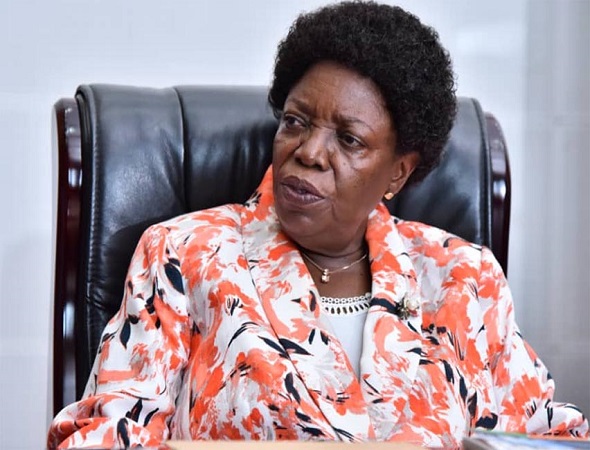
Prof. Mary Okwakol, the NCHE boss
HABARI DAILY I Kampala, Uganda I Zimbabwean education officials are considering adopting Uganda’s Higher Education Access Certificate (HEAC) programme after a benchmarking visit revealed its success in expanding access to university education for disadvantaged students.
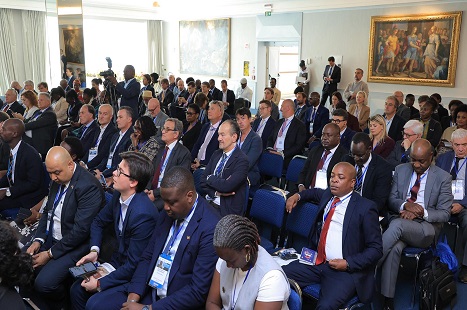
Officials from Zimbabwe’s Ministry of Higher and Tertiary Education, the Zimbabwe Council for Higher Education (ZIMCHE) and representatives from private universities made the remarks after concluding a week-long study tour of Ugandan institutions implementing the programme.
The delegation met with the Executive Director of Uganda’s National Council for Higher Education (NCHE), Mary Okwakol, on Thursday to share findings from the visit and discuss possible collaboration between the two countries.
The team visited several institutions, including Busitema University, Islamic University in Uganda and Ernest Cook Ultrasound Research and Education Institute, among others implementing the HEAC programme.
The Higher Education Access Certificate programme provides an alternative pathway to university education for academically capable students from economically disadvantaged backgrounds who fail to meet the minimum requirements for direct admission into degree or diploma programmes.
Under the arrangement, students undertake a one-year bridging course and receive a certificate considered equivalent to advanced-level education, enabling them to qualify for university entry.
Originally, the programme was designed to assist foreign students, particularly from Commonwealth countries whose education systems did not offer qualifications equivalent to Uganda’s Advanced Level system.
Over time, however, the programme evolved to accommodate Ugandan students who completed A’level but did not attain the grades required for direct university admission.
It has also become an important transition route for learners from vocational and technical institutions seeking to progress into higher education.
Zimbabwean officials described Uganda’s model as practical, scalable and highly relevant to their country’s education needs.
The delegation leader, Fanuel Tagwira, said the team was impressed by the successful implementation of the programme across different universities.
“My delegation is amazed by the findings and once we return to Zimbabwe, we shall immediately consider to deploy the Higher Education Access Certificate (HEAC) programme. We are sure that through its implementation, we shall support the under-deserved students to attain higher education access,” Tagwira said.
He added that Zimbabwe hopes to establish long-term collaboration with Uganda in order to strengthen inclusive access to higher education.
Tagwira said the benchmarking visit had provided an opportunity to observe how institutions operationalize the programme and support students throughout the learning process.
He noted that Zimbabwe already operates a “work for fees” programme aimed at improving educational inclusivity.
“The goal now is to see how we support the students once they complete their respective courses through this programme. In Zimbabwe, we currently boost inclusivity through a ‘work for fees programme’ where a student can work in a hostel, kitchen or classroom for their tuition fees,” he explained.
The Chief Executive Officer of ZIMCHE, Kuzvinetsa Peter Dzvimbo, emphasized the importance of creating inclusive pathways that allow students from diverse educational and social backgrounds to access university education.
According to NCHE Executive Director Mary Okwakol, the HEAC programme has played a significant role in promoting equity and inclusion in Uganda’s higher education sector.
Okwakol said the programme particularly benefits marginalized learners, especially young women who might otherwise never access university education.
“HEAC fosters equity and inclusion by providing a second chance for marginalised learners, especially young women who may never have accessed higher education,” she said.
She added that the programme has also contributed to increased enrolment in science-related programmes, helping bridge the gap between arts and science disciplines.
According to Okwakol, evaluations conducted on students admitted through HEAC indicate that many perform just as well as — and in some cases better than — students admitted through the traditional direct-entry system.
She explained that before the introduction of standardized HEAC guidelines, bridging programmes across institutions varied significantly in quality, duration and academic content.
“Before these standards, bridging programmes varied widely in duration, content and quality, with some lasting as little as one month and offering significantly fewer credit units than the current benchmark. The introduction of uniform standards has improved consistency and safeguarded academic integrity,” Okwakol said.
Despite the programme’s success, Okwakol acknowledged several challenges affecting implementation.
She noted that some students admitted through HEAC continue to face stigma from peers who entered university through direct admission pathways.
Funding constraints also remain a major obstacle, with many eligible students unable to access the programme due to limited financial support.
In some cases, students who enrol fail to complete the programme because of financial hardship, while others who graduate from HEAC are unable to proceed to degree or diploma programmes for the same reason.
Education experts say the growing interest from Zimbabwe reflects increasing recognition across Africa of the need for alternative and inclusive pathways into higher education, particularly for disadvantaged learners and students from non-traditional academic backgrounds.
The proposed adoption of the HEAC model in Zimbabwe is expected to strengthen regional cooperation in higher education and expand opportunities for thousands of students previously excluded from university education systems.