
Museveni Unleashes ‘Kisanja No Sleep,’ As He Vows To Uproot Corruption Upon Taking Oath Of Office
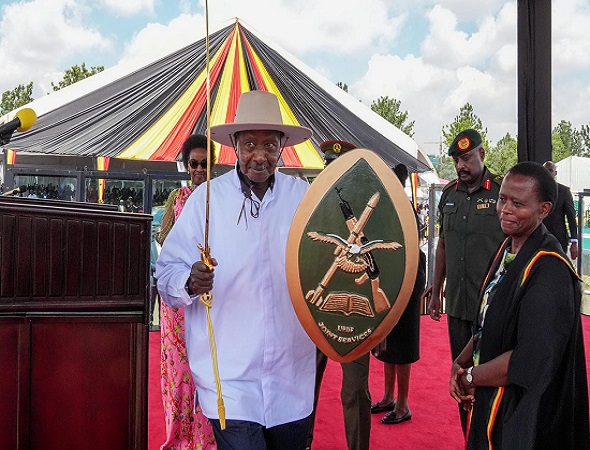
HABARI DAILY I Kampala, Uganda I Uganda’s President, Yoweri Museveni, has promised a new era of relentless work, economic transformation and wealth creation as he begins his seventh consecutive term in office, declaring the 2026–2031 period as “Kisanja no more sleep.”
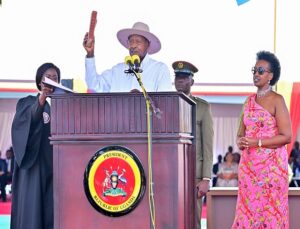
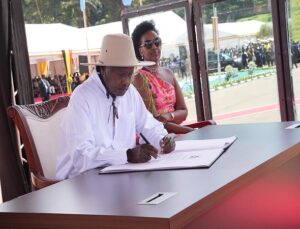
Speaking shortly after taking the oath of office at the Kololo Ceremonial Grounds in Kampala, Museveni challenged Ugandans to take full advantage of the peace, infrastructure and economic opportunities created under the National Resistance Movement (NRM) government since 1986.
“This Kisanja should be regarded as ‘Kisanja no more sleep’ for all Ugandans. We don’t want people sleeping and blaming this and that; yet all solutions are there. No more excuses,” Museveni said.
The President described his new term as one focused on productivity, wealth creation and job generation, arguing that Uganda now has the necessary foundation to accelerate economic growth.
“Every Ugandan must play a role in the country’s development,” Museveni said, noting that government had already created an enabling environment through investments in security, infrastructure, education and regional integration.
Museveni said the country had already made major strides in economic transformation, pointing to the rapid expansion of real estate developments around Kampala, Wakiso and Entebbe as visible proof of growing domestic wealth.
“All these houses you see have been built by Ugandans and not foreigners,” he said.
The President said the growth in commercial buildings, residential estates and business infrastructure demonstrated that many Ugandans had embraced entrepreneurship, investment and participation in the money economy.
While acknowledging that poverty still affects sections of the population, Museveni said a growing number of citizens had accumulated wealth through hard work, enterprise and involvement in productive sectors such as agriculture, industry, services and technology.
“Development is different from personal wealth creation,” Museveni said, urging citizens not to rely solely on government programmes but to actively engage in income-generating activities.
According to Museveni, Uganda has already secured access to regional and international markets, creating opportunities for businesses and investors to expand.
“We have created wealth and markets in Uganda, in the region, in Africa, and we now have access to the world markets. What remains now is to play your part. You must be part of wealth creation. Once you create wealth you will create jobs,” he said.
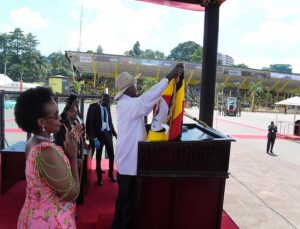
The President also used the inauguration ceremony to highlight the NRM government’s infrastructure achievements over the last four decades, saying investments in transport, electricity and social services had laid the groundwork for faster economic growth.
“We have developed infrastructure like roads, electricity, the railway, airports, as well as social infrastructure such as schools and hospitals,” he noted.
Museveni argued that peace and political stability had been central to Uganda’s transformation, crediting national unity for the country’s progress and the smooth conduct of elections.
The President said the NRM had rejected divisive identity politics and instead focused on unity and national cohesion.
“That is why we win in all elections and never have election re-runs,” he said.
Museveni congratulated the NRM for what he described as sweeping victories in the presidential, parliamentary, district chairperson and councillor elections.
He also praised opposition parties such as the Democratic Party and Uganda People’s Congress for participating peacefully in the electoral process.
“I congratulate the other parties such as DP, UPC, etc., that participated in the elections without using violence, unlike the party of NUP and some elements of FDC that were using violence,” Museveni said.
The President accused sections of the National Unity Platform and the Forum for Democratic Change of engaging in violence during the election period and called on political actors under the Inter-Party Organisation for Dialogue (IPOD) to establish clearer rules for election management in line with Uganda’s Constitution and electoral laws.
Beyond economic mobilisation, Museveni also signaled a tougher stance against corruption during his new term.
He warned that misuse of public resources would not be tolerated, amid growing public concern over graft and accountability in government institutions.
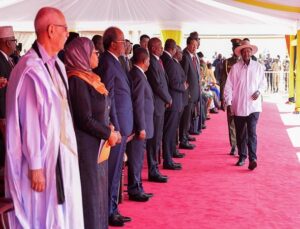
The inauguration ceremony attracted several African leaders and senior officials, underlining Uganda’s growing influence in regional diplomacy and security affairs.
Among the dignitaries was Burundi’s President, Évariste Ndayishimiye, who praised Museveni’s leadership and Uganda’s economic transformation.
Addressing guests at Kololo, Ndayishimiye described Museveni as a “visionary leader” and “elder statesman” whose leadership had helped transform Uganda into one of Africa’s emerging economies.
“Uganda has steadily positioned itself among the continent’s most promising emerging economies,” Ndayishimiye said, citing progress in security, social cohesion, infrastructure development and poverty reduction.
The Burundian leader also commended Museveni for his role in promoting peace and reconciliation within the Great Lakes region, particularly during periods of political instability in Burundi.
“The people of Burundi will always remember with gratitude your tireless efforts in favour of peace, not only within our borders, but throughout the region,” Ndayishimiye said.
He added that Museveni remained widely respected across East and Central Africa for his commitment to regional integration, unity and security cooperation.
Ndayishimiye further congratulated Ugandans for renewing Museveni’s mandate, saying the election outcome reflected citizens’ desire for “peace, stability, resilience and wise leadership.”
For Museveni, however, the central message of his seventh term remained clear: Uganda’s future economic progress will depend not only on government investments, but also on whether citizens embrace productivity, enterprise and wealth creation.
With the slogan “Kisanja no more sleep,” the President has now set the tone for what he says will be a period of intensified work and economic revival aimed at transforming Uganda into a more prosperous middle-income economy.
About the Author