
Paul Mwiru
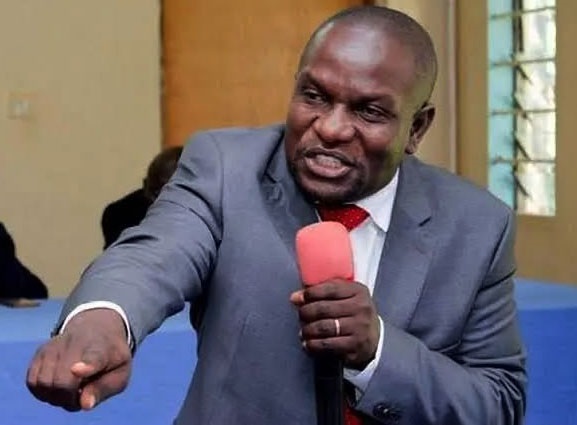
HABARI DAILY I Kampala, Uganda I The decision by Uganda’s opposition party, the National Unity Platform, to front Paul Mwiru for Speaker of the 12th Parliament has injected fresh debate into the race for control of the August House.
However, despite the symbolism and reformist message surrounding his candidature, political realities inside Parliament make Mwiru’s chances of becoming Speaker highly unlikely.
Today May 19, 2026, NUP officially unveiled the Jinja South East legislator as its flag bearer for the top parliamentary seat ahead of the May 25 vote. The party presented Mwiru as a candidate determined to restore Parliament’s independence, strengthen oversight of the Executive, and combat corruption within the institution.
Parliament’s autonomy at stake
The endorsement comes at a time when tensions are rising over alleged external influence in parliamentary affairs, particularly within the ruling establishment. NUP leaders argued that Parliament has increasingly lost its autonomy and constitutional authority, making the speakership race more than just a contest for office.
Addressing journalists during the announcement, NUP Secretary General David Lewis Rubongoya said Parliament needed to reclaim its independence from forces outside the House.
“I believe that Parliament needs to regain its independence, and we do not see that in what is currently going on,” Rubongoya said.
He criticized what he described as the growing practice of outsiders influencing who should lead Parliament, warning that such interference undermines democratic processes.
“You see someone who is not even a participant in parliamentary politics waking up one day and endorsing one candidate for Speaker, then changing positions the next day. That should not happen because Parliament is supposed to make its own independent decisions,” he added.
Succession battle
Although Rubongoya did not directly name individuals, his remarks appeared aimed at powerful political actors who have recently weighed into the succession battle for parliamentary leadership.
NUP insists that electing Mwiru would help restore public confidence in Parliament and strengthen its constitutional role of overseeing government. According to the party, the institution has increasingly struggled to hold the Executive accountable because of political pressure and alleged corruption.
“If we get such a Speaker, how independently can they work and hold government accountable?” Rubongoya asked.
He further appealed to legislators across the political divide, including members of the ruling National Resistance Movement, to support efforts aimed at rebuilding Parliament’s image and credibility.
“We implore Members of Parliament, including those from the NRM, to see what is happening and join efforts to restore not just the image of Parliament, but also its functionality as required under the Constitution,” he said.
Despite the passionate rhetoric surrounding Mwiru’s candidature, the numerical realities inside Parliament remain overwhelmingly unfavorable to the opposition.
The NRM currently commands at least 372 Members of Parliament, giving the ruling party a dominant majority capable of comfortably determining the outcome of the speakership election. Historically, parliamentary leadership contests in Uganda are largely decided along party lines, with ruling party MPs almost always rallying behind the official NRM-backed candidate.
No political muscle
This political arithmetic leaves opposition candidates with little realistic chance of victory, regardless of the popularity of their message outside Parliament.
Mwiru is also entering a race crowded with influential contenders closely aligned to the ruling establishment. Among the notable names already linked to the contest are Jacob Oboth-Oboth, Persis Namuganza, and Lydia Wanyoto. Democratic Party president Norbert Mao has also emerged as a potential contender.
With several heavyweight figures competing for support within the ruling establishment, analysts believe the eventual Speaker is almost certain to come from candidates backed by the NRM power structure rather than the opposition.
For many observers, Mwiru’s candidature therefore appears more symbolic than numerically viable. It gives NUP an opportunity to publicly challenge what it sees as the erosion of parliamentary independence while positioning itself as the leading voice for institutional reform.
The party also hopes the campaign will amplify national debate about corruption, accountability, and separation of powers, issues that have increasingly dominated public discussion about Parliament in recent years.
Strong legislature?
Rubongoya emphasized that Parliament remains one of the most critical constitutional institutions in Uganda and should not be weakened by political manipulation.
“The Constitution creates Parliament as a very important institution that must oversee the Executive, protect the rule of law, and represent the people of Uganda,” he said.
Even though Mwiru’s path to the Speaker’s chair appears extremely narrow, NUP believes his candidature sends a strong political message about the kind of Parliament the opposition wants to build in the future.
As the May 25 vote approaches, however, the overwhelming dominance of the NRM in the House means that barring an extraordinary political upset, Mwiru’s bid is likely to remain an unlikely dream rather than a realistic path to the Speakership of the 12th Parliament.