
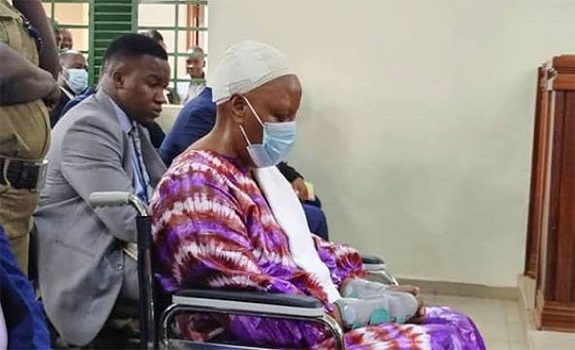
Molly Katanga following the court proceedings
HABARI DAILY I Kampala, Uganda I All hell broke loose as learnt friends bombarded each other with questions and legal opinions, and the presiding judge, Justice Rosette Comfort Kania could not bear it any longer.
What was expected to be another routine day in the high-profile murder trial of Molly Katanga instead descended into scenes of disorder and heated confrontation, forcing Justice Rosette Comfort Kania to abruptly walk off the bench and adjourn proceedings.
The dramatic turn of events unfolded as lawyers battled over the admissibility of crucial photographic evidence allegedly showing injuries sustained by Molly Katanga following the shooting incident that led to the death of her husband, businessman Henry Katanga.
At the heart of the dispute were printed hospital photographs extracted from an electronic medical database. The defense team sought to rely on the images to support its argument that Molly Katanga suffered serious injuries during the events surrounding her husband’s death, a matter they believe is relevant to the court’s determination of what transpired.
However, state prosecutors strongly objected to the manner in which the photographs were being introduced into evidence. Their objection centered on a defense witness who had been called to identify the printed photographs. According to the prosecution, the witness was not competent to authenticate the physical printouts because he had only viewed the images in digital form within the hospital’s electronic records system and was not involved in producing the hard copies presented before court.
The prosecution maintained that proper evidentiary procedures require a witness to establish the authenticity and chain of custody of documentary exhibits before they can be admitted. In their view, allowing the witness to identify the photographs without satisfying those requirements would undermine the integrity of the evidence.
The defense disagreed, insisting that the photographs formed part of genuine hospital records and were important in helping the court understand the extent of Molly Katanga’s injuries. Defense lawyers argued that the images were relevant to their case and should be considered by the court.
What followed was a fierce exchange between the opposing legal teams. Lawyers repeatedly interrupted one another, objections were shouted across the courtroom, and attempts to restore order appeared unsuccessful. The courtroom atmosphere became increasingly tense as both sides dug in on their positions.
Sources present during the proceedings described a rare spectacle in which legal arguments gave way to emotional exchanges, making it difficult for the court to proceed in an orderly fashion. As the shouting intensified, Justice Kania appeared visibly frustrated by the inability of counsel to maintain decorum.
Faced with the escalating disorder and apparent loss of control over the proceedings, the judge rose from her seat and walked out of the courtroom, effectively bringing the day’s hearing to an abrupt end.
The trial, one of Uganda’s most closely watched criminal cases, has now been adjourned until June 23. When proceedings resume, attention is expected to focus once again on the contested hospital photographs and whether they will ultimately be admitted as evidence in the case against Molly Katanga, who is accused of murdering her husband, Henry Katanga.







About the Author