
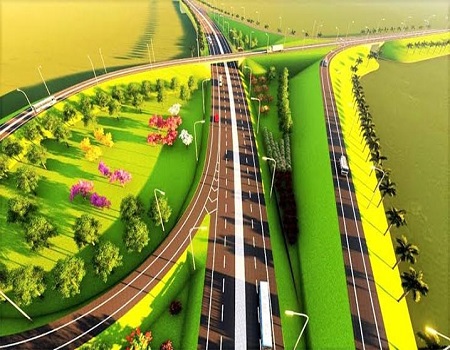
A graphic impression of the Busega–Mpigi Expressway project
HABARI DAILY I Kampala, Uganda I The huge cost overruns on the Busega–Mpigi Expressway project gave them away as President Yoweri Museveni suspended three senior engineers in the Ministry of Works and Transport and directed Permanent Secretary Waiswa Bageya to step aside pending investigations into alleged corruption surrounding the multibillion-shilling road project.
In a June 26, 2026 letter addressed to Inspector General of Government Justice Aisha Naluzze Batoro, the President ordered the suspension of Engineers Edwin Raymond Kiyaga, Dickens Ahimbisibwe and Patrick Muleme over what he described as the suspected embezzlement of funds allocated to construct the 23-kilometre expressway and its more than 20 kilometres of access roads.
Museveni also instructed Bageya to proceed on leave for the duration of the investigations, with Under Secretary Barbara Namugambe appointed Acting Permanent Secretary.
The President’s directive followed reports that senior officials in the ministry had been ordered to vacate their offices as investigations into the project intensified.
At the centre of the probe is the dramatic escalation in the project’s cost from an initial Shs600 billion to an estimated Shs1.3 trillion.
According to Museveni, the government secured Shs600 billion from the African Development Bank to fully finance construction of the expressway. However, despite the entire amount reportedly being spent, only about 40 percent of the work has been completed.
“The government borrowed Shs600 billion from ADB to do the Expressway 100%. As of now only 40% of the work has been done but all the money was paid. What happened?” the President questioned in his letter.
Museveni said the unexplained depletion of the original financing raised serious concerns about the management of public resources and warranted a comprehensive investigation.
The President levelled even more serious allegations against the suspended engineers, accusing them of deliberately altering the original road alignment for personal financial gain.
According to Museveni, the expressway had already been surveyed and the original route compensated. However, he alleged that ministry engineers diverted the alignment away from the approved corridor and redirected it through land in which they had personal interests.
That decision, he said, forced government to undertake fresh land acquisition and compensation, significantly increasing the project’s overall cost.
“The corrupt engineers altered the route of the road and avoided the route that was already compensated for and charted a new route going through their own lands that needed fresh compensation. A road that was supposed to cost Shs600 billion is now being put at Shs1.3 trillion. These thieves must be destroyed,” Museveni wrote.
To establish the circumstances surrounding the alleged financial loss, the President directed the Inspector General of Government to lead the investigations, assisted by State House Auditor General John Tumwiine.
“I therefore direct that Engineers Kiyaga, Ahimbisibwe and Muleme are suspended from duty and are investigated. You lead the investigations but my Auditor Tumwiine should also be involved,” he instructed.
The suspensions mark a significant shift from the Inspectorate of Government’s earlier assessment of the project.
In May, Deputy Inspector General of Government Anna Twinomugisha Muhairwe led an inspection of the Busega–Mpigi Expressway following public complaints about delays, reports that the contractor had abandoned the site, alleged encroachment on the road reserve and concerns over value for money.
After touring the project, Muhairwe said the Inspectorate had been largely satisfied with the explanations provided by officials from the Ministry of Works and Transport.
“We are almost convinced with the explanation that they gave,” she told journalists after the inspection.
Nevertheless, she warned that investigations into land compensation would continue, particularly where there were allegations of illegal developments within the expressway corridor and inconsistencies in property valuations.
At the time, ministry engineers defended the increased project cost, explaining that the revised financing reflected additional funding approved after construction slowed because of financial constraints.
Assistant Commissioner for Roads Eng. Godfrey Bihemaiso said the African Development Bank approved an additional €217 million, equivalent to about Shs909 billion, in December 2025 to facilitate completion of the project.
According to ministry officials, the additional financing was intended to cover outstanding compensation for project-affected persons, revised construction costs and completion of the remaining works.
The Busega–Mpigi Expressway is one of Uganda’s flagship transport infrastructure projects. It comprises a 23.7-kilometre four-lane expressway, over 20 kilometres of access roads, four interchanges, toll plazas and supporting infrastructure designed to improve connectivity between Kampala and central Uganda.
It remains unclear whether the allegations cited by President Museveni relate specifically to the additional financing approved by the African Development Bank, changes in the project’s scope, compensation payments, procurement decisions or other aspects of implementation.
By the time of publication, neither the suspended engineers nor the Ministry of Works and Transport had publicly responded to the allegations, while investigators prepared to begin what is expected to be a far-reaching inquiry into one of Uganda’s most expensive ongoing infrastructure projects.







About the Author