
Wafula Oguttu
HABARI DAILY I Kampala, Uganda I “We have had run-ins with the current government, but they have never been this bad.”
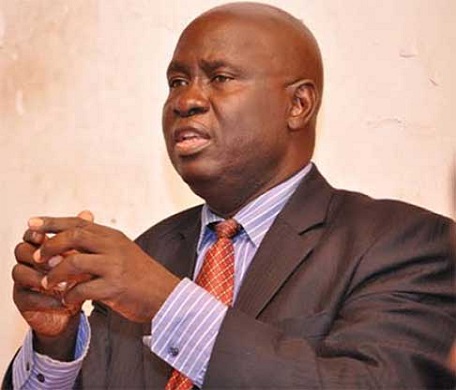
That was the stark assessment by veteran journalist and Nation Media Group (NMG) co-founder Wafula Oguttu as he disclosed the existence of behind-the-scenes negotiations between the Ugandan government and the media company’s top shareholders over the reopening of the country’s largest independent media house.
Speaking on Capital FM’s The Capital Gang programme on Saturday, Oguttu revealed that government officials have attached far-reaching conditions to the reopening of Nation Media Group-Uganda’s operations, including demands that the company dismiss some of its senior editors and managers and overhaul its editorial leadership.
However, he insisted that the company would rather remain closed than sacrifice its editorial independence.
“They want us to sack some of our managers. They want us to sack some of our editors. That will not happen by the way,” Oguttu said.
“We rather close than sack them.”
His remarks provide the clearest public indication yet of what is being discussed in closed-door meetings between government representatives and Nation Media Group’s principal shareholders following last weekend’s security operation that shut down the company’s media operations.
Security-led inquiry
Security agencies disrupted Nation Media Group-Uganda’s activities by halting the printing of the Daily Monitor and taking NTV Uganda, Spark TV, KFM and Dembe FM off air. Government later said the closure stemmed from a security-led inquiry instituted by President Yoweri Museveni involving the Uganda People’s Defence Forces, police investigators and other security agencies.
Since then, negotiations have quietly been underway to find a path towards reopening the media house.
Sources familiar with the discussions say government representatives have demanded sweeping changes to the company’s editorial policy, arguing that some of its reporting and commentary have increasingly mirrored civil society activism and opposition politics.
The negotiations have also reportedly extended beyond editorial policy to the company’s leadership.
Government officials are said to have raised concerns about Managing Director Susan Nsibirwa’s stewardship of the company, accusing her of using social media to criticise government officials and presiding over what they describe as an increasingly activist newsroom culture, particularly at the Daily Monitor and NTV Uganda.
No official decision has been announced regarding Nsibirwa’s future, and Nation Media Group has not publicly commented on the reports.
No dismissing editors, managers
Although Oguttu strongly rejected the idea of dismissing editors and managers to satisfy government demands, the ongoing talks appear to be taking place at the highest corporate level.
This week’s meeting at the Special Forces Command headquarters in Entebbe reportedly brought together Chief of Defence Forces Gen Muhoozi Kainerugaba, principal shareholders Rostam Aziz and Saam Aziz, as well as Georgia Mutagaywa of Taarifa Limited.
Their participation signals that the negotiations are being handled by individuals with significant influence over the company’s future direction.
Given their controlling shareholding and decision-making authority, any eventual agreement on management restructuring, editorial reforms or conditions for reopening is expected to be determined by the company’s principal shareholders rather than former directors or minority shareholders.
Oguttu nevertheless maintained that editorial independence should not become a bargaining chip.
He said Nation Media Group has always experienced friction with successive governments because of its journalism, but previous disagreements had largely been managed through legal and regulatory institutions rather than military intervention.
Love, hate relationship
“We have had a long story with the government ever since we started. There have always been some run-ins because we wrote or published something they didn’t like,” he said.
“I’m not surprised about what is going on, although this time it was done in a manner that is not right. It is not even constitutional or legal.”
According to Oguttu, previous disputes typically involved formal communication from the Uganda Communications Commission or the Ministry of Information, allowing disagreements to follow recognised legal and administrative procedures.
“This time it came from a different direction. It came from the Chief of Defence Forces tweeting and closing a media house. That is something you never hear about,” he said.
High ethical values
He also mounted a spirited defence of the Daily Monitor’s journalism, dismissing suggestions that its reporting lacked factual basis.
“Every story that the Daily Monitor does, they have a basis for it; either a primary document or someone they are quoting. They don’t create things,” Oguttu said.
The former Leader of Opposition argued that the newspaper’s record in court demonstrated its commitment to factual reporting.
“The government has taken Monitor many times to court. They have never won a case. We have always won,” he said.
Court cases won, or occasionally lost
He acknowledged that the newspaper had occasionally lost cases and paid damages, citing a defamation suit arising from reporting on alleged preferential access to COVID-19 vaccines, but insisted such isolated rulings did not undermine the paper’s overall journalistic standards.
Beyond the constitutional questions surrounding media freedom, Oguttu warned that the continued closure of Nation Media Group’s operations carries significant economic consequences.
He estimated that approximately 300 employees work directly for the Daily Monitor alone, with hundreds more employed across NTV Uganda, Spark TV, KFM, Dembe FM and the company’s other media platforms.
When suppliers, newspaper vendors, distributors, freelancers and other service providers are included, he estimated that as many as 3,000 livelihoods could ultimately be affected if the impasse drags on.
“The people at Monitor alone, those who are there, are about 300. Then you have NTV and the other outlets. They are quite a number. Maybe an estimated 3,000 people could be affected by this whole thing – losing jobs, losing income, losing a livelihood,” Oguttu said.
Regional supremacy
Nation Media Group, headquartered in Kenya, is one of East Africa’s largest independent media companies and owns the Daily Monitor, NTV Uganda, Spark TV, KFM, Dembe FM, The East African, Ennyanda newspaper and Nation Courier in Uganda.
Despite the ongoing negotiations, the company has not announced when its newspapers, television stations and radio outlets will resume operations.
For now, the fate of one of Uganda’s most influential media organisations appears to rest on the outcome of confidential negotiations balancing government concerns, shareholder interests and the media house’s determination to preserve its editorial independence.