
Organised attacks on innocent souls
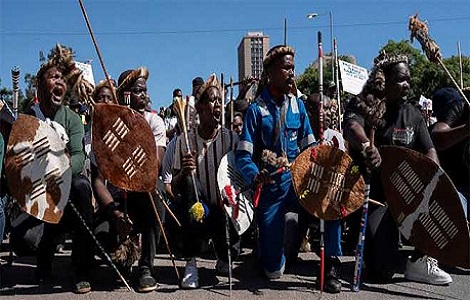
HABARI DAILY I Kampala, Uganda I Probably the time to meet their maker had arrived. That was the chilling thought that crossed the minds of many Ugandans as violent anti-migrant mobs descended on neighbourhoods across parts of South Africa, forcing hundreds to flee with nothing but the clothes they were wearing.
Homes were attacked, businesses looted, and foreigners given ultimatums to leave or risk being killed in a wave of xenophobic violence that has now forced the Ugandan government to evacuate hundreds of its citizens.
For the 424 Ugandans repatriated under a government-sponsored rescue programme, the journey home marked the end of weeks of terror, uncertainty and loss. Their stories paint a grim picture of coordinated attacks against foreign nationals, livelihoods destroyed overnight, desperate escapes from violent mobs and the emotional trauma of leaving behind everything they had worked for over many years.
The first batch of 273 returnees, including 255 adults and 18 children, arrived at Entebbe International Airport aboard an Ethiopian Airlines flight under a government-coordinated evacuation programme. They were followed by another group of 116 people and a final batch of 35 returnees.
Escalating insecurity
The evacuation followed President Yoweri Museveni’s directive after reports emerged of escalating insecurity targeting foreigners in South Africa. The government mobilised resources to bring stranded Ugandans home safely, with officials receiving them at Entebbe International Airport.
Among the most common stories shared by the returnees were accounts of targeted violence. Many described how vigilante groups systematically identified foreign-owned businesses and homes before launching coordinated attacks. According to the survivors, migrants from several African countries were accused of taking jobs from South Africans and placing pressure on public services, making them targets of growing hostility.
Several returnees said the violence was not random but appeared carefully organised. Communities that had peacefully lived together for years suddenly turned hostile as anti-immigration groups issued warnings demanding that foreigners leave the country.
Abandoning businesses
For many Ugandans, the violence meant abandoning businesses built through years of sacrifice. Small retail shops, restaurants, transport businesses and informal enterprises became targets of looting and destruction.
Some narrated watching helplessly as mobs broke into their premises, stealing merchandise, cash and equipment before setting buildings on fire or vandalising property. Others said they never had an opportunity to recover personal belongings, family documents or savings because they fled moments before attackers arrived.
The financial losses were devastating. Many of the returnees had spent years working in South Africa, investing every available shilling into businesses intended to support relatives back home. Within hours, those investments disappeared.
“I left with nothing,” was a phrase repeated by several returnees as they described boarding evacuation flights empty-handed.
The atmosphere of fear intensified after anti-immigration groups reportedly issued deadlines ordering foreigners to leave certain communities. The ultimatums triggered widespread panic, with many migrants spending sleepless nights wondering whether they would survive until morning.
Risking violent confrontation
Some families abandoned their homes before the deadlines expired, believing it was safer to leave voluntarily than risk violent confrontation. Others remained trapped indoors, relying on friends, religious institutions and diplomatic contacts for information about safe escape routes.
Eventually, many Ugandans sought refuge at temporary assembly centres coordinated by Uganda’s diplomatic mission in South Africa, where they waited for evacuation arrangements while living under constant anxiety.
The trauma was compounded by tragic loss of life. Government officials confirmed that three Ugandan nationals lost their lives during the unrest, while the bodies of two victims had not yet been identified or repatriated.
Earlier reports from affected communities had also indicated that at least one Ugandan in KwaZulu-Natal was attacked, robbed and killed during the violence, highlighting the deadly risks many migrants faced simply because of their nationality.
The deaths have left families grieving while raising fresh concerns about the safety of African migrants living in South Africa.
Psychological impact
Many returnees said they still struggle to process the psychological impact of what they experienced. Some witnessed neighbours being attacked, while others escaped only minutes before mobs reached their homes.
Parents described the emotional challenge of trying to reassure frightened children while having no certainty about where they would sleep or whether they would have enough food the following day.
On arrival at Entebbe International Airport, the exhausted returnees were welcomed by Acting Minister of Foreign Affairs Haruna Kyeyune Kasolo, Uganda’s Ambassador to South Africa Paul Omoru Omiat and other senior government officials.
Minister Kasolo described the evacuation as a demonstration of the government’s responsibility to protect its citizens wherever they may be.
“The brotherly responsibility of any sovereign government is the safety and security of its citizens, both within our borders and abroad,” he said.
He revealed that more than 700 Ugandans had voluntarily registered for repatriation, indicating that hundreds more may still wish to return if conditions remain unstable.
Rebuilding lives in Uganda
The minister also encouraged the returnees to rebuild their lives in Uganda, telling them that the country’s economy continues to offer opportunities through various government wealth creation programmes.
Uganda’s Ambassador to South Africa, Paul Omoru Omiat, praised the swift intervention by President Museveni and the Chief of Defence Forces, General Muhoozi Kainerugaba, describing the evacuation as both timely and compassionate.
He noted that many evacuees returned with virtually nothing after abandoning years of accumulated wealth.
Speaking on behalf of the returnees, Lydia Mwesigwa, President of the United Returnees Organisation and a resident of South Africa for more than three decades, expressed gratitude to the government for bringing them home safely.
Organisational support
She said the organisation would work with the returnees to rebuild their lives through Savings and Credit Cooperative Organisations (SACCOs) and agricultural livelihood programmes.
Another returnee, Mawanda Sayid Juma, who had worked as a driver in South Africa since 2023, appealed for continued government support, noting that many families had lost homes, businesses and personal property accumulated over several years.
For the hundreds of Ugandans who escaped the violence, returning home represents both relief and uncertainty. Although they are grateful to have survived, many now face the difficult task of starting over from scratch after losing everything they had built abroad. Their stories serve as a stark reminder of the human cost of xenophobic violence and the fragile reality faced by migrants seeking better opportunities far from home.







About the Author