
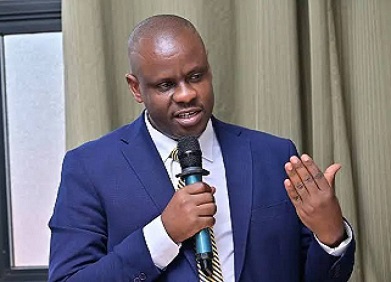
Minister Balaam Barugahara Ateenyi
HABARI DAILY I Kampala, Uganda I During the Kisanja No Sleep, a government minister has taken it upon himself to get the country out of its slumber, ordering bars, malwa joints and other alcohol-selling establishments across Uganda to remain closed until 3pm on working days.
The directive, issued by Local Government Minister Balaam Barugahara Ateenyi, is aimed at tackling what the minister describes as a growing culture of daytime drinking that is undermining productivity, fuelling social problems and exposing young people to harmful practices.
In a circular addressed to district chairpersons, city mayors and council speakers, Barugahara instructed local authorities to work with security agencies and enforcement teams to ensure that alcohol outlets comply with the new operating hours.
“Bars, Malwa joints and other alcohol-selling establishments should not open before 3:00 p.m. on working days, subject to applicable national laws, licensing requirements and lawful local government regulations,” Barugahara said.
The minister’s intervention comes amid longstanding concerns over Uganda’s relatively high levels of alcohol consumption and the consequences associated with harmful drinking.
According to the World Health Organisation (WHO), Uganda has historically recorded alcohol consumption levels above both the African and global averages. The WHO Africa office, citing its 2023 World Health Statistics report, estimated Uganda’s alcohol consumption at 12.2 litres of pure alcohol per person annually, compared with an African regional average of 6.3 litres and a global average of 6.18 litres at the time.
The government is particularly concerned about the impact of alcohol consumption during hours when Ugandans are expected to be working.
Barugahara said early-morning drinking contributes to idleness, as some people spend important working hours in bars and malwa joints instead of engaging in productive activities.
The minister’s argument is reinforced by evidence linking harmful alcohol use to workplace problems, unemployment and financial difficulties.
WHO says harmful alcohol consumption goes beyond temporary intoxication, with consequences including liver and cardiovascular diseases, cancers, injuries, mental and behavioural disorders, family difficulties, financial problems and unemployment.
Alcohol is also associated with more than 200 diseases, injuries and other health conditions, according to the global health body.
For Barugahara, therefore, restricting access to alcohol during the morning and early afternoon is intended not merely as a licensing measure, but as an attempt to change behaviour and encourage Ugandans to devote working hours to productive activities.
The directive also links excessive alcohol consumption to wider social problems.
Government authorities have raised concerns that early-day drinking contributes to crime, domestic violence, family breakdown and disputes within communities.
By pushing alcohol outlets to open at 3pm, the ministry hopes to reduce the amount of time people have available to engage in drinking during working hours and, consequently, limit some of the social problems associated with harmful alcohol use.
The minister has also placed particular emphasis on protecting children.
Bar owners, shopkeepers, malwa operators and other alcohol sellers found supplying alcohol to people below the age of 18 have been warned that they will face arrest and prosecution.
“Bar owners, shop owners and operators of Malwa joints or other alcohol-selling establishments who sell or supply alcohol to persons under 18 years of age should be arrested and prosecuted in accordance with the law,” Barugahara said.
Local governments and security agencies have consequently been instructed to take a more aggressive approach towards businesses that violate the law.
Establishments that repeatedly disregard lawful operating-hour restrictions face closure and possible revocation of their business licences, adding a significant enforcement component to the directive.
The minister has also extended the campaign against potentially harmful social habits to the betting industry.
Local governments have been directed to regulate the operating hours of betting companies, although Barugahara did not prescribe a uniform national opening time for them.
The stated objective is to protect young people from excessive gambling and its associated risks.
The measures form part of a broader effort by the Ministry of Local Government to make local authorities more responsive to community welfare and public accountability.
Barugahara has directed councils to allow journalists access to council sittings, similar to Parliament’s proceedings, in an effort to give citizens greater visibility into how their elected representatives conduct public business.
Local governments have also been instructed to display approved budgets on council notice boards and other publicly accessible locations.
The minister said this would enable residents to know what has been budgeted for their areas and follow up on projects and services.
The move is intended to encourage what the circular describes as “people-led audits”, allowing citizens to scrutinise government spending and demand accountability from local leaders.
For the alcohol restrictions, however, the biggest challenge could be enforcement.
Uganda has thousands of bars, drinking joints and small alcohol outlets operating in urban centres, trading centres and rural communities. Ensuring that all of them observe a uniform 3pm opening time will require sustained monitoring by local authorities and security teams.
The circular also recognises that enforcement must operate within existing legal frameworks, stating that the directive is subject to national laws, licensing requirements and lawful local government regulations.
Barugahara has therefore placed responsibility on local government leaders to ensure implementation and to report challenges through the appropriate government channels.
The minister’s message is clear: Uganda’s working hours should not become drinking hours.
By restricting bars and malwa joints until 3pm, government hopes to reduce morning drinking, improve productivity, protect minors and tackle some of the family and community problems associated with harmful alcohol consumption.
Whether the directive will significantly change drinking habits, however, will ultimately depend not only on the 3pm rule, but on how consistently local authorities enforce it across the country.