
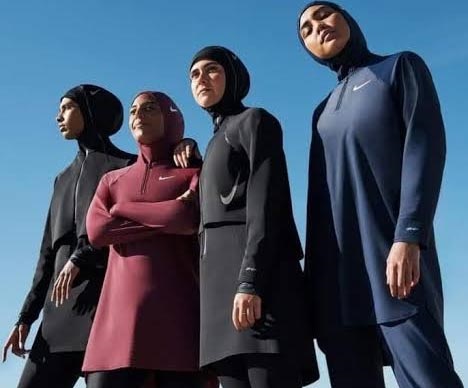
Young girls in Libya donning Nike products
HABARI DAILY I Kampala, Uganda I Religion has collided with modernity after Libya’s highest religious authority issued a controversial ruling prohibiting Muslims from buying, selling or wearing clothing bearing the Nike logo, arguing that the famous sportswear brand promotes symbols associated with the worship of multiple gods.
The fatwa, issued by the Tripoli-based Dar al-Ifta and approved by Libya’s Grand Mufti, Sadiq al-Gharyani, targets the American sportswear giant Nike, whose name and iconic swoosh logo, according to the religious institution, have their origins in Greek mythology.
In its ruling, the religious authority explained that Nike was named after the Greek goddess of victory, while the company’s globally recognised swoosh symbol was inspired by the wings of the mythical deity.
It argued that wearing clothing displaying the logo amounted to promoting symbols associated with “polytheism”, the worship of more than one god, which is incompatible with Islamic teachings.
The institution consequently called on Muslims to refrain from purchasing, selling or wearing Nike-branded clothing, extending its objection beyond individual consumers to businesses involved in distributing the products.
The ruling has brought renewed attention to the intersection of religious beliefs, global consumer culture and the growing influence of religious conservatism in Libya, where international fashion and sportswear brands enjoy considerable popularity.
Libya itself has a long historical association with ancient Greek civilisation. It is home to Cyrene, an ancient Greek city whose archaeological remains include a statue of the Greek goddess of the same name, reflecting the country’s historical connections with the civilisation whose mythology the religious authority has criticised.
However, the religious committee’s objections to Nike extend beyond the company’s branding and its alleged association with pagan religious symbolism.
The Dar al-Ifta also accused the American company of supporting Israel and called for a boycott of businesses it considers supportive of the country.
In defending its position, the institution referred to a statement issued by its Council for Research and Sharia Studies on November 5, 2023, which urged Muslims to boycott Western companies perceived to be supporting Israel during the war in Gaza.
The latest ruling therefore combines religious objections to the symbolism associated with Nike’s identity with the wider campaign against companies accused of supporting Israel.
A fatwa is a religious opinion or ruling issued by an Islamic authority on matters concerning Islamic law. Although such pronouncements can carry considerable influence among believers, they do not automatically constitute government legislation.
Indeed, the Dar al-Ifta’s latest decision does not amount to a legally enforceable nationwide ban on Nike products. It does not announce government restrictions or specify penalties for Muslims who continue purchasing or wearing the company’s clothing.
Libya remains politically divided, with rival authorities and institutions operating in the east and west following years of instability after the overthrow of long-time leader Muammar Gaddafi in 2011.
The Dar al-Ifta, based in Tripoli in western Libya, is nevertheless an influential religious institution whose pronouncements can shape public attitudes and consumer behaviour.
The latest fatwa is not the first time it has targeted international fashion brands over their symbolism.
Last year, the institution ruled against wearing jewellery and watches bearing the logo of French luxury jewellery house Van Cleef & Arpels. It argued that the company’s four-leaf clover design was associated with Christian beliefs and the pursuit of good luck, practices it considered incompatible with Islamic teachings.
The Nike ruling has generated mixed reactions on social media, with some users welcoming the religious authority’s position while others questioned its significance, describing it as ironic or a distraction from more pressing challenges facing the country.
The controversy comes against the backdrop of increasing religious conservatism in Libya’s public life.
In 2025, authorities in eastern Libya announced restrictions on rap music, theatre and dance performances, citing concerns that some lyrics and performances violated public morals and Islamic values. The measures were subsequently extended to western Libya.
The Dar al-Ifta has also previously issued religious rulings against music, although there is no clear evidence directly linking it to the restrictions imposed on artistic performances.
Meanwhile, Nike-branded clothing remains available through local sportswear retailers despite the company not operating an official store in Libya. Counterfeit versions of popular international brands are also widely sold in local markets.







About the Author