
Uganda discharges last Ebola patient several days ago
HABARI DAILY I Kampala, Uganda I 34 days away from being officially declared Ebola-free by the World Health Organization, Uganda has intensified its support to the Democratic Republic of Congo (DRC) in an effort to contain the deadly disease at its source and prevent cross-border transmission.
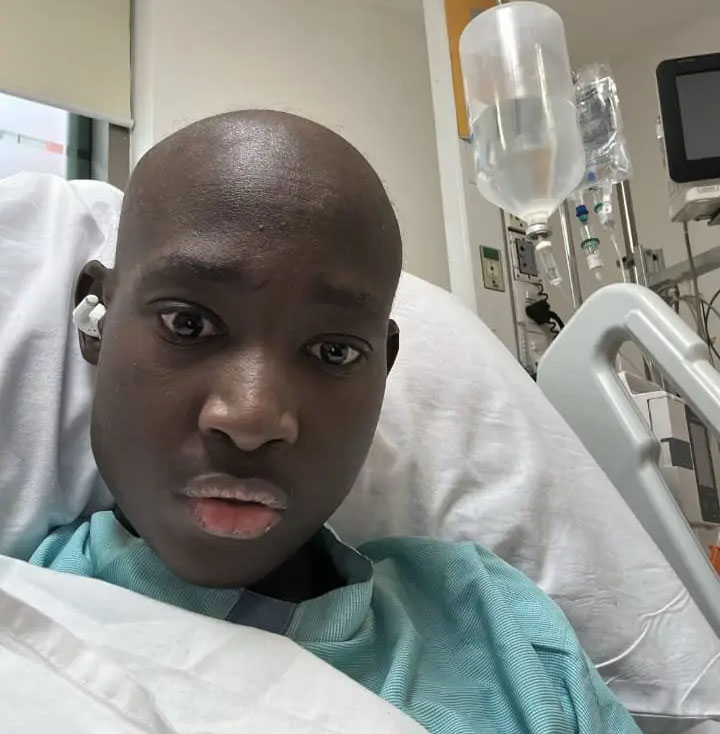
The countdown to Uganda’s Ebola-free status began on July 16, 2026, when the country’s last recovering Ebola patient was discharged from Mulago National Referral Hospital. Under World Health Organization guidelines, a country must complete **42 consecutive days—equivalent to two 21-day incubation periods—without recording a new case before it can be officially declared Ebola-free.
Even as Uganda edges closer to achieving that milestone, the Government has stepped up regional efforts by deploying medical teams and establishing specialized Ebola treatment facilities inside eastern DRC, where the outbreak continues.
Museveni weighs in
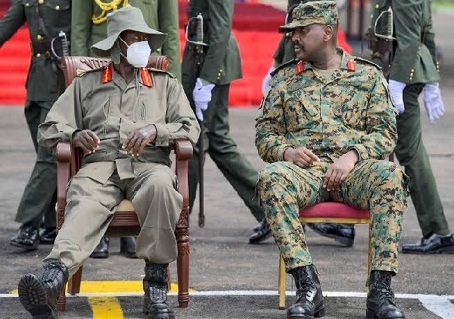
President Yoweri Kaguta Museveni reaffirmed Uganda’s commitment to supporting its western neighbour during a meeting at State House, Entebbe, with the Democratic Republic of Congo’s Minister of Public Health, Hygiene and Social Welfare, Dr. Kamba Mulanda Samuel Roger, who delivered a special message from the Congolese Government.
President Museveni said Uganda had successfully contained its recent Ebola outbreak through early detection, timely treatment and strict public health interventions.
He explained that although several health workers were infected before the disease was identified, no further local transmission occurred after the necessary containment measures were introduced.
The President revealed that Uganda treated both Ugandan and Congolese Ebola patients, with the overwhelming majority recovering after receiving medical care.
He noted that the few fatalities recorded involved patients who sought treatment at an advanced stage of the illness.
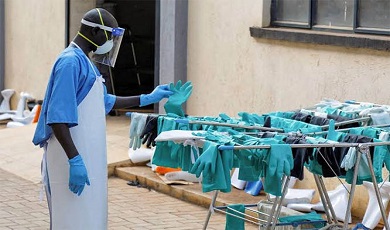
To strengthen the regional response, Uganda has established an 80-bed Ebola isolation and treatment unit inside eastern Democratic Republic of Congo to ensure that patients receive care closer to their communities.
The country has also set up isolation centres, treatment facilities and mobile laboratories in key outbreak hotspots, including Aru, Aloo and Kasenyi, enabling faster diagnosis and treatment of suspected Ebola cases.
Deployment announced
Uganda has further deployed dozens of specialized health workers, emergency medical experts and laboratory personnel to work alongside Congolese health teams in managing the outbreak.
The two countries have also adopted a joint operational strategy anchored on regular cross-border coordination meetings, information sharing and disease surveillance to quickly detect and respond to new infections.
According to President Museveni, treating patients within the Democratic Republic of Congo will significantly reduce the movement of infected individuals across the porous Uganda-DRC border in search of medical care, thereby minimizing the risk of cross-border transmission.
He explained that Uganda could not close its border with the Democratic Republic of Congo because of the strong social and economic ties between the people of the two neighbouring countries and the importance of cross-border trade.
Screening and surveillance
Instead, the Government strengthened health screening and surveillance at official border entry points, particularly along cargo transport corridors, to protect public health while allowing the continued movement of essential goods.
“We shall do everything within our means to help because the people of the Democratic Republic of Congo are our brothers and sisters,” President Museveni said.
Uganda’s intervention extends beyond emergency medical care to strengthening the DRC’s overall capacity to respond to the outbreak through technical expertise, laboratory services and coordinated public health planning.
The meeting between the two countries underscored the growing regional cooperation in addressing cross-border health emergencies and reaffirmed their shared commitment to containing Ebola through coordinated action rather than isolated national responses.
Over 1,000 deaths registered in DR Congo
Also present at the meeting were Health Minister Dr. Chris Baryomunsi, Permanent Secretary Dr. Diana Atwine, Inspector General of Police Abas Byakagaba, Commander of UPDF Land Forces Lt. Gen. Kayanja Muhanga and other senior government officials.
Declared on May 15, 2026, health authorities have documented 2,536 confirmed cases across five provinces in DR Congo. This has become the fastest-growing Ebola outbreak in recorded history, taking less than 10 weeks to surpass 1,000 fatalities.







About the Author