
Controversy Surrounds Uganda’s Secondment Of Olara Otunnu To UN Secretary General Post
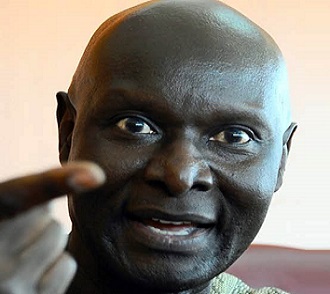
Ambassador Olara Otunnu
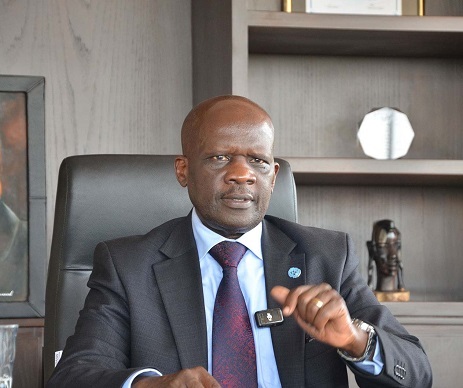
HABARI DAILY I Kampala, Uganda I Controversy is surrounding Olara Otunnu’s candidature for the United Nations’ top job after the Ugandan government formally endorsed the former opposition leader and long-time critic of President Yoweri Museveni to become the next Secretary-General of the United Nations, marking a dramatic political turnaround.
Uganda has officially nominated veteran diplomat and former United Nations Under-Secretary-General Olara Otunnu as its candidate for the world’s highest diplomatic office, setting the stage for what could become one of the most closely watched campaigns for the position of U.N. Secretary-General.
The nomination, however, has attracted significant attention because of the complex political history between Otunnu and the Ugandan government, which he has openly opposed for decades.
UN responds
The formal nomination was submitted by Uganda’s Permanent Representative to the United Nations, Ambassador Adonia Ayebare, on July 24, 2026. A day later, U.N. General Assembly President Annalena Baerbock and Security Council President Zénon Ngay Mukongo jointly notified all 193 U.N. member states that Uganda had officially presented Otunnu as its candidate.
“The Republic of Uganda has presented the nomination of Mr. Olara Otunnu as candidate for the position of Secretary-General,” the joint communication stated.
The two U.N. leaders further informed member states that they were forwarding the communication and supporting documents received from Uganda’s Permanent Mission.
“We have the further honour to forward the communication and documents received from the Permanent Mission of the Republic of Uganda to the United Nations dated 24 July 2026 in this respect,” the letter added.
The notification formally places the 75-year-old diplomat among those seeking to succeed António Guterres, whose second and final term as Secretary-General expires in December 2026. The process will now advance to consultations among member states before the Security Council recommends a candidate to the General Assembly for appointment.
Strong international credentials
While the nomination showcases Uganda’s confidence in Otunnu’s international credentials, it has also reopened debate over the country’s past relationship with the veteran diplomat.
For years, Otunnu maintained that his earlier ambitions to become U.N. Secretary-General during the 1990s were frustrated because he lacked the backing of his own government. At the time, he suggested that domestic political considerations prevented Uganda from supporting his candidature despite his extensive experience within the United Nations system.
The current endorsement therefore represents a remarkable reversal by Kampala.
Otunnu has spent much of the last two decades as one of President Museveni’s fiercest political opponents. After returning from an international diplomatic career, he became president of the Uganda Peoples Congress (UPC), one of Uganda’s oldest political parties, and later contested the 2011 presidential election against Museveni.
His nomination by the same government he once fiercely criticized has generated mixed reactions among political observers, with some describing it as a demonstration of national unity above partisan politics, while others view it as an unexpected political reconciliation.
Despite the domestic controversy, Uganda’s diplomatic campaign focuses squarely on Otunnu’s international experience rather than his political background.
Global statesman
Government officials describe him as a seasoned global statesman with more than four decades of leadership within the United Nations and the wider international community.
His campaign portrays him as a bridge-builder capable of navigating increasingly complex geopolitical tensions while spearheading reforms within the multilateral organization.
Uganda is also presenting Otunnu as a leader equipped to confront emerging global challenges, including the governance of artificial intelligence, climate change, international security and growing humanitarian crises.
His credentials are among the strongest of any African diplomat.
Otunnu previously served as Uganda’s Minister of Foreign Affairs between 1985 and 1986 before becoming the country’s Permanent Representative to the United Nations.
His international profile rose significantly when he was appointed U.N. Under-Secretary-General and became the first Special Representative of the Secretary-General for Children and Armed Conflict, serving from 1998 to 2005.
During that period, he led global advocacy efforts to protect children caught up in armed conflicts and worked closely with governments, humanitarian organizations and international institutions to strengthen international legal protections for children.
Search Kicked off November 2025
Uganda’s endorsement comes as the United Nations begins the formal process of selecting its next chief under procedures outlined in General Assembly Resolution 79/327, following the launch of the selection process in November 2025.
The eventual Secretary-General will require the recommendation of the 15-member U.N. Security Council before being appointed by the General Assembly, making consensus among the world’s major powers a decisive factor.
For Uganda, the nomination represents an opportunity to place one of its most accomplished diplomats at the center of global leadership. Yet it also underscores an extraordinary political development at home, where a former opposition presidential candidate and long-standing government critic now carries the country’s official flag in pursuit of the United Nations’ highest office.
Whether the nomination signals genuine political reconciliation or simply reflects recognition of Otunnu’s international stature, his candidature has already become one of the most talked-about aspects of Uganda’s engagement in the race to lead the United Nations after António Guterres steps down at the end of this year.
About the Author