
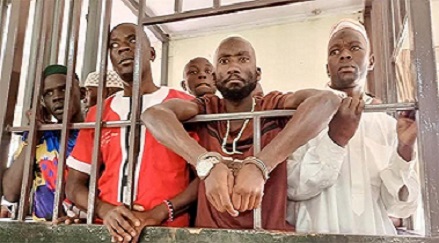
A cross section of the freed NUP supporters
HABARI DAILY I Kampala, Uganda I It looks more or less like a deal weaved in heaven as nine supporters of the National Unity Platform (NUP) finally walked out of military detention after nearly six years, following a process that involved guilty pleas, applications for amnesty and approval by the General Court Martial in Makindye.
The release marks the latest chapter in the long-running case involving 28 NUP supporters who were arrested in Kalangala District during the heated 2021 general election campaigns while accompanying the party’s presidential candidate, Robert Kyagulanyi Ssentamu, popularly known as Bobi Wine.
The nine freed supporters are Yasin Ssekitoleko, also known as Machete, Patrick Mwase, Sharif Kalanzi, Joseph Muwonge, Abdalla Kintu, Emma Umar Kato, Musa Kavuma, Jimmy Galukande and Abdallah Hakim Gibusiwa.
They had been facing charges of treachery and unlawful possession of ammunition before the General Court Martial, charges that the opposition party consistently described as politically motivated and fabricated.
Their release followed an amnesty process before the General Court Martial chaired by Brig. Richard Tukacungurwa.
Detainees renounced armed rebellion
During the proceedings, the detainees admitted participating in rebellious activities and formally renounced any involvement in armed rebellion allegedly linked to the so-called “Bali-Bali” rebel group.
The military prosecution raised no objection to the amnesty applications, clearing the way for the court to approve their release.
The court subsequently ordered that the nine be handed over to the Amnesty Commission for official counselling, rehabilitation and reintegration into society before they are fully released under Uganda’s Amnesty Act.
The decision brings to an end years of uncertainty for the group, who had remained in detention despite significant legal developments surrounding the jurisdiction of military courts over civilians.
The nine were among 28 NUP supporters arrested in Kalangala during the 2021 election campaigns, when Bobi Wine was challenging President Yoweri Museveni in one of Uganda’s most fiercely contested presidential elections.
After their arrest, they were arraigned before the General Court Martial in Makindye and jointly charged with treachery and illegal possession of ammunition.
NUP leaders repeatedly dismissed the accusations, insisting the charges were fabricated to weaken the opposition and intimidate its supporters.
Balaam Barugahara’s saving hand
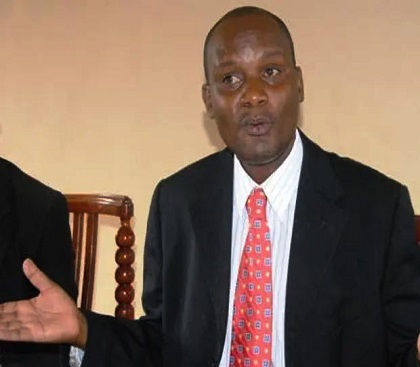
The case took a dramatic turn in November 2024 when then Minister of State for Youth and Children Affairs, Balaam Barugahara, visited the detainees in prison.
According to previous accounts by the detainees and their lawyers, Barugahara advised them to admit guilt and seek a presidential pardon, warning that refusing the offer could leave them imprisoned indefinitely.
Nineteen of the 28 eventually accepted the proposal.
They pleaded guilty before the General Court Martial, were convicted of treachery and unlawful possession of ammunition and were later pardoned by President Museveni.
However, the remaining nine initially refused to admit guilt, insisting they had committed no offence and maintaining that the charges against them were politically driven.
Their decision meant they remained in military detention while legal proceedings continued.
Military court urgument
Their continued prosecution attracted further attention after the Supreme Court ruled that civilians should not be tried before military courts and directed that such cases be transferred to civilian courts.
Despite that landmark ruling, the nine remained in detention as legal processes continued.
Their prolonged incarceration prompted growing concern from human rights activists and opposition leaders.
At one point, Yasin Ssekitoleko, popularly known as Machete, embarked on a hunger strike to protest his continued detention.
He later suspended the protest after doctors advised him to resume eating because of concerns over his deteriorating health.
On Friday, the National Unity Platform said the prolonged detention had eventually forced the nine to reconsider their earlier position.
Guilty but innocent
In a statement, the party claimed the detainees had accepted to plead guilty despite maintaining their innocence.
“These comrades, weighed down by the long period of detention finally accepted to plead guilty to crimes they did not commit, but the regime changed strategy and compelled them to apply for Amnesty,” the party said.
NUP added that the General Court Martial had directed that the nine be transferred to the Amnesty Commission, where they are expected to receive amnesty certificates before regaining their freedom.
The party also expressed concern over the post-release process, saying it hoped the former detainees would not be diverted to mandatory ideological training.
“We hope they won’t be hijacked and forcefully taken to Kyankwanzi as happened to some of the comrades previously released,” the statement added.
The release of the nine effectively closes another chapter in one of the most contentious cases arising from the 2021 election period, although questions surrounding the military prosecution of civilians and the circumstances under which the detainees secured their freedom are likely to remain subjects of political and legal debate.