EACOP Nears Completion As Uganda Government Declares Country Ready For Historic Oil Production
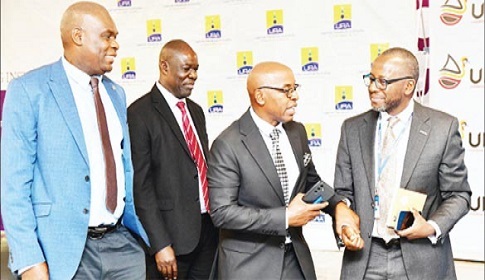
L-R: Judicial Training Institute governing council chairperson, Mike Chibita, Kawumi, Zeija and Board Member of PAU, Innocent Kihika after the training on Monday, 3rd August 2026
HABARI DAILY I Kampala, Uganda I After waiting for what looks like eternity, Uganda is finally within touching distance of becoming an oil-producing nation, with government officials expressing confidence that the country will beat the long-anticipated deadline for first oil as major petroleum infrastructure enters its final phase of completion.
Speaking at the opening of a specialised oil and gas training programme for judicial officers at the Supreme Court in Kampala, Minister for Science, Technology and Innovation Dr. Monica Musenero said Uganda’s long journey to commercial oil production is now approaching its defining moment.
“We are drawing closer to first oil. The baby is about to be born, and it is gratifying that all sectors are coming together to appreciate the country’s oil and gas developments,” Musenero said.
Her remarks reflect growing optimism within government that the country’s flagship oil projects are progressing on schedule despite earlier disruptions caused by global events.
EACOP Enters Final Phase
One of the strongest indicators that Uganda is on course is the progress registered on the East African Crude Oil Pipeline (EACOP), the 1,443-kilometre export pipeline that will transport crude oil from Uganda’s Albertine Graben to the Tanzanian port of Tanga.
According to the latest project update, EACOP has reached 93 percent overall completion, leaving only seven percent of the work before commissioning.
Construction statistics show remarkable progress across the cross-border infrastructure project.
A total of 1,536 kilometres of pipeline, representing 99.5 percent of the entire network, have already been welded.
Out of this, 1,441 kilometres, equivalent to 93 percent, have been lowered into trenches, while 90 percent of the pipeline has been buried underground. Land restoration activities are also progressing simultaneously in both Uganda and Tanzania as construction crews prepare the project for commissioning.
The remaining works include installation of high-voltage power cables, which has already covered more than 1,200 kilometres, pipeline cleaning, hydro-testing to detect leakages and confirm operational readiness, gauging, and installation of the mainline block valves.
Pre-commissioning activities have intensified to ensure crude oil begins flowing according to schedule.
Peak Production Targets
Once commercial production begins, Uganda is expected to produce approximately 230,000 barrels of crude oil per day at peak output.
The Tilenga oil development project, operated by TotalEnergies, will contribute the largest share of production, while the Kingfisher project, operated by CNOOC Uganda, has been designed to process about 40,000 barrels of oil per day at peak capacity.
These projects, together with EACOP, represent the backbone of Uganda’s emerging petroleum industry.
Uganda National Oil Company (UNOC) Chief Legal Officer and Company Secretary Peter Muliisa said the remaining works are well within schedule and expressed confidence that Uganda will soon celebrate its long-awaited first oil.
“This journey started in the 1920s when the colonial administration undertook the earliest exploration activities. It later suffered setbacks during the Second World War and the struggle for independence. However, in the late 1980s, the current Government revived the search for oil resources, and today, we are approaching the final stages of that journey,” Muliisa said.
“Very soon, we shall see oil flowing from the Albertine Graben to Tanga.”
Muliisa added that UNOC has already expanded its operations beyond Uganda as part of preparations for crude oil trading on the international market once production begins.
Challenges Overcome
Although the project has made tremendous progress, Petroleum Authority of Uganda Director of Legal and Corporate Affairs Ali Ssekatawa acknowledged that implementation experienced temporary setbacks.
He said the conflict in the Middle East disrupted global supply chains, delaying delivery of critical equipment needed for the projects.
Uganda also faced delays during the Ebola outbreak, when travel restrictions prevented expatriate technical specialists from entering the country to undertake specialised assignments.
Despite these challenges, Ssekatawa said the project remains firmly on course and that the remaining work is expected to be completed within schedule.
Judiciary Preparing for Oil Era
The optimism was shared during a week-long training programme designed to prepare Uganda’s Judiciary for the legal complexities expected once commercial oil production begins.
The programme includes a field visit to the Albertine Graben to expose judicial officers to the country’s oil and gas infrastructure.
The event attracted Chief Justice Dr. Flavian Zeija, Deputy Chief Justice Dr. Moses Kazibwe Kawumi, Principal Judge Dr. Douglas Singiza, Bank of Uganda Governor Dr. Michael Atingi-Ego, Uganda Revenue Authority Commissioner General John Musinguzi Rujoki, Court of Appeal justices and other senior judicial officers.
Musenero said the Judiciary will play a central role in supporting Uganda’s petroleum industry by ensuring disputes are resolved fairly, efficiently and in accordance with the law.
Chief Justice Zeija said judges must develop a practical understanding of the industry’s technical, environmental and social dimensions because oil-related disputes are expected to increase once production starts.
Strong Institutions Key
Bank of Uganda Governor Dr. Michael Atingi-Ego said Uganda’s petroleum success extends beyond discovering oil to building institutions capable of protecting investments.
He noted that the EACOP, Tilenga and Kingfisher projects represent more than 12 billion US dollars in committed investment, making them the largest concentration of long-term capital ever attracted into Uganda.
“Uganda’s geology attracted investment, but our institutions gave investors confidence that those investments would endure,” Atingi-Ego said.
“Capital flowed here because, buried in the fine print of every joint venture agreement, land acquisition deed and tax assessment, investors trusted Uganda’s courts to uphold the law whenever disputes arise.”
With construction entering its final stages, government officials believe Uganda has finally overcome decades of delays and is now poised to meet its long-awaited first oil target, marking the beginning of a new chapter in the country’s economic transformation.
About the Author