
Experts, Business Leaders Side With Museveni On Income Tax, Sports Betting, Kaveera Taxes As They Become Law
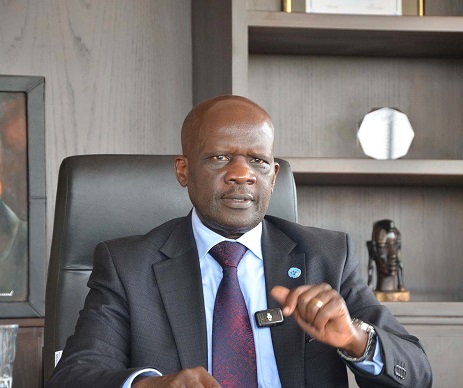
Charles Ocici
HABARI DAILY I Kampala, Uganda I Ugandan experts and business leaders are supportive of the recently signed bills by President Yoweri Museveni, saying the changes to the country’s tax regime will help strike a balance between domestic revenue mobilisation, private-sector growth and investor confidence.
President Museveni recently assented to the Excise Duty (Amendment) Act, 2026 and the Income Tax (Amendment) Act, 2026, after Parliament adopted recommendations he made when he returned the Bills for reconsideration in July.
The President had declined to sign the two Bills amid concerns over provisions he said could create unfair competition, leave loopholes for tax avoidance and place additional pressure on businesses and the wider economy.
Parliament subsequently adopted his recommendations on August 4, 2026, paving the way for the President to give the amended legislation his assent later in August.
The revised laws introduce changes in areas including betting and gaming, single-use plastics, sugar and income taxation, as Government seeks to increase domestic revenue collections for the 2026/27 financial year without undermining productive sectors.
Charles Ocici, the Director General of Enterprise Uganda, said the changes should, however, be viewed beyond their immediate revenue implications, particularly where taxation affects the behaviour of businesses and consumers.
One of the areas addressed by the amended laws is the taxation of betting and casino winnings, following concerns that differences in the treatment of land-based casinos and other gaming activities could result in unequal treatment and revenue leakage.
Ocici said the betting industry presents a complicated policy challenge because, although it is intended as entertainment and contributes to economic activity, excessive participation can become socially harmful.
“The most difficult thing about the betting sector is it’s like the alcohol sector. Alcohol and betting are supposed to be for entertainment, but the moment they become a habit, a ritual, somebody after their time in it, they become a disadvantage rather than a benefit for the economy,” Ocici said.
He expressed particular concern about the growing shift towards online betting, arguing that digital platforms can make it harder to immediately identify who is participating and monitor potentially vulnerable groups.
He said Government should therefore be cautious about relying heavily on betting as a source of economic growth or tax revenue, stressing that revenue mobilisation should be supported by productive activities with long-term benefits.
Another significant change concerns the excise duty on single-use plastics. The original proposal sought to increase the duty to 25 percent, triggering concerns from manufacturers that the measure would substantially raise production and packaging costs.
Following the President’s intervention and Parliament’s reconsideration, the rate was retained at 2.5 percent, rather than the proposed 25 percent.
Dr Ezra Rubanda Muhumuza, the Executive Director of the Uganda Manufacturers Association (UMA), welcomed the decision, saying it reflected Government’s willingness to listen to private-sector concerns.
“We are happy that the government is maintaining its principle of private-sector-linked economy by listening to the views and opinions of the private sector in formulation of both trade policy and tax policy,” Rubanda said.
He explained that a 25 percent tax on plastics would have increased packaging costs, which would eventually have been passed on to consumers through higher prices.
Rubanda warned that this could have made Ugandan products less competitive against imported goods from countries with more developed packaging industries and cheaper packaging systems.
“We think that it was a positive insight of the president,” he said.
He acknowledged, however, that Uganda must eventually reduce its dependence on plastic packaging because of the environmental damage associated with plastic waste. He said the country should instead accelerate investment in alternatives, including packaging made from materials such as banana fibre and other environmentally friendly products.
Ocici similarly argued that the environmental cost of plastic bags should not be overlooked simply because manufacturers require affordable inputs.
He said Government should use tax policy to gradually encourage consumers and businesses to move towards alternatives rather than permanently supporting plastic products.
“Jobs can always be good in many other alternative ways,” Ocici said, warning that decisions based solely on protecting existing manufacturing jobs could amount to a short-term approach.
The tax amendments also maintain the income-tax threshold, a move Rubanda said could strengthen Uganda’s attractiveness as an investment destination.
He argued that investors take considerable risks when bringing capital into the country and should be allowed to earn reasonable returns.
“When we recoup the profit and we want to increase tax on that income, then it means we are making our country less attractive,” he said.
Rubanda also raised concerns about additional taxation of income that could amount to double taxation where individuals or businesses are already subject to Pay As You Earn.
For him, the revised tax regime represents a more balanced approach that could boost investor confidence by recognising the interests of Government, consumers and investors.
“The investors, consumers, government, we must find a win-win situation when we are reviewing the tax policy,” Rubanda said.
The manufacturers’ body also welcomed the decision to halt the proposed increase in excise duty on sugar, arguing that the sector needs to be carefully supported because of its importance to Uganda and the wider regional market.
As Government implements the new laws, the broader challenge will be to ensure that increased domestic revenue mobilisation does not undermine production, investment and employment.
Ocici said Uganda should continue expanding its tax base but focus on sustainable sources of revenue, while Rubanda maintained that tax policy must enable all stakeholders to grow together.
“The tax policy is supposed to ensure that all the stakeholders in this economy flourish together, not one becoming a parasite on the other.”
About the Author