
What Nobert Mao’s Signing Of Katungi’s Extradition Order To USA Over Cocaine And Arms Supply Means
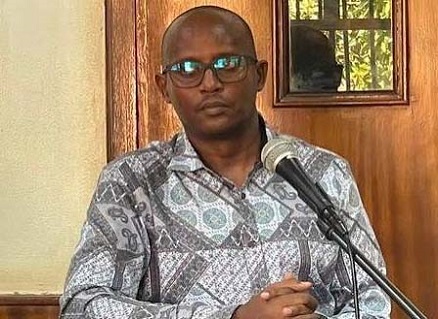
Michael Mpeirwe Katungi
HABARI DAILY I Kampala, Uganda I Uganda’s justice system has coughed him out, meaning that the former Uganda Peoples’ Defence Forces (UPDF) officer and diplomat Michael Mpeirwe Katungi is now on the verge of being handed over to the United States to face trial over allegations linking him to an international cocaine-trafficking and arms-supply conspiracy.
Justice and Constitutional Affairs Minister Norbert Mao’s decision to sign the surrender warrant on September 1 represents the final major executive step in Uganda’s extradition process. It means that, unless there are further lawful interventions, Katungi will leave Uganda and enter the jurisdiction of the US courts, where prosecutors accuse him of conspiring to traffic cocaine, supply firearms and provide material support to a Mexican drug cartel.
Mao directed the Commissioner General of Prisons to release Katungi to representatives authorised by the US government to receive and transport him to Virginia.
“Michael Katungi Mpeirwe, presently in lawful custody in Uganda, shall be surrendered to the Government of the United States of America,” Mao said.
The minister added that Katungi would be conveyed to the US “to stand trial in respect of the specific offences for which his extradition was requested and authorised.”
End of Uganda’s extradition process
The decision effectively closes the Ugandan judicial and executive stages of a case that has placed the country’s extradition laws under considerable scrutiny.
Mao’s order followed an August 28 decision by Buganda Road Chief Magistrate Ritah Neumbe Kidasa, who found that the legal requirements for Katungi’s extradition had been met and committed him to custody pending the ministerial decision.
The court rejected objections by Katungi’s lawyers, including arguments that the proceedings were improperly instituted, that the Director of Public Prosecutions lacked authority and that Katungi was entitled to diplomatic immunity because of his previous service.
Mao subsequently exercised the executive authority provided under Uganda’s Extradition Act.
He ordered Ugandan authorities to facilitate the transfer and directed police, prisons and other government agencies to support the handover. The warrant was copied to the Inspector General of Police, the DPP, Ministry of Foreign Affairs and the US Embassy in Kampala.
The precise date of Katungi’s transfer, however, has not been disclosed.
A major test of sovereignty
Beyond the legal process, the extradition has political implications for Uganda’s sovereignty and foreign relations.
Katungi’s case comes against a background of increasingly nationalist political rhetoric, particularly among sections of the ruling establishment and figures associated with the Patriotic League of Uganda (PLU).
Critics may therefore view the decision as presenting an uncomfortable contradiction: while government-linked voices frequently emphasise Uganda’s sovereignty and resistance to foreign influence, the state is now preparing to surrender a former Ugandan military officer and diplomat to face prosecution under the criminal jurisdiction of a foreign power.
The issue is not necessarily whether Katungi should face trial, but who should have jurisdiction to determine his guilt or innocence.
By approving the extradition, Kampala has effectively accepted that the United States is the appropriate forum for resolving the allegations contained in its indictment.
The question of reciprocity
The decision could also revive questions about reciprocity in Uganda’s extradition arrangements.
Political actors and observers have previously questioned whether the relationship between powerful Western states and developing countries produces an equal exchange when extradition requests are made.
The argument is straightforward: Uganda has demonstrated its willingness to surrender a Ugandan national to the US justice system, but powerful countries such as the United States have historically been reluctant to surrender their own citizens to jurisdictions in developing countries.
That concern could fuel debate over whether extradition agreements operate on genuinely equal terms or whether weaker states bear greater obligations in international criminal cooperation.
Fighting global crime
Legally, however, the Katungi extradition reinforces Uganda’s participation in international efforts against transnational organised crime.
Mao said the US request, transmitted through diplomatic channels in a formal note dated December 23, 2025, was considered under Uganda’s Extradition Act and the 1988 United Nations Convention against Illicit Traffic in Narcotic Drugs and Psychotropic Substances.
Katungi faces three conspiracy charges before the US District Court for the Eastern District of Virginia, Alexandria Division.
US prosecutors allege that he worked with Bulgarian national Peter Dimitrov Mirchev, Kenyan national Elisha Odhiambo Asumo and Tanzanian national Subiro Osmund Mwapinga in a scheme involving at least five kilogrammes of cocaine and military-grade weapons.
The alleged weapons included machine guns, rocket launchers, grenades, sniper rifles, anti-personnel mines and anti-aircraft systems.
Prosecutors further allege that the group used a Tanzanian end-user certificate to disguise the intended destination of a shipment of 50 AK-47 rifles, ammunition and magazines exported from Bulgaria.
They also allege that a larger weapons deal worth about €53.7 million, approximately $58 million or Shs216 billion, was contemplated.
The intended arsenal allegedly included surface-to-air missiles, anti-aircraft drones and ZU-23 anti-aircraft systems.
The alleged recipient, Cartel de Jalisco Nueva Generación (CJNG), is one of Mexico’s most powerful drug-trafficking organisations and was designated by the US as a foreign terrorist organisation in February 2025.
From Ugandan custody to US court
Katungi, a former African Union policy adviser and former deputy head of Uganda’s diplomatic mission in Nigeria, has been in Ugandan custody since his arrest in Kampala on June 27.
His extradition does not amount to a finding of guilt.
He remains presumed innocent unless and until the US prosecution proves the allegations against him in court.
But Mao’s signature has fundamentally changed his legal position. Uganda is no longer deciding whether he should be extradited; the executive has authorised the surrender.
If convicted in the United States, Katungi could face between 10 years and life imprisonment.
About the Author