
Museveni Defends Vitol Oil Deal As He Pens Birthday Message To Grandchildren
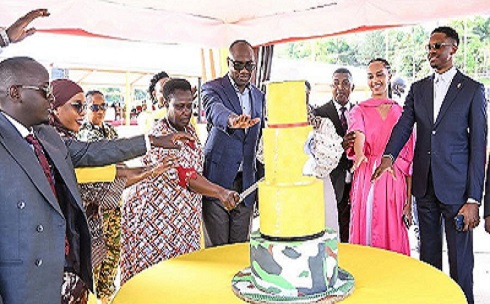
Cake cutting to celebrate Museveni’s 82nd birthday at Kololo last week
HABARI DAILY I Kampala, Uganda I President Yoweri Museveni has defended Uganda’s controversial shift to buying petroleum products through global energy trader Vitol, saying the arrangement helped the country eliminate costly middlemen in Kenya and secure cheaper fuel supplies.
Museveni made the defence in a birthday message to Ugandans, particularly his “Bazzukulu” or grandchildren, following his 82nd birthday on September 15, 2026.
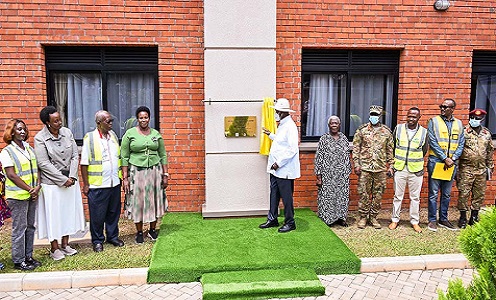
The President said he was responding to what he described as a misleading portrayal by sections of the Kenyan media of remarks he made while commissioning the foundation stone for a 320-million-litre oil storage centre at Buyala.
Museveni said Uganda had for years been purchasing petroleum products through middlemen in Kenya without his knowledge, a situation he said he only discovered around 2019 after being informed by former Kenyan Senator Jirongo.
“I did not know that these wonderful People were buying those products through middle-men in Kenya by tendering to those middlemen,” Museveni said.
He said he subsequently instructed then Energy Minister Irene Muloni to address what he described as the problem, but claimed that no significant change occurred until 2023.
Museveni says Vitol lowered prices
According to Museveni, Uganda eventually entered into an arrangement with Vitol, a global energy company with refineries and bulk-supply operations in different parts of the world.
He said the initial agreement, signed on August 18, 2023, resulted in substantial reductions in the prices Uganda paid per metric tonne for petroleum products.
For diesel, Museveni said the old price was US$118, compared with US$83 under the new arrangement.
The price of petrol, he said, fell from US$97.50 to US$61.50, while aviation fuel declined from US$114.25 to US$79.25.
Museveni presented the figures as evidence of the financial benefits of changing the procurement arrangement and moving away from the previous system involving intermediaries.
His comments come amid continued debate over Uganda’s petroleum supply chain and the country’s reliance on infrastructure in neighbouring Kenya to import fuel.
Credits Ruto for Kenya agreement
Museveni also praised Kenyan President William Ruto for supporting the new arrangement, saying Ruto “prevailed over some actors in Kenya who were trying to resist.”
The President said Kenya subsequently allowed Uganda to pump its petroleum products through the Kenya oil pipeline, with Uganda acquiring a 20.15 per cent shareholding in the pipeline.
“We are very happy with the Kenya Government of President Ruto on this matter,” Museveni said.
His defence of the arrangement was framed within a broader argument about the way Uganda has been governed and the need to examine how public institutions manage strategic economic sectors.
Museveni recalled the period of the struggle against former President Idi Amin, saying the opposition at the time accused Amin of placing people without formal education in charge of running government affairs.
After Amin’s overthrow, Museveni said, civil servants were restored to positions of responsibility.
However, he said the government later discovered that some senior civil servants, including permanent secretaries and commissioners, were themselves responsible for decisions that harmed the country’s interests.
The petroleum procurement system, he said, was one example.
Birthday message turns to Africa
Beyond the oil issue, Museveni used his birthday message to outline what he described as three historical missions that Africans must accomplish to secure future prosperity and strategic security.
The first is economic prosperity through integration of the African common market, which he said would enable wealth creators to expand.
The second is strategic security through political integration, including initiatives such as the proposed East African Federation.
The third is the use of what he called “undugu” — brotherhood — among Africa’s four broad linguistic groupings, which he identified as Niger-Congo, Nilo-Saharan, Afro-Asiatic and Khoisan.
Museveni said accomplishing these missions would guarantee prosperity and strategic security for Africans.
He also thanked what he said were eight million well-wishers who congratulated him on his 82nd birthday.
The President said the well-wishes and God’s blessings would help him and his wife, Janet Museveni, continue for another 18 years, with the goal of reaching 100 years while she reaches 96.
About the Author