
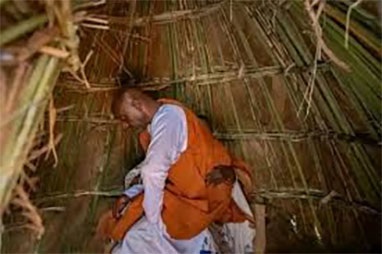
King Edward Rukidi Nyabongo I, the king-designate of Tooro, sits on his mother’s lap during the traditional initiation ceremony into the Tooro throne
In a highly orchestrated sacred mission, the new Tooro King, Edward Rukiidi Nyabongo I, performed the ancient ritual required to symbolically bury his predecessor, the late Omukama King Oyo Nyimba Kabamba Iguru Rukidi IV, at the Karambi Royal Tombs in Fort Portal.
The ritual, performed before thousands of mourners, marked the traditional conclusion of Oyo’s burial and simultaneously affirmed Nyabongo’s succession to the Tooro throne.
The coffee bean ritual
According to Tooro tradition, the burial of a reigning Omukama is not considered complete until the heir performs a symbolic burial rite.
At Karambi, Nyabongo performed the ritual by dropping nine coffee beans into Oyo’s grave.
The act carried deep cultural significance, symbolising the heir taking responsibility for completing the burial of the deceased king while beginning his own journey as the new Omukama.
The ritual had initially been the subject of an agreement reached during negotiations surrounding Oyo’s burial. An earlier memorandum of understanding had reportedly provided that Nyabongo would not perform the coffee-bean ritual until the succession dispute had been resolved.
However, during the burial ceremony, Charles Kamurasi, head of the Babiito royal clan and a central figure in the succession discussions, directed that the burial proceed according to Tooro customs.
Nyabongo therefore dropped the nine coffee beans into Oyo’s grave, completing the traditional requirement.
Drums announce royal arrival
The ceremony began with the arrival of Oyo’s casket at the royal burial grounds, an event announced by the thunderous sound of Bahemukiira Ataafe, the giant royal drum.
The silver-coated, king-size casket, draped in Tooro Kingdom’s blue and yellow colours and bearing the kingdom’s coat of arms, was taken through ekibira, a small traditional shed.
There, the omusuna, the leader of the funeral procession, formally announced the arrival of the casket.
Nyabongo, who had been driven to the burial grounds in a black Land Cruiser and was heavily guarded by military personnel, was accompanied during the rites by Kamurasi, senior Babiito elders and members of the royal family.
Before the casket was lowered into the tomb, additional traditional ceremonies were conducted around the burial site.
A retreat signal was sounded, after which a virgin bull was slaughtered. The ritual was intended to ensure that the king’s burial did not bring bad omen upon his subjects.
The casket was then covered with a new barkcloth before being lowered into the royal tomb.
Blessings for the new king
The traditional ceremony was also used to bless Nyabongo as he assumed his new role.
One of the rites involved the new king sitting on the lap of an elderly woman who traditionally attends to the royal tombs. The act was performed as a sign of blessing.
Nyabongo was also introduced to religious leaders who offered further blessings before he was escorted away from the burial grounds.
One of the most important instructions in the ceremony was that the new king should not look back at the tomb after performing the symbolic burial.
According to Tooro tradition, looking back at the deceased king’s tomb after completing the rite is believed to invite bad omen.
The royal drums were sounded again as Nyabongo was led away, bringing the traditional ceremony to a close.
End of one reign, beginning of another
The ceremony came after a contested succession process that followed Oyo’s death and eventually resulted in the proclamation of Nyabongo as the new Omukama after consultations involving members of the royal family and the Babiito clan.
Queen Mother Best Kemigisa, who had attempted to attend the burial, was reportedly blocked by security forces, adding another layer of controversy to an already sensitive transition.
Oyo died in the United States aged 34 after reigning over Tooro for more than three decades. He ascended the throne in September 1995 at the age of three following the death of his father, Omukama Patrick Matthew Kaboyo Olimi III.
His remains were laid to rest at Karambi alongside earlier Tooro kings, including his grandfather Daudi Kyebambe and father George Olimi.
His burial therefore represented more than the laying to rest of a deceased monarch. Through the coffee beans, the royal drums, the bull sacrifice, blessings and the final departure without looking back, Tooro’s ancient traditions formally connected the end of Oyo’s reign with the beginning of Edward Rukiidi Nyabongo I’s reign.