

“Do Not Squander Our Dollars”: Museveni Orders BoU to Resist Shilling Defence
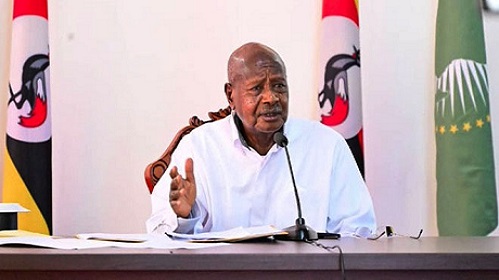
President Museveni
HABARI DAILY I Kampala, Uganda I President Yoweri Museveni has ordered Bank of Uganda, rejecting a proposal by Governor Michael Atingi-Ego to sell the country’s foreign exchange reserves to prop up the weakening shilling, which has depreciated by more than 11 per cent against the US dollar this year.
Museveni insists that the depreciation is temporary and could benefit Ugandan exporters by increasing the amount of local currency they receive when converting their dollar earnings, even as importers face higher costs for goods purchased from abroad.
Addressing the country during Uganda’s Independence Day celebrations at State House Entebbe, the President said Uganda should preserve its foreign exchange reserves rather than spend them defending the shilling against market forces.
“The governor was suggesting that he spends our dollar reserves to bring the dollar price down and I don’t agree with it. It is not correct to squander our dollars,” Museveni said.
Commercial banks quoted the shilling at approximately Shs4,090 buying and Shs4,100 selling per dollar on October 8, compared with Shs3,960 and Shs3,970 a week earlier, reflecting mounting pressure on the local currency.
Exporters stand to benefit
Museveni argued that the shilling’s depreciation should not automatically be treated as an economic disaster, particularly for businesses earning foreign currency through exports.
When the dollar appreciates against the shilling, exporters receive more local currency for the same amount of foreign exchange earned from selling their products abroad.
“When I sell my coffee for the same two dollars when the price of the dollar is 3,700, I get less shillings; when it is more I get more. So the exporters will get more shillings,” he said.
The President believes that the country should use the situation to strengthen domestic production, increase exports and reduce dependence on imported goods.
However, the benefits depend on exporters’ ability to maintain foreign sales and manage the rising cost of imported inputs, transport and other business expenses.
Museveni acknowledged that importers face the opposite effect because they must spend more shillings to obtain dollars to pay foreign suppliers.
The depreciation therefore threatens to increase the domestic prices of imported commodities, fuel, machinery and other goods, potentially adding to inflationary pressures.
Gulf conflict adds pressure
The President attributed the weakening shilling partly to international developments, particularly conflicts in the Gulf that have pushed up fuel prices and increased Uganda’s import bill.
“Have you not been hearing about the wars in the Gulf? How are people surprised about the high cost of fuel?” he asked.
Museveni said Uganda had initially been shielded from some of the effects through a fuel supply arrangement with Vitol, which had agreed to provide fuel at relatively favourable prices for several months following changes in the country’s procurement system.
“Vitol guaranteed to give us cheap fuel for some months thinking that the situation would settle down. But the situation has not settled down,” he said.
He added that the company could not reasonably be expected to continue absorbing losses while international fuel prices remained elevated.
Higher fuel prices increase demand for foreign currency because Uganda imports much of its petroleum, placing additional pressure on the exchange rate.
Museveni also cited weaker prices for some export commodities, particularly coffee, as a factor reducing the country’s dollar earnings.
“I hear that coffee in Brazil has done better and therefore the price of our coffee has gone down a bit, which means that it is bringing in less dollars than it was,” he said.
He further blamed reduced tourism receipts, declining foreign investment and portfolio investors moving their money to markets offering higher returns.
“Those portfolio investors are quite opportunistic. They go where money is highest,” he said.
Preserve reserves, reduce imports
Museveni said Uganda should preserve its foreign exchange reserves, which he put at approximately $6 billion, rather than use them to satisfy demand for imports he considers unnecessary.
“It is not correct to sell them to people who want to import perfumes and dead people’s hair,” he said.
“Please minimise the imports. This is the answer. Import less, and buy more local goods.”
He also called for greater value addition to Ugandan exports so the country can earn more from processed products instead of relying heavily on raw commodities.
The President suggested increasing taxes on selected imported products, including garments and clothes, to discourage foreign exchange outflows and support domestic manufacturers.
The proposals reflect his broader economic argument that Uganda should expand local production and reduce its vulnerability to external shocks.
BoU maintains market-based approach
Bank of Uganda has also attributed the depreciation to a stronger US dollar, changing global interest rates, capital outflows, weaker export prices, higher oil and shipping costs, and strong domestic demand for foreign currency.
Demand from importers, energy companies and telecommunications firms is expected to continue influencing the exchange rate.
The central bank has responded by tightening shilling liquidity, raising the cash reserve requirement to 13.5 per cent effective September 24 while maintaining the Central Bank Rate at 9.75 per cent.
Its stated policy is not to defend a particular exchange-rate level but to limit excessive volatility and maintain orderly trading.
Museveni’s rejection of reserve intervention reinforces the government’s preference for addressing the underlying imbalance between dollar supply and demand rather than attempting to hold the exchange rate at an artificial level.
Nevertheless, the strategy carries risks. While exporters may receive more shillings for their earnings, importers and consumers could face higher costs, particularly if fuel and other essential imports become more expensive.
About the Author