

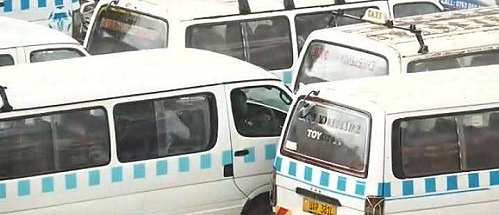
HABARI DAILY I Kampala, Uganda I More than 400 commuter taxis have failed roadworthiness tests during a Government crackdown on vehicles operating in dangerous mechanical condition, raising fresh concerns about passenger safety and the risks posed by defective vehicles on Uganda’s roads.
The Ministry of Works and Transport, working with the Uganda Police Force, said 423 out of 531 taxis inspected at Namanve and Kawanda vehicle inspection centres had failed the tests as of October 15, 2026.
The figure represents 79.7 per cent of all the taxis examined, while only 108 vehicles, equivalent to 20.3 per cent, passed the mandatory inspection.
The results highlight the scale of mechanical defects among commuter taxis, commonly known as Drone or Ganyegenya, and the importance of enforcing road safety regulations to protect passengers and other road users.
In a press release issued on October 16, the ministry said the vehicles that failed inspection had critical defects, including faulty brakes, defective steering systems, worn-out tyres, failed suspension and defective lighting systems.
“These defects make the vehicles unsafe to carry passengers,” the ministry said, explaining the need for enforcement against taxis declared to be in dangerous mechanical condition.
Unroadworthy taxis targeted
As part of the crackdown, the ministry and police conducted a night operation in which several commuter taxis were impounded for continuing to operate after being declared unroadworthy.
The operation specifically targeted taxis operating during night hours despite having failed inspection, when poor lighting and defective braking systems can heighten the risk of crashes.
The impoundment of the vehicles marks a shift from identifying mechanical defects to taking enforcement action against operators who continue carrying passengers in unsafe vehicles.
The ministry did not provide the exact number of taxis impounded during the latest operation. However, the inspection results show that hundreds of vehicles examined at the two centres did not meet the required safety standards.
The exercise is intended to ensure that public transport vehicles are mechanically fit before they are allowed to carry passengers, particularly given the consequences of brake failure, steering defects and worn-out tyres in busy urban traffic.
The ministry and police are working jointly on the enforcement operations, combining technical inspections with action against drivers and owners who disregard safety requirements.
Dump trucks face enforcement
Alongside the taxi crackdown, Government has been enforcing a separate mandatory inspection programme targeting heavy dump trucks, including Sinotruk vehicles, following rising road crashes involving the trucks and resulting loss of life.
The 60-day inspection window was announced on August 17, 2026, and expired on October 16.
By October 15, a total of 492 dump trucks had been inspected. Of these, 390, representing 79.3 per cent, passed, while 102, or 20.7 per cent, failed the inspection.
The ministry said the inspections assess braking efficiency, steering, tyres, emissions, suspension, lighting systems, structural integrity and other safety-critical components.
It directed that dump trucks without valid inspection certificates would not be allowed to operate on public roads after the deadline.
“Joint enforcement operations with Uganda Police will commence immediately and defaulters risk impoundment,” the ministry said.
Inspections of dump trucks are continuing within the Kampala Metropolitan Area, with the programme expected to be extended to other parts of the country. Owners and operators who have not complied have been urged to present their vehicles at Namanve and Kawanda.
Road safety enforcement
The two operations underline Government’s effort to address mechanical defects before they contribute to crashes, injuries and deaths.
The high failure rate among inspected taxis is particularly significant because commuter vehicles transport large numbers of passengers daily, often through congested urban roads where sudden braking, tyre failure or steering problems can endanger several people at once.
The inspection figures also point to the need for vehicle owners to maintain their fleets and address defects rather than continue operating vehicles that have failed safety tests.
While the ministry’s latest statement did not give an overall figure for vehicles removed from service or the total number of taxi inspections planned, it confirmed that enforcement against dangerous mechanical conditions is continuing in partnership with police.
For taxi and truck operators, the message is clear: vehicles must meet the required roadworthiness standards, and those that fail inspection risk being kept off public roads.
Government is urging operators to comply with inspection requirements as the crackdown seeks to improve vehicle safety and reduce preventable road crashes.







About the Author