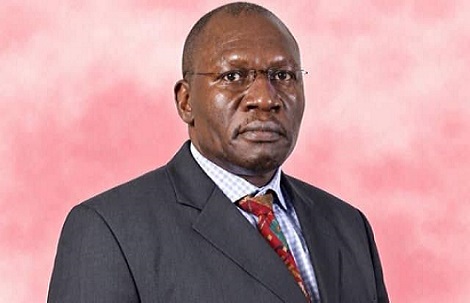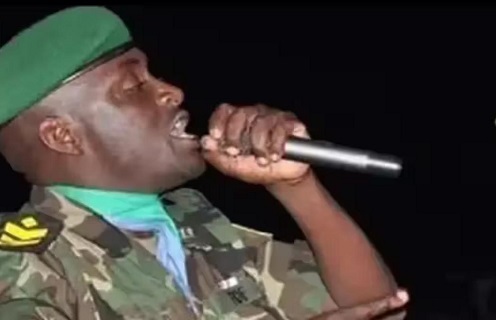
The late Sergeant Major Robert Kabera
HABARI DAILY I Kampala, Uganda I The Uganda Police is still looking for answers following the gruesome murder of Rwandan dissident Sergeant Major Robert Kabera, whose headless body was discovered in Luwala village, Kamengo Sub-county, Mpigi District, in circumstances that have left his family and the wider Rwandan exile community demanding justice.
Kabera, about 50, was identified by relatives, although police spokesperson Kituuma Rusoke said investigators would conduct scientific tests to establish his identity conclusively.
“Up to now the head has not been recovered. We recovered the body without the head. The killers went with the head,” Rusoke said.
The remains were transferred to Mulago City Mortuary for examination as detectives began investigating the killing and searching for evidence that could lead to the perpetrators.
Police received the report on Saturday, October 17, 2026, but investigators believe the murder may have occurred the previous day or during the morning of October 17.
“We are investigating that murder and any other details that are relevant either to the murder or other circumstances surrounding his life,” police said.
The motive remains unknown, and authorities have not established whether the killing was connected to Kabera’s political history, his exile or threats he had previously reported.
Search ends at gruesome scene
According to family accounts, Kabera arrived from Kampala at about 7pm on Friday, October 16, accompanied by his regular boda boda rider, identified as Innocent.
After greeting his brother, Victor Agaba, Kabera reportedly left for a nearby bar in Luwala trading centre.
A family member said Kabera returned home at about 11.30pm to collect his phone before leaving again. However, a bar attendant reportedly told Agaba that his brother had last been seen at the establishment at around 9.30pm, leaving some uncertainty about his final movements.
When Agaba failed to see him the following morning, he went looking for him. He checked the house with Kabera’s son but found it closed before making inquiries at the bar.
Agaba initially suspected his brother might have spent the night at a lodge and proceeded to his gardens.
At about 2pm, however, the village defence secretary reportedly informed him that an unidentified body had been discovered without a head.
Agaba rushed to the scene, where he identified his brother using a scar on the body’s right thumb and shoes found nearby.
An eyewitness described the scene as disturbing, with the body lying in a pool of blood and flies hovering over it.
Police reportedly recovered a large stick suspected to have been used in the attack, two beer bottles—one empty and another partly filled—and the deceased’s shoes. The evidence is expected to assist investigators in reconstructing what happened before the killing.
Previous threats raises questions
Kabera’s murder has renewed attention to his earlier reports of threats and concerns about his security while living in Uganda.
In a letter dated October 23, 2023, Sserwanga Village LC1 in Lubaga Division reportedly informed Old Kampala Police Station that three men had attacked Kabera along Rubaga Road.
According to the letter, the attackers fled in a black vehicle without number plates after Kabera shouted for help. Before leaving, they allegedly warned him: “Even if you run to America, we will find you and kill you.”
The local council asked police to investigate and assist Kabera, saying he feared for his life. The document reportedly bears a receipt stamp from the police station dated October 23, 2023, but it remains unclear what action followed the complaint.
Kabera had also reportedly raised security concerns in 2021, prompting local leaders to appeal to refugee protection authorities for assistance.
Human Rights Watch documented his concerns in an October 2023 report on Rwanda’s treatment of critics abroad. The organisation said Ugandan police had confirmed that Kabera received asylum on grounds of political persecution and additional police protection. It also recorded his allegations of an assault and threats in Uganda in 2022.
However, investigators have not announced any link between these earlier incidents and his murder.
From military instructor to exile
Before fleeing Rwanda, Kabera combined a career in the military with a reputation as a musician. Popularly known as “Sergeant Robert”, he served in the Rwanda Defence Force and performed with its military band.
A profile published by Rwanda’s The New Times in 2009 described him as a widely recognised musician whose breakthrough came with the 1997 song Wezo Tunao. He also performed as a soloist with the Army Jazz Band and took part in national Liberation Day commemorations.
Kabera fled to Uganda on November 19, 2020, saying he feared persecution and threats to his life. In an interview with the Ugandan media after his arrival, he linked his difficulties partly to his relationship with the family of Fred Rwigema, the first commander of the Rwandan Patriotic Front, whom he described as his uncle.
Rwandan military prosecutors had announced an investigation into an alleged defilement offence in November 2020. Kabera denied the accusation, describing it as politically motivated, and maintained that he had already left Rwanda before the alleged offence occurred. The final outcome of that investigation could not be established from the available information.
In May 2022, Ugandan security personnel reportedly arrested him at his Masanafu home in Kampala over allegations involving gun smuggling and unlawful possession of firearms. A media report at the time said his lawyer maintained that a search had not found guns.
Calls for justice
Following his death, the opposition Rwanda National Congress called for justice and stronger protection for Rwandan exiles living in Uganda, while clarifying that Kabera was not a member of the organisation.
Police have not identified any suspects or established a motive for the killing.
Investigators now face the task of determining Kabera’s final movements, locating his missing head, analysing the recovered evidence and establishing who was responsible.







About the Author