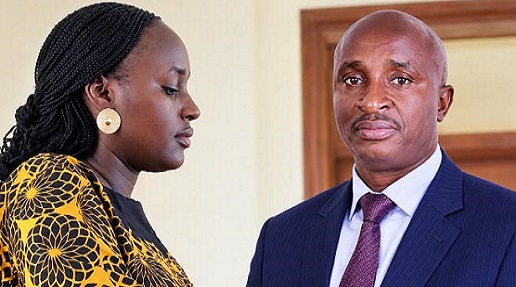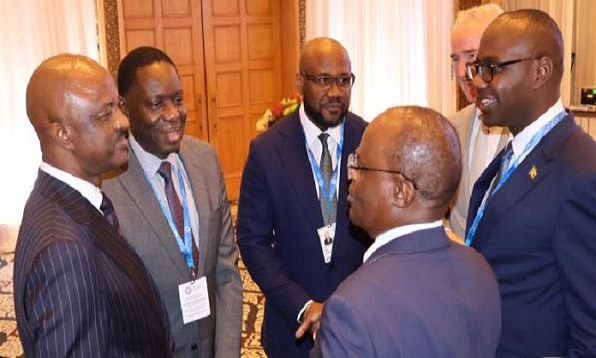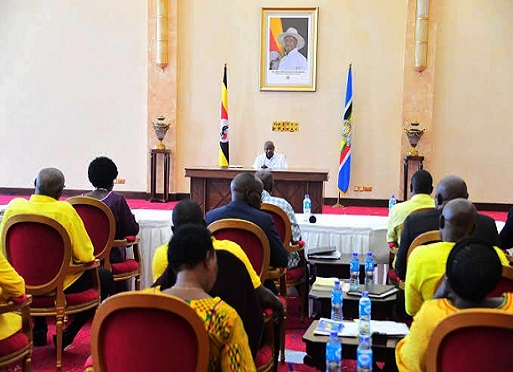
The CEC meeting which took place at State House Entebbe on Tuesday, October 27, 2026
HABARI DAILY I Kampala, Uganda I The question that has been outstanding for over three decades was answered in one sentence, according to accounts emerging from the National Resistance Movement’s (NRM) Central Executive Committee meeting at State House Entebbe on Tuesday, October 27, 2026: President Yoweri Museveni wants his son, Gen Muhoozi Kainerugaba, to succeed him.
The reported proposal marks a significant development in Uganda’s long-running succession debate, which has intensified as supporters of Gen Muhoozi, the Chief of Defence Forces (CDF), increasingly position him for the 2031 presidential election.
Museveni reportedly presented a discussion paper outlining the qualities he considers essential for Uganda’s next leader and made the case for Muhoozi’s credentials before members of the ruling party’s top decision-making organ.
Kasambya County MP Daudi Kabanda, who serves as executive secretary in the Office of the National Chairman of the Patriotic League of Uganda (PLU), subsequently announced on X that Museveni had endorsed his son during the meeting.
However, while several media reports described the development as a presidential endorsement, the exact nature of Museveni’s proposal and whether the CEC adopted a formal resolution remained unclear. The President and the NRM Secretariat had not publicly confirmed a binding decision by the time the reports emerged.
Museveni Outlines Qualities of His Successor
According to accounts of the closed-door meeting, Museveni presented succession as a question of leadership preparation rather than simply identifying someone to occupy State House after his departure.
His discussion paper reportedly emphasised patriotism, Pan-Africanism, military strength, discipline and commitment to national development as essential attributes of a future president.
The President is also reported to have stressed that countries often encounter difficulties during leadership transitions because they fail to adequately test prospective leaders before handing over power.
He reportedly argued that Uganda’s next leader should demonstrate the ability to defend national interests, maintain stability and advance the country’s economic transformation.
Gen Muhoozi’s supporters have pointed to his military career, his stated opposition to corruption and his ideological alignment with the President’s political outlook as reasons he should be considered for the position.
The reported presentation of his credentials at the CEC meeting therefore took the discussion beyond the public mobilisation that has surrounded his possible presidential bid and placed the matter before the NRM’s senior leadership.
Nevertheless, the meeting did not publicly establish a final succession arrangement, and further deliberations would be necessary to determine whether the party would formally adopt the proposal.
CEC Members Divided Over Muhoozi
The reported proposal received support from several senior NRM figures, although accounts of the meeting suggest that not all participants were equally enthusiastic.
Among those reported to have backed Muhoozi was Haruna Kasolo, the NRM vice-chairperson for Buganda and State Minister for Regional Cooperation. Dr Tanga Odoi, the party’s Electoral Commission chairman, was also reported to have supported the President’s position.
Their reported backing gives Muhoozi’s supporters a stronger platform within the ruling party as they seek to consolidate support ahead of the next general election.
However, Hadijah Namyalo, head of the NRM Chairperson’s Office, reportedly raised concerns about her personal security after her security detail was withdrawn. Museveni is reported to have dismissed the complaint as a minor administrative matter that could be handled separately.
Former Speaker of Parliament Anita Among, who serves as the NRM’s second national vice-chairperson for women, was reportedly present but did not contribute to the succession discussion.
The reported exchanges illustrate the sensitivities surrounding a question that touches on the interests of senior party officials, the future of the ruling organisation and the political ambitions of Muhoozi’s supporters.
It remains unclear whether the reported support translated into a collective CEC position or whether members were expected to study the President’s paper before reaching a conclusion.
M7 Signals Importance of Party Consensus
Museveni reportedly told members that the aspirations of the majority within the party would ultimately prevail, suggesting that the succession question would require consideration of internal opinion rather than an immediate unilateral decision.
He is also reported to have indicated that he would not seek another term beyond his current mandate, although no separate, detailed public announcement confirming the reported position had emerged from the meeting.
The President has led Uganda since 1986, making the question of what happens after his departure a central issue for the NRM’s long-term political future.
A succession plan could help the party prepare for a transition, maintain internal cohesion and avoid uncertainty over leadership. However, identifying a preferred candidate is different from establishing a formal party nomination or securing election as president.
Political analyst Rogers Barigayomwe has argued that the NRM needs a structured transition process to prevent a leadership vacuum and preserve continuity. He has also pointed to tensions between the NRM and the PLU as a source of uncertainty within the ruling establishment.
For Muhoozi, the reported proposal could strengthen his standing among party leaders, but his eventual candidacy would still depend on the applicable political and electoral processes.
PLU’s Relationship With NRM Comes Under Scrutiny
Another important issue reportedly addressed at the meeting was the status of the Patriotic League of Uganda, the mobilisation organisation associated with Muhoozi’s political ambitions.
Museveni reportedly clarified that the PLU operates as a civic organisation rather than an independent political party.
The distinction matters because Muhoozi’s supporters have conducted mobilisation campaigns and collected endorsements in preparation for his anticipated 2031 presidential bid, raising questions about how the organisation relates to the NRM.
Some party members have reportedly expressed concern that the PLU could compete with or weaken the ruling party if the two structures pursue overlapping political agendas.
The reported discussions suggest that Museveni wants the succession question and the relationship between the two organisations handled within a framework that preserves the NRM’s position.
The CEC’s eventual approach to the PLU could therefore influence how Muhoozi’s supporters organise politically and how his ambitions are accommodated within the ruling party.
Economy, Security and Party Headquarters Discussed
Succession was not the only issue on the meeting’s reported agenda. The CEC also considered the economy, national security, regional integration, grassroots party structures and the proposed NRM headquarters.
On the economy, members reportedly discussed the stability of the Ugandan shilling and broader economic oversight. Museveni was said to have scheduled a follow-up meeting with Bank of Uganda technocrats to examine the issues raised.
The committee also reviewed proposals to provide NRM district chairpersons with transport to improve their ability to monitor government programmes, including the Parish Development Model.
The initiative is intended to strengthen the party’s presence at the grassroots and improve supervision of government interventions intended to support household incomes and enterprise development.
National security and regional integration were also discussed, including efforts to maintain stability around Uganda’s borders and strengthen cooperation within the East African Community.
Members further received updates on financing and construction of the proposed NRM national headquarters, part of the party’s broader institutional development plans.
These discussions indicate that the meeting addressed both the party’s immediate organisational priorities and its longer-term leadership questions.
Formal Decision Remains Unclear
Despite reports describing the meeting as a turning point in Uganda’s succession debate, public accounts remained contested.
Kabanda celebrated what he described as Museveni’s endorsement of Muhoozi, while some official party voices played down the suggestion that succession had been conclusively settled.
Local media reported that NRM Secretary General Richard Todwong was contacted for comment and said he would respond after consulting the CEC. The report also indicated that the committee’s final position had not been independently established.







About the Author