Dr Barbara Ofwono
HABARI DAILY I Kampala, Uganda I She was born a dreamer, but the journey to building an education empire was far from straightforward for Dr Barbara Ofwono. From abandoning her childhood ambition of becoming a lawyer to overcoming financial setbacks, including a rejected bank loan, she has navigated numerous challenges to build Victorious Education Services Limited, a network of schools now serving more than 4,000 pupils and employing over 500 people.
Today, Ofwono is the founder of five Victorious Schools campuses and an online school, making six institutions under the education business. Yet, surprisingly, teaching was not initially part of her career ambitions.
Her father had recognised what she had not: that she had the qualities of a teacher. While she was still in Senior Six, he encouraged her to pursue the profession, but she was determined to study law.
“When I was in my S.6, my father encouraged me to become a teacher, but I declined because I wanted to pursue law,” she recalls.
So determined was she to secure admission to study law that she repeated Senior Six in an attempt to improve her grades. However, she obtained the same results, forcing her to reconsider her options.
What initially appeared to be a setback eventually became the beginning of a career that would transform her life and the lives of thousands of children.
Her attitude towards teaching changed dramatically during school practice. Having initially approached the profession reluctantly, she discovered that she enjoyed being in the classroom so much that she did not want the experience to end.
“The first time I went for school practice, I didn’t want to stop teaching. I wanted to teach and teach. I used to ask other teachers to give me an opportunity to take up their lessons. I fell in love with the profession,” she says.
Although she trained to teach at secondary school level, her passion increasingly shifted towards younger children. She particularly enjoyed teaching Sunday School to children aged between three and five years, an experience that helped her understand the needs of early childhood learners.
A childhood experience that shaped her vision
Ofwono’s desire to establish a school was also influenced by her own childhood experiences.
She recalls having a difficult time during her primary school boarding years, when separation from her parents left her emotionally distressed.
“I was always emotional while going back to school. I would miss my parents so much that whenever I would go back to school, I would cry,” she recounts.
The experience made her sensitive to the emotional and developmental needs of children, particularly those who spend long periods away from their families.
Her outlook was later transformed when she joined Namasagali College, an institution she credits with shaping her understanding of education as more than academic instruction.
The school emphasised the development of a wholesome person capable of making an impact on their life, generation and community.
“Namasagali College turned my life around. The school believed in developing a wholesome person, who could make an impact in their life, generation and community. This greatly shaped my life, future and day-to-day activities,” she says.
That philosophy would eventually become central to the identity of Victorious Schools, where education is presented as a process of developing children’s faith, character and sense of responsibility, rather than simply preparing them to pass examinations.
Inspiration behind Victorious Schools
The idea of establishing a school emerged while Ofwono was teaching Sunday School.
During a break between the second church service, she recalls experiencing what she describes as a prompting that the children she was teaching were being catered for, while many others outside the church still needed attention.
The experience planted a burden in her heart to reach more children through education.
“I had trained to teach secondary level, but Sunday School taught me how to handle young children,” she says.
The following day, she began visiting nursery schools, exploring how early childhood education was organised and identifying an opportunity to establish an institution that would give young learners a more welcoming environment.
Her motivation was partly informed by the way children were treated in some homes, social gatherings and churches during the late 1990s.
She recalls that children were often excluded from adult functions, with some families sending them outside to play whenever visitors arrived. In some churches, Sunday School lessons were conducted on verandas, under trees or in people’s homes.
She believed children deserved better facilities and an environment in which their needs were taken seriously.
In 1999, she took the bold step of opening a kindergarten with only 30 pupils and three members of staff in a three-bedroom bungalow in Old Kampala.
The institution became the foundation of what is now Victorious Schools, with the original establishment aptly named the Genesis Campus.
Overcoming the capital challenge
Building a school network from such humble beginnings required more than passion and a clear educational philosophy. Ofwono also needed money to acquire facilities, expand operations and serve an increasing number of learners.
Like many entrepreneurs starting with limited resources, she turned to commercial banks to seek financing.
Her first attempt, however, ended in disappointment. She approached a bank in Kampala seeking a loan to support the business, but her application was rejected because she did not meet some of the requirements, particularly those relating to collateral.
The rejection could have discouraged an entrepreneur whose business was still in its early stages. Instead, Ofwono sought another banking partner.
On this occasion, the bank looked beyond her immediate financial circumstances and recognised the potential of the education venture she was trying to build.
The institution agreed to partner with her, providing the financial support that helped unlock the next stage of Victorious Schools’ growth.
For Ofwono, that partnership was a defining moment in the journey, demonstrating how access to financing can help turn an entrepreneur’s vision into a functioning and expanding enterprise.
Her experience also illustrates the importance of persistence when an initial business financing application fails. Rather than abandoning the idea, she continued looking for an institution willing to understand and support her plans.
One bungalow to six campuses
The expansion of Victorious Schools did not happen overnight. Ofwono adopted a gradual approach, building on the foundation established at Old Kampala and growing the institution as opportunities emerged.
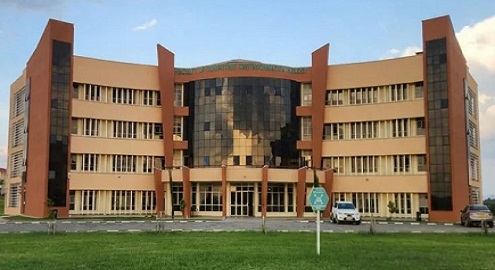
The network now includes the Anointed Campus in Ntinda, which offers daycare through primary education; the Miracle Campus in Bakuli, which provides daycare and kindergarten; and the Divine Campus in central Kampala, which focuses on primary education.
Other branches include Ebenezer Campus in Mukono, a boarding school, and Zion Campus, the online school.
Together with the original Genesis Campus, these institutions make up the five physical Victorious Schools campuses and the online school operated under Victorious Education Services Limited.
The growth is reflected in the numbers. From an initial enrolment of 30 pupils and three employees, the enterprise has expanded to more than 4,000 pupils and a workforce exceeding 500 people.
These figures demonstrate how an idea that began in a modest residential bungalow has developed into an established education business supporting hundreds of employees and thousands of learners.
For Ofwono, however, the achievement is not measured only by the number of campuses, pupils or employees.
Building character, academic achievement
She considers Victorious Schools more than a commercial enterprise because of its emphasis on developing children into responsible citizens.
The institution seeks to provide education that nurtures faith and character, producing what she describes as a wholesome package of learners equipped to contribute positively to society.
This approach reflects the influence of Namasagali College and her experiences teaching young children, both of which shaped her understanding of education as a tool for personal and community transformation.
Her business philosophy also extends beyond the classroom to financial discipline and the management of personal success.
At the 2024 Bride and Groom Expo at Lugogo Showgrounds, Ofwono advised couples to remain united in managing money, particularly as their financial circumstances improve.
“Plan together because it is not your money, but our money. You have to sit down with your husband and plan, which is why I managed to go back to school,” she told the audience.
She believes financial decisions within marriage should be made jointly rather than allowing the person who earns the money to exercise exclusive control over it.
She also maintains that business success should not make people abandon their responsibilities at home, emphasising humility and remaining grounded even when an enterprise begins generating substantial income.
Ofwono will share her entrepreneurial experience and ideas for growing businesses at the 2026 Pakasa Forum scheduled for November 21 at Enterprise Uganda.
Her journey, from a reluctant prospective teacher who once dreamed of studying law to the founder of a six-institution education network, illustrates how passion, resilience, access to financing and a clear sense of purpose can turn a modest beginning into an enterprise with a far-reaching impact.







About the Author