
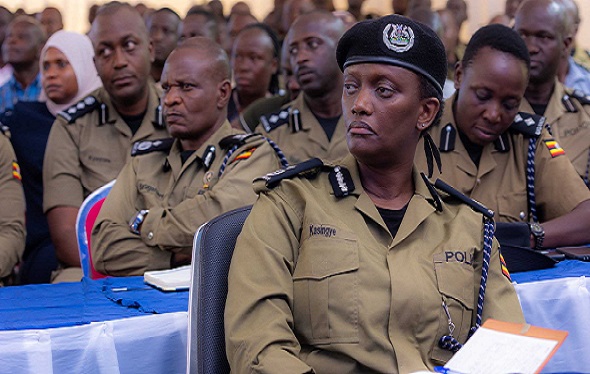
ACP Suzan Kasingye
HABARI DAILY I Kampala, Uganda I Long despised by sections of the public over allegations of brutality, excessive use of force and unprofessional conduct, the Uganda Police Force is turning to Assistant Commissioner of Police (ACP) Suzan Kasingye to help rebuild its public image through a newly established Strategic Communications Team.
The appointment signals a major shift in how the force intends to engage with the public, moving away from a largely reactive approach to communication towards proactive, coordinated and long-term public engagement.
Inspector General of Police (IGP) Abas Byakagaba announced Kasingye’s appointment on November 13, 2026, placing her in charge of the new team, deputised by Superintendent of Police (SP) Vincent Etuket.
The initiative is intended to restore public confidence, professionalise institutional messaging and ensure that the police communicate more effectively with citizens, particularly at a time when incidents involving law enforcement officers are increasingly scrutinised on social media.
Police spokesperson ACP Kituuma Rusoke said the decision was informed partly by the changing information environment, where smartphone recordings of police encounters can circulate widely before the force has an opportunity to explain what happened.
Videos showing police officers confronting suspects, dispersing demonstrations or handling members of the public frequently generate public debate, sometimes shaping perceptions of the entire institution before an official account is issued.
The new communications structure is therefore expected to ensure that police information is timely, accurate and consistent across the force’s various formations.
Rusoke explained that the institution wants to move beyond issuing statements in response to security incidents, allegations and public criticism.
Instead, it intends to regularly explain its daily operations, communicate public safety information, acknowledge institutional shortcomings and demonstrate the corrective measures being undertaken.
“We must demonstrate who we are through our conduct, our service and our communication, every day and at every station,” Rusoke said.
Another major reason behind Kasingye’s appointment is the need to separate long-term communication planning from the routine responsibilities of the police spokesperson.
Under the new arrangement, Rusoke’s office will continue handling daily operational updates, official briefings, media enquiries and responses to emerging incidents.
Kasingye’s office, on the other hand, will concentrate on developing long-term communication strategies, coordinating public engagement campaigns, strengthening internal communication skills and assessing whether police messages are reaching their intended audiences.
“The Office of the Police Spokesperson speaks for the Force today, while Strategic Communications plans how the Force communicates tomorrow,” Rusoke said.
The distinction is expected to allow the spokesperson’s office to concentrate on immediate information demands while the strategic team develops communication programmes capable of addressing deeper public perception challenges.
Kasingye’s previous experience in government communication structures is also understood to have influenced her selection.
She previously served for several years at State House before returning to the Uganda Police Force, giving her exposure to communication coordination within government and security institutions.
That experience is expected to help her coordinate messaging across different police departments and other government agencies, particularly when handling sensitive security matters requiring a unified institutional position.
Her deputy, SP Etuket, brings specialised expertise in electronic countermeasures, which is expected to strengthen the technical side of the communications function, including the protection of information infrastructure and communication systems.
However, police officials acknowledge that improving public relations will require more than sophisticated communication strategies and carefully crafted statements.
Rusoke stressed that the institution cannot restore public confidence through publicity campaigns alone, arguing that the quality of police services must match the image the force seeks to project.
“Public trust cannot rest on publicity alone; it must be earned through the quality of our service,” he said.
This presents Kasingye’s team with the challenge of ensuring that police communication reflects actual institutional improvements rather than becoming another public relations exercise.







About the Author