
Iran Wartime Crackdown: Hundreds Of US and Israeli Collaborators Feared Executed
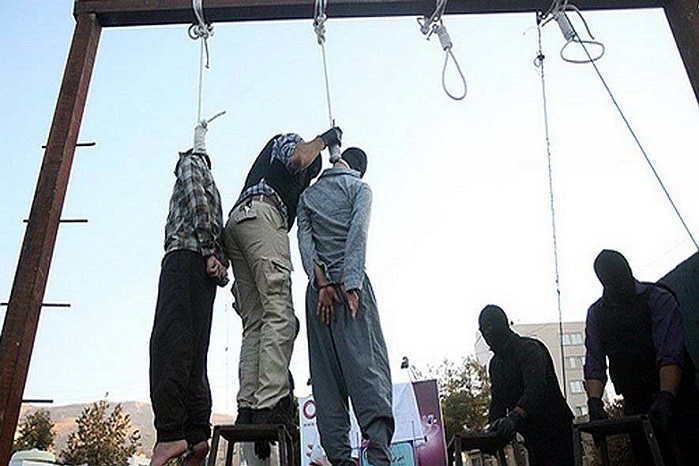
HABARI DAILY I Kampala, Uganda I Iran has sharply escalated the execution of individuals accused of collaborating with the United States and Israel since the outbreak of the Middle East war, with rights groups warning that the campaign reflects a broader effort to suppress dissent under the cover of national security.
The latest case came on Tuesday, when Iranian authorities executed Amirali Mirjafari, a man convicted of collaborating with foreign adversaries and attempting to set fire to a major mosque in Tehran. According to the judiciary’s Mizan news agency, Mirjafari was hanged after his sentence was upheld by the Supreme Court.
He had been accused of acting as “one of the armed elements collaborating with the enemy” and of leading what officials described as a Mossad-linked anti-security network during protests that erupted in late December and escalated into nationwide unrest in early January.
Authorities said Mirjafari confessed to participating in demonstrations, damaging public property and carrying out arson attacks using petrol bombs. However, human rights organisations have repeatedly raised concerns about Iran’s reliance on confessions allegedly obtained under duress.
His execution is the latest in a growing list of individuals put to death on political and security-related charges since Iran entered into open conflict with the United States and Israel on February 28.
Executions mount amid war narrative
Since the war began, at least 14 prisoners have been executed on political charges in just three weeks, according to reports from rights groups and United Nations experts. These include protesters, alleged opposition members and individuals accused of espionage or links to foreign intelligence agencies.
Seven of those executed had been arrested during the January protests and accused of setting fire to a Basij paramilitary base in eastern Tehran. Others were convicted of alleged ties to the Mujahedin-e Khalq (MEK), an exiled opposition group that Tehran considers a terrorist organisation.
One individual was executed on accusations of spying for Israel during a previous conflict.
Iran’s judiciary has defended the executions as necessary in what it describes as a “full-scale war” against foreign-backed destabilisation efforts. Judiciary chief Gholamhossein Mohseni Ejei has called for faster implementation of death sentences, including confiscation of property for those accused of aiding enemy states.
“A full-scale war is under way against us,” he said, warning that there would be no leniency for individuals labelled as collaborators or traitors.
Hundreds feared executed or at risk
While confirmed figures remain difficult to verify due to tight state control and an ongoing internet shutdown, rights groups warn that the number of executions could be far higher.
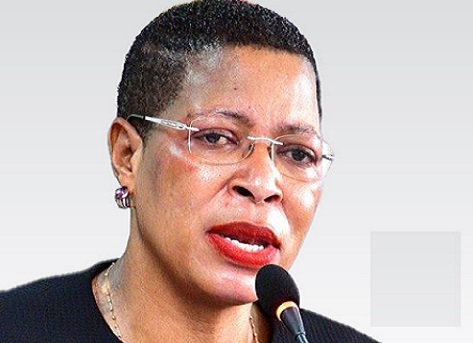
Mai Sato reported that at least 100 people were executed in January 2026 alone. Her broader findings indicate that 1,639 executions were carried out in 2025 and 975 in 2024, underscoring a steady rise in the use of capital punishment.
Opposition groups and activists now estimate that more than 300 people may have been executed so far this year, many of them accused of links to the United States or Israel.
The surge has coincided with mass arrests. Iranian state media reported around 3,000 arrests in mid-January, though human rights organisations believe the true number could be in the tens of thousands.
Those detained include doctors, students, journalists, lawyers and activists—some accused of assisting injured protesters or maintaining links with foreign media.
Contested cases
Several of the executions have drawn intense scrutiny over the fairness of trials and the credibility of evidence presented.
In the high-profile Basij base case, seven defendants were sentenced to death after being accused of attacking and setting fire to a government facility during protests. State media broadcast videos described as confessions shortly after their arrest.
However, human rights lawyers argue the footage raises serious questions. Some say it suggests that government agents may have played a role in the incident, while others note that several of the accused were not active protesters.
The defendants were tried in a Revolutionary Court within a month of their arrest and denied adequate access to legal representation, according to rights groups.
In another case, two men executed on alleged links to the MEK were reportedly subjected to prolonged solitary confinement, torture and psychological abuse before being forced to confess—claims detailed in a letter previously sent by Sato to Iranian authorities.
“These executions are a continuation of a longstanding pattern of using the death penalty to suppress dissent,” Sato said, warning that broadly defined national security laws allow authorities to criminalise almost any form of protest.
Charges such as “waging war against God,” espionage and “corruption on Earth” are frequently used, often without transparent evidence or fair trial standards, she added.
International concerns
The spike in executions has drawn international concern, particularly as reports suggest that political prisoners are being fast-tracked through the judicial system.
US President Donald Trump has claimed that Iran halted or cancelled the execution of around 800 people in January. However, these assertions have not been independently verified, and rights groups say there is no clear evidence of a large-scale pause.
Instead, many observers say the trend points in the opposite direction, with executions accelerating since the onset of war and amid a near-total information blackout inside the country.
There are also fears that more executions could be imminent. Among those reportedly at risk is Bita Hemmati, believed to be one of the first female protesters facing the death penalty in connection with the January unrest.
A climate of fear
The broader context is one of tightening state control, with thousands detained and many facing serious charges linked to alleged foreign collaboration.
Reports indicate that some detainees have died in custody, while others remain unaccounted for. Healthcare workers have reportedly been arrested for treating injured protesters, with some charged under national security laws.
With only a small fraction of executions officially announced, the true scale of the crackdown remains unclear.
As a fragile ceasefire holds following weeks of fighting, rights groups warn that the use of executions as a tool of political control may continue, particularly as authorities frame internal dissent as part of a wider geopolitical conflict.
For many Iranians, the result is an atmosphere of fear, where protest, expression and even humanitarian actions risk being interpreted as collaboration with enemy states—punishable by death.
About the Author