
Erias Lukwago
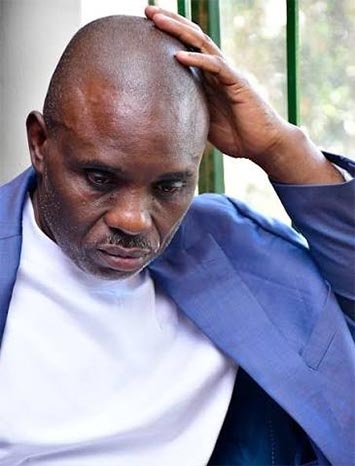
HABARI DAILY I Kampala, Uganda I An extensive account of what prosecutors allege was Erias Lukwago’s role in a conspiracy to overthrow President Yoweri Museveni’s government has emerged in court.
This followed the move by the Director of Public Prosecutions (DPP) to lay out a far-reaching charge sheet that links the opposition politician to an alleged years-long plot involving retired presidential candidate Dr. Kizza Besigye and several other opposition figures.
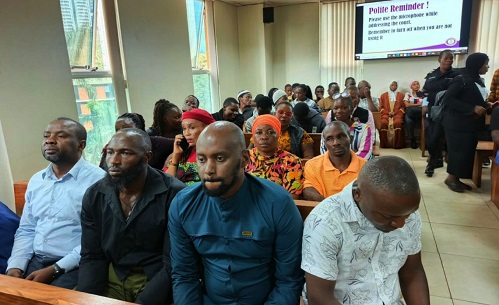
The allegations were read in open court on Thursday after the Makindye Chief Magistrate’s Court committed Lukwago to the High Court for trial on a single charge of misprision of treason. Prosecutors contend that although Lukwago is not accused of personally participating in the alleged conspiracy, he knowingly concealed information about it and failed to report it to the authorities.
Chief Magistrate Sarah Basemera read the DPP’s summary of evidence before formally committing the People’s Front for Freedom (PFF) president to stand trial.
The prosecution describes Lukwago as an advocate, former Kampala Lord Mayor, former Kampala Central Member of Parliament and leader of the PFF, a political party formed following a split from the Forum for Democratic Change (FDC).
Vocal critic of NRM
According to the indictment, Lukwago has throughout his political career been a vocal critic of President Museveni’s government and allegedly associated with opposition leaders, including Dr. Besigye, Ssemujju Nganda and Salaam Musumba, in activities aimed at removing the current administration from power.
At the centre of the prosecution’s case is Andrew Wilson, a private security company proprietor whom prosecutors say was approached in 2021 by Switzerland-based Ugandan Joel Wakayima to source weapons and military training for Ugandans allegedly planning to overthrow the government by force.
Instead of accepting the proposal, Wilson is said to have alerted a senior Uganda People’s Defence Forces (UPDF) officer serving with Uganda’s peacekeeping contingent in Somalia. Prosecutors say he was subsequently recruited as an undercover source by what was then the Chieftaincy of Military Intelligence (CMI), secretly recording meetings and conversations while maintaining contact with those allegedly involved.
Plot weaved on Zoom
According to the prosecution, Wakayima later introduced Wilson to opposition politician Salaam Musumba. During a Zoom meeting allegedly captured by Wilson, Musumba is said to have requested training for opposition supporters in covert communications and intelligence gathering for the purpose of spying on the Ugandan government.
The indictment alleges that Musumba later invited Wilson to a meeting in Brussels, Belgium, attended by Lukwago, Ssemujju Nganda, Lubega Mukaku and Charles Rwomushana. Prosecutors claim Wilson agreed to act as the group’s military and security adviser and that Lukwago was aware of the discussions but deliberately failed to report them to law enforcement agencies.
Investigators further allege that Wilson was later introduced to Dr. Besigye, leading to several meetings in Geneva, Switzerland.
According to the indictment, a meeting held on October 29, 2023, attended by Besigye, Frank Kiherere Atukunda, Wakayima and Wilson allegedly discussed plans to overthrow the Ugandan government by force.
The prosecution claims Besigye sought military assistance from Wilson, requested intelligence and paramilitary training for selected allies and asked him to procure counterfeit Ugandan currency to finance the alleged operation and destabilise the economy.
Prosecutors also allege that Besigye requested “ricin poison” to target government officials and supplied Wilson with a list of military installations and security facilities that would allegedly become targets during the planned operation.
Targeted landmarks
Among the installations listed in the indictment are Makenke Barracks, Bugembe Barracks, Bihanga Military School, Gaddafi Barracks in Jinja, Magamaga Barracks, the Marine Division headquarters, the Air Force Academy in Nakasongola, the Senior Staff College at Kimaka and the Military Intelligence and Security School.
According to prosecutors, these discussions were secretly documented using covert cameras and audio recording equipment supplied to Wilson.
The charge sheet alleges that the conspiracy expanded further through meetings held in Geneva during January and June 2024.
During one of those meetings, prosecutors claim Besigye and Wakayima allegedly requested Wilson to assassinate President Museveni using a drone strike. They further allege that Besigye undertook to provide details about the President’s movements and vulnerable locations to facilitate such an attack.
In return, prosecutors allege Wilson was promised access to Uganda’s banking system for money laundering, permission to use Ugandan airfields for trafficking illicit goods, including narcotics, and Uganda as a safe haven for fugitives should the alleged plot succeed.
The indictment also claims Besigye later requested Wilson to procure surface-to-air missiles, drones, grenades, firearms and counterfeit currency while providing coordinates of an airstrip in the Democratic Republic of Congo intended for the airdrop of weapons.
Neighbouring Zambia dragged in
Prosecutors further allege that parts of neighbouring Zambia were proposed as training and logistical bases for the alleged operation.
Wilson is also said to have provided Besigye with 5,000 US dollars to facilitate the travel of selected Ugandans to Kisumu, Kenya, for intelligence and paramilitary training.
According to the prosecution, Lukwago, by virtue of his position as PFF president, knew about the arrangements, participated in mobilising party members and authorised the travel of some participants, including Samuel Makokha, to Kenya.
The indictment further alleges Lukwago knew about subsequent meetings held in Geneva and Nairobi involving Besigye, Hajj Obeid Lutale and Wilson but failed to disclose the information to the authorities.
Prosecutors claim that during a November 16, 2024 meeting in Nairobi, Besigye allegedly renewed requests for weapons capable of bringing down helicopters and aircraft and discussed plans involving civil disobedience and the assassination of President Museveni.
Defendant’s denial
The prosecution says its case will rely on covert audio and video recordings allegedly made by Wilson over several years, WhatsApp communications, forensic examinations of mobile phones, immigration records, electronic communications and witness testimony.
Lukwago has consistently denied all wrongdoing. His lawyers argue that much of the information cited by prosecutors was allegedly acquired while he was acting as legal counsel to Besigye and other clients, warning that criminalising such knowledge would undermine lawyer-client confidentiality and the constitutional right to legal representation.
The allegations contained in the indictment remain untested in court, and the High Court will ultimately determine whether the prosecution’s evidence is sufficient to sustain the charge against Lukwago.