President Yoweri Museveni
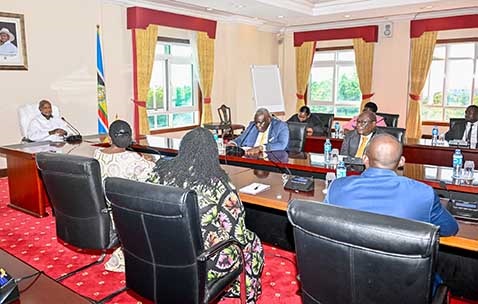
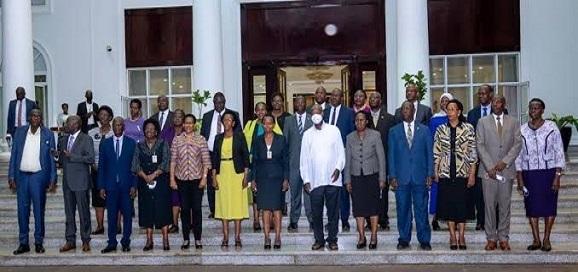
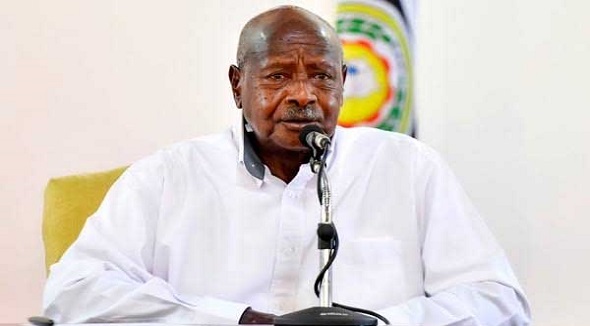
HABARI DAILY I Kampala, Uganda I President Yoweri Museveni’s latest overhaul of Uganda’s public service has signalled a significant transition in the country’s administrative leadership, with 11 permanent secretaries retired and 13 new officials appointed to key government positions in a sweeping shake-up that could gradually diminish the influence of long-serving members of the old guard.
The changes, announced on November 9, 2026, affect some of the most influential positions in government, including the ministries responsible for public administration, agriculture, works and transport, foreign affairs, defence, water and environment, and the Judiciary.
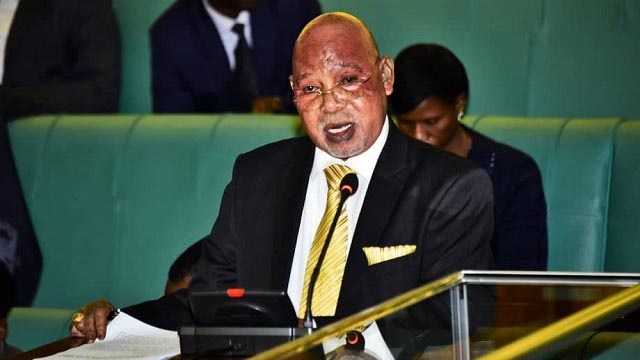
Among those retired are some of the most established figures in Uganda’s public administration, notably Pius Bigirimana, the Permanent Secretary and Secretary to the Judiciary, and former Clerk to Parliament Adolf Mwesige Kasaija.
Others include Maj. Gen. David Kasura-Kyomukama, Dr Rose Nassali Lukwago, Alex B. Okello, Dorcus W. Okalany, Bageya Waiswa, Edith Nsaja Mwanje, Alfred O. Okidi, Dr John Geoffrey Mbabazi and Rose N. Kafeero.
The scale of the changes suggests that the President is seeking to reshape the country’s administrative architecture by introducing fresh leadership while repositioning some experienced officials and retaining others considered important to the continuity of government operations.
A changing generation in government
The retirement of 11 permanent secretaries is particularly significant because it affects officials who have occupied influential positions in government for years, some of whom have become familiar faces in Uganda’s public administration.
Political insiders and analysts have interpreted the shake-up as part of a broader process of generational renewal, in which Museveni is gradually reorganising the public service and redistributing institutional influence among different generations of government officials.
The development comes against the background of Museveni’s long presidency, which began in 1986, and the gradual emergence of a new generation of public administrators expected to take on greater responsibility for implementing government policies and programmes.
The changes therefore go beyond filling vacant offices. They represent an opportunity to introduce different administrative approaches, strengthen institutional accountability and prepare government institutions for changing national development priorities.
According to reporting by Daily Monitor, the reshuffle also reflects power dynamics within government, particularly the changing influence of officials who have occupied strategic positions for extended periods.
The retirement of Bigirimana is particularly notable because of his long career in public service, during which he occupied several senior positions, including Permanent Secretary in the Office of the Prime Minister and the Judiciary.
Kasaija’s departure is equally significant because of the controversies and scrutiny that have surrounded parliamentary administration, including questions about financial management and the handling of parliamentary service awards.
However, the retirement of the officials should not automatically be interpreted as a finding of wrongdoing against them. Rather, the changes provide an opportunity for government to reconsider leadership arrangements and expectations in institutions entrusted with managing public resources.
Contracts, performance and accountability
The reshuffle also comes at a time when the performance and renewal of permanent secretaries’ contracts have attracted attention.
According to New Vision, Deputy Head of Public Service Jane Mwesiga Kyarisiima revealed last month that contracts for some permanent secretaries had expired on July 28, 2026.
She explained that the officials were awaiting assessment by the Public Service Commission before recommendations could be made to the President regarding their continued service.
“We didn’t have a Public Service Commission. Their contracts had expired on July 28, 2026,” Kyarisiima said, explaining the delay in completing the assessment process.
The newly constituted nine-member Public Service Commission, chaired by Vincent Seruma, was sworn in on October 16, 2026, paving the way for the assessment and recommendations concerning the affected officials.
Permanent secretaries serve on three-year renewable contracts, meaning their continued stay in office is subject to renewal and assessment. This arrangement provides an institutional basis for periodically evaluating leadership, performance and suitability for continued service.
The latest changes therefore combine generational renewal with an administrative process that has been pending for several months.
New faces take over strategic institutions
Museveni has appointed 13 new permanent secretaries, introducing fresh leadership into several strategic government institutions.
Among the new appointees is Prof. Stephen Akandwanaho, who takes charge of the Ministry of ICT and National Guidance, while Eng. Flavia Guto Bwire has been appointed Permanent Secretary in the Ministry of Works and Transport.
Other appointments include Charles Ssentongo at Foreign Affairs, Barbara Namugambe at Agriculture, Animal Industry and Fisheries, and Kenneth Akiri at Water and Environment.
Emmanuel Freddie Mugunga has been appointed to the Office of the Prime Minister, while Maureen Kasande takes over at the Inspectorate of Government.
Mark Sseremba has been appointed to the Ministry of Public Service, Edith Butuuro to Defence and Veteran Affairs, and Aggrey Wunyi to East African Community Affairs.
The other appointees are Sheeba Kyobutungi Rujoki, Betty Mutesa Cwinya-ai and Edward Sengonzi Damulira, who takes over as Clerk to Parliament.
The President has also retained 16 senior officials in their existing positions, including Head of Public Service Lucy Nakyobe Mbonye, Finance Permanent Secretary Ramathan Ggoobi and Health Permanent Secretary Dr Diana Atwiine.
Another 11 officials have been retained in public service but redeployed to different institutions. Among them is Dr Aminah Zawedde, who moves to the Office of the Prime Minister in charge of Coordination, while Bagiire Vincent Waiswa moves to the Ministry of Tourism, Wildlife and Antiquities.
A test for the new generation
The changes affect 51 senior public officers across government, when the 16 retained, 11 redeployed, 11 retired and 13 newly appointed officials are considered.
They also touch institutions responsible for critical national priorities, including infrastructure development, agricultural transformation, public accountability, security, public administration and service delivery.
The challenge for the incoming officials will be to demonstrate that generational renewal can translate into measurable improvements in government performance.
Uganda continues to grapple with concerns about public expenditure, delayed government projects, procurement inefficiencies, corruption and weaknesses in service delivery.
The new leadership will consequently be expected to demonstrate greater efficiency in managing public resources, supervising government programmes and ensuring that approved budgets translate into tangible results for citizens.
The President carried out the sweeping changes and retirements in exercise of his constitutional powers under Articles 99, 172(1)(a) and 174(2) of the 1995 Constitution of the Republic of Uganda.







About the Author