
HABARI DAILY I Kampala, Uganda I Having been struck before by outbreaks of the deadly Ebola virus, Uganda has taken another major step towards strengthening its preparedness against future epidemics, with the Uganda Virus Research Institute (UVRI) launching Africa’s first Phase I clinical trial of an mRNA vaccine targeting the Bundibugyo ebola virus.
The trial, launched on November 27, 2026, in collaboration with American biotechnology company Moderna, follows approval by Ugandan regulatory authorities and is intended to establish the safety and immune response of the investigational vaccine, known as mRNA-1469-P102.
The development comes amid an ongoing Bundibugyo ebolavirus outbreak in the Democratic Republic of the Congo (DRC), raising concerns about the possibility of further transmission across borders, including into Uganda.
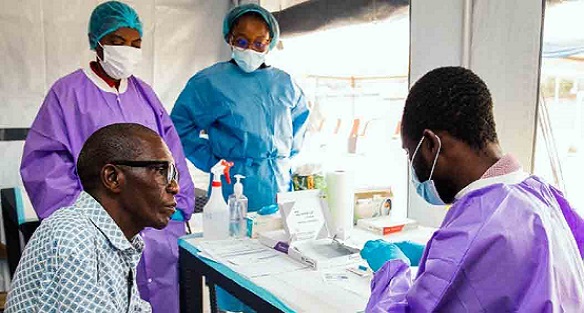
The study will recruit approximately 224 healthy volunteers aged between one and 65 years, making it the first human trial of this vaccine candidate to evaluate its safety and immunogenicity in children as young as one year.

Participants will be monitored for approximately one year after receiving the vaccine, with researchers assessing how their bodies respond and whether the candidate produces the desired immune response.
The trial represents an important milestone in Africa’s participation in the development of vaccines against emerging infectious diseases, particularly those that have previously caused serious public health emergencies on the continent.
Uganda’s outbreak preparedness
UVRI’s decision to initiate the trial reflects the urgency of developing medical interventions against the Bundibugyo strain, which has previously caused outbreaks in Uganda.
The institute worked with the Ministry of Health, national regulatory authorities, Moderna and clinical research organisation Parexel to accelerate the process of moving the vaccine candidate into human testing.
The collaboration brought together government institutions, international vaccine developers and clinical research experts to ensure the study could begin following the necessary regulatory reviews and approvals.
Professor Pontiano Kaleebu, the Director of UVRI and Head of the MRC/UVRI and London School of Hygiene and Tropical Medicine Viral Pathogen Theme, who is leading the trial, said the institute was pleased to contribute to efforts to address the ongoing outbreak in the DRC and prepare for future emergencies.
“We are very pleased to conduct this trial to support the efforts to address the ongoing outbreak in DRC and future outbreaks,” Kaleebu said.
He explained that the rapid progress had been made possible through cooperation between Ugandan regulators, the Ministry of Health, the local research team, Moderna and Parexel.
The collaboration, he said, demonstrated the importance of partnerships in accelerating the development and evaluation of vaccines against emerging health threats.
Second human trial after Canada
The Ugandan study is the second human trial of Moderna’s mRNA-1469 vaccine candidate, following an earlier Phase I trial that began enrolling healthy adults aged 18 to 65 in Canada in August 2026.
Interim findings from the Canadian study have contributed to a recommendation by the World Health Organisation’s independent Technical Advisory Group on Candidate Vaccines Prioritization to evaluate the vaccine in the DRC’s Phase 2/3 Tumaini ring vaccination trial.
The recommendation provides an opportunity to advance research into the vaccine’s potential effectiveness while Uganda’s Phase I study generates additional safety and immune-response data.
Unlike the Canadian trial, which involves adults, the Ugandan study will extend investigations to children from the age of one.
This is particularly important because children are among the vulnerable groups during Ebola outbreaks, yet vaccine research has historically taken longer to establish the safety and suitability of candidate vaccines for younger populations.
Dr Richard Hatchett, the Chief Executive Officer of the Coalition for Epidemic Preparedness Innovations (CEPI), said the inclusion of children was a significant milestone in efforts to develop vaccines that could eventually protect entire communities.
“Children are often among those hardest hit when Ebola strikes, yet they are too often the last to benefit from new vaccines,” Hatchett said.
He explained that gathering safety and immunogenicity data in children at this stage would help prepare for wider vaccine deployment if subsequent Phase 2/3 studies establish that the candidate works.
However, the current trial is primarily designed to assess safety and immune responses rather than establish whether the vaccine prevents infection.
CEPI commits up to $58.5m
The research is being supported by funding of up to $58.5m from CEPI to Moderna as part of a programme to accelerate the development of the Bundibugyo vaccine candidate.
CEPI is an international partnership involving public, private, philanthropic and civil society organisations established to accelerate the development of vaccines and other medical interventions against epidemic and pandemic threats.
Its work includes the ambitious 100 Days Mission, which seeks to make safe, effective and accessible vaccines available against emerging infectious disease threats within 100 days of identifying a new pathogen.
Hamilton Bennett, Moderna’s Executive Director for Resilience Research and Development, welcomed the Ugandan trial, particularly its focus on evaluating the vaccine in children.
“Evaluating the vaccine in paediatric populations will provide valuable data to support its potential wider use in the current and future outbreaks,” Bennett said.
She expressed appreciation to UVRI, CEPI and the other partners for their collaboration in addressing the public health threat posed by Bundibugyo ebolavirus.
The funding and partnerships are expected to support further research and development as scientists seek to establish whether the candidate can eventually become an effective intervention against the disease.
Position in vaccine research
The trial adds to Uganda’s growing involvement in international research aimed at developing vaccines against dangerous infectious diseases.
UVRI has been at the centre of the country’s disease surveillance, outbreak investigations and biomedical research since its establishment in 1936 by the Rockefeller Foundation to study yellow fever.
The government research institution has since expanded its mandate to cover communicable diseases, particularly viral infections of public health importance, while advising the Government on their prevention and control.
Its collaboration with international research institutions has enabled Uganda to participate in studies that contribute to global scientific knowledge and strengthen local capacity to respond to epidemics.
Research into Bundibugyo vaccines is also progressing through other programmes. These include trials of the University of Oxford’s viral vector-based ChAdOx1 BDBV vaccine candidate in the United Kingdom and Uganda, which began in July and October 2026, respectively.
The different approaches are expected to broaden scientific understanding and increase the prospects of developing effective protection against a strain for which vaccine development remains a major public health priority.







About the Author