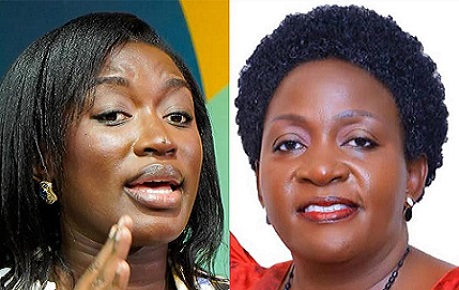


Godfrey Saazi
HABARI DAILY I Kampala, Uganda I The High Court in Mpigi has nullified the election of National Unity Platform (NUP) Member of Parliament Godfrey Saazi for Gomba East County and ordered a fresh poll following findings of substantial electoral irregularities during the January 15, 2026, parliamentary elections.
The judgment was delivered on Monday, October 26, 2026, by Justice Jamson Karemani Karemera through an email ruling, following an election petition filed by National Resistance Movement (NRM) candidate Henry Harris Kalule Kirumira, who challenged Saazi’s victory.
The court found that irregularities and non-compliance with electoral laws had substantially affected the outcome of the election, prompting it to set aside Saazi’s victory and declare the Gomba East parliamentary seat vacant.
Justice Karemani directed the Electoral Commission (EC) to organise a fresh election in the constituency. The judge also ordered each party to bear its own legal costs.
The decision means that voters in Gomba East will have to return to the ballot box to elect their parliamentary representative, subject to the Electoral Commission’s arrangements for the fresh poll.
Missing votes and destroyed electoral materials
A central issue in the petition was the disruption of voting and the handling of electoral materials at several polling stations.
According to the court findings reported by local media, voting was heavily disrupted and electoral materials were destroyed at nine polling stations, raising questions about the integrity and completeness of the results used to declare the winner.
The court also found that the Electoral Commission had failed to include or tally results from four specific polling stations.
These omissions were significant because they meant that the final declared results did not fully account for votes from the affected polling locations.
In an election petition, the court examines whether alleged irregularities occurred and whether they were sufficiently substantial to affect the validity of the election. In Saazi’s case, Justice Karemani concluded that the irregularities and failures to comply with electoral requirements warranted nullification of the results.
The ruling underscores the importance of properly safeguarding electoral materials, counting votes and ensuring that results from all relevant polling stations are included in the final tally.
The nine affected polling stations were Ttaba Trading Centre, Buyebeyi Church of Uganda, Kimbo Catholic Church, Serumbe UMEA Primary School, Jumbi Church of Uganda, Kindimunda Playground and St Peter Primary School in Ngeribalya, among others. The stations had a combined total of 4,387 registered voters.
Saazi had secured 10,907 votes
Saazi had been declared the winner with 10,907 votes against Kalule’s 9,156, giving him a winning margin of 1,751 votes.
The court separately examined the omission of results from four polling stations: Buyana Trading Centre, Tiginya SDA Primary School, Kiziba Trading Centre and Buyinja Butoole Primary School B.
The results forms showed that Kalule had obtained 453 votes from the four stations, while Saazi received 366. Including these votes would have increased Saazi’s total to 11,273 and Kalule’s to 9,609, leaving Saazi with a reduced lead of 1,664 votes.
Justice Karemani ruled that although omitting the four polling stations violated electoral requirements, the omission alone did not substantially affect the election outcome because Saazi would still have retained his lead.
The decisive issue was the destruction of electoral materials at the nine other polling stations, where the votes cast could not be established.
The judge found that the electoral choices of thousands of registered voters remained unknown, making it impossible to determine how their votes would have affected the final result. Saazi’s reduced margin of 1,664 votes was less than half the number of registered voters at the affected stations, a factor the court considered significant in assessing the impact of the irregularities.
Candidates disputed responsibility for disruptions
During the proceedings, Saazi maintained that the election was substantially free and fair and that the declared results reflected the will of the majority of voters. He denied responsibility for the disruptions at the affected polling stations.
The Electoral Commission and the Gomba District Returning Officer attributed the omission of results from the four polling stations to a technical glitch discovered after polling. They argued that the omission did not substantially affect the outcome.
The court nevertheless found that failures to safeguard the electoral process and the destruction of voting materials had undermined the election’s integrity sufficiently to warrant a fresh poll. It did not establish who orchestrated the violence and destruction at the nine polling stations. <Cite refs={[“turn491869search0″,”turn491869search3”]}/>
The ruling now leaves the Electoral Commission responsible for organising a new election in Gomba East, where voters will choose their parliamentary representative again.







About the Author