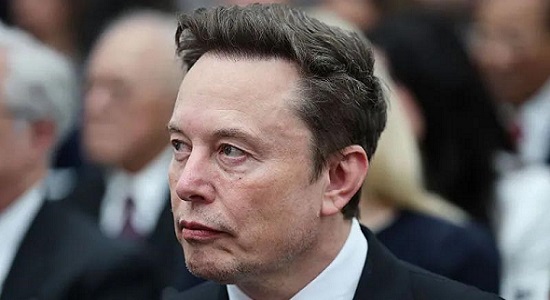
Elon Musk
HABARI DAILY I Kampala, Uganda I Money can certainly buy love, but not votes. This is the painful lesson the world’s richest man, Elon Musk, appears to have learnt after spending nearly $450 million backing Republican candidates in America’s midterm elections, only to witness Democrats deliver a resounding electoral victory that threatens to undermine his growing influence in Washington.
Musk’s unprecedented political investment, believed to be the largest amount spent by an individual in an American election cycle, was intended to help Republicans retain political control and protect the conservative political agenda championed by President Donald Trump.
Instead, the billionaire businessman has found himself on the losing side of an electoral backlash, with Democratic victories raising the prospect of increased scrutiny of his business empire, government contracts and influence over national security decisions.
The political consequences could be particularly significant for SpaceX, his aerospace company, which has reportedly secured an estimated $10 billion in additional government contracts since Trump returned to the White House for his second, non-consecutive presidential term.
Democratic lawmakers are now questioning whether the company’s expanding relationship with the federal government creates conflicts of interest and whether its growing involvement in America’s national security infrastructure deserves closer congressional examination.
For Musk, who has built his fortune through companies operating in electric vehicles, space exploration, artificial intelligence and social media, the electoral outcome could mark the beginning of a difficult period in his relationship with Washington.
$450 million fails to deliver political returns
According to federal election filings analysed by OpenSecrets, Musk contributed more than $445 million to Republican candidates, political action committees and other outside political groups during the election cycle.
The spending made him the biggest individual donor in the midterm elections and one of the largest political contributors in American history.
However, the money did not translate into the electoral victories he had hoped for. Many of the candidates and political groups he supported suffered defeats as Democrats made substantial gains across the country, including in contests that Republicans had considered competitive.
Musk’s political gamble was particularly concentrated in Texas, where he has relocated the headquarters of Tesla and SpaceX, although both companies maintain substantial operations in California, where they were founded.
He reportedly spent more than $200 million in Texas in an effort to influence the Senate contest and other political races.
One of his most controversial interventions involved Texas Democratic politician James Talarico, whom Musk attacked on his social media platform X.
Talarico responded by accusing the American political system of allowing a billionaire to effectively purchase his own senator.
The criticism captured a growing political concern among voters that wealthy business executives were exercising disproportionate influence over American democracy.
Musk’s defeat was therefore not simply a financial setback. It exposed the limitations of using extraordinary personal wealth to influence voters, particularly when economic concerns, political accountability and public dissatisfaction are driving electoral decisions.
According to election coverage by several US press outlets, Musk’s political spending failed to prevent Republicans from losing congressional control and several important races.
$10 billion government contracts under scrutiny
Perhaps the most consequential development for Musk is the possibility that his companies could face increased congressional scrutiny over their extensive business relationships with the American government.
SpaceX, which has become a critical contractor for NASA, the Department of Defence and other government agencies, has reportedly received at least $10 billion in additional government contracts since Trump returned to the White House.
The Democracy Defenders Fund, which tracks government contracting and potential conflicts of interest, estimates that the company secured the additional contracts during Trump’s second administration.
Democratic lawmakers argue that the scale of these government relationships deserves examination, particularly because Musk previously headed the Department of Government Efficiency (DOGE), which was involved in reviewing government spending and operations.
Their central concern is whether Musk’s position within the administration gave him opportunities to influence decisions involving government agencies that also award contracts to his companies.
They also want to establish whether adequate safeguards existed to prevent conflicts of interest involving his commercial enterprises.
The concerns are not entirely new. In May 2025, Democratic lawmakers on congressional oversight committees questioned Musk’s dual role as a senior government adviser and SpaceX chief executive, arguing that his influence over federal agencies could create conflicts involving contracts, regulations and procurement decisions.
The new Democratic congressional majority could give lawmakers greater powers to demand documents, summon officials and investigate the relationship between Musk’s businesses and federal institutions.
Senator Ed Markey appeared to signal the determination of Democrats when he responded on X to a question about investigations into technology executives.
“They are going to need to plant new forests for all of the subpoenas we’ll be printing,” he declared.
The statement suggested that Musk and other powerful technology executives could face an aggressive period of congressional oversight.
Data centre investments face fresh obstacles
Beyond government contracts, Musk’s ambitious plans to expand artificial intelligence infrastructure could also encounter resistance from the new political environment.
SpaceX and its associated technology businesses have interests in developing massive data centres, facilities that house thousands of computer servers used to process and store enormous amounts of digital information.
These facilities are essential to artificial intelligence companies such as Musk’s xAI, which operates the Grok chatbot, as well as other technology platforms including ChatGPT and Claude.
However, the rapid expansion of data centres has generated opposition from communities concerned about electricity consumption, water shortages, environmental damage and generous tax incentives offered to technology companies.
The November 3 elections demonstrated the growing strength of this resistance.
According to election tracking by technology industry publication Tom’s Hardware and other researchers, voters overwhelmingly supported measures seeking to restrict data centre developments. An analysis of 41 ballot measures found that 40 favoured restrictions, with only one supporting development.
Georgia presents another potential challenge for Musk’s business ambitions. The state’s incoming Democratic governor, Keisha Lance Bottoms, campaigned partly on limiting the rapid expansion of massive data centres and reviewing the substantial tax incentives offered to technology companies establishing such facilities.
Her victory could complicate plans by companies seeking to expand their artificial intelligence infrastructure in the state.
The growing resistance is particularly significant because data centres require enormous investments in land, electricity infrastructure, cooling systems and water supplies.
For Musk, who has ambitions to expand xAI and strengthen its computing capacity, restrictions could increase development costs, delay projects and reduce the attractiveness of certain locations.
Reacting to the growing opposition, Musk posted on X that his previously suggested idea of building data centres in space was beginning to look attractive.
Although the comment appeared partly humorous, it reflected the mounting challenges facing technology companies seeking to secure land and sufficient energy for their artificial intelligence ambitions.
Investors begin reassessing Musk’s fortunes
The election outcome has also introduced uncertainty into financial markets, with investors reassessing the political and regulatory risks facing major technology companies.
James Flintoft, head of investment solutions at AJ Bell, said Musk’s unsuccessful political spending, combined with the scale of Democratic victories, had ushered in uncertainty over whether technology companies would face increased regulation.
Although technology stocks generally recovered on Wednesday morning, Tesla shares fell by approximately 4.9%, while SpaceX shares declined by 3.4%.
The market reaction illustrates how closely Musk’s business interests have become intertwined with American politics, government procurement and regulatory decisions.
Musk also appeared to retreat from his aggressive political messaging following the election.
During the 2025 political battles, he frequently flooded X with hundreds of political posts in a single day. However, by Wednesday, he had largely stopped commenting on politics and shifted his attention to praising GrokBot, the artificial intelligence chatbot developed by xAI.
He also removed a pinned post warning his 241 million followers about the consequences of Democratic victories.
Another post urging Americans to vote Republican appeared to have been deleted.
His political silence contrasted sharply with the enthusiasm he had demonstrated while campaigning for Republican candidates.
Not all American billionaires shared Musk’s political preferences. Reid Hoffman, the LinkedIn co-founder and prominent Democratic donor, celebrated the results, describing them as an overwhelming rejection of Trump and his allies.
Hoffman argued that wealthy individuals should not be allowed to undermine American democratic institutions through excessive political spending.
A costly lesson for Musk
For Musk, the election represents a potentially expensive political miscalculation.
His nearly $450 million investment failed to deliver the political protection he sought, while the Democratic victories have created an opportunity for lawmakers to examine the relationship between his companies and the federal government.







About the Author