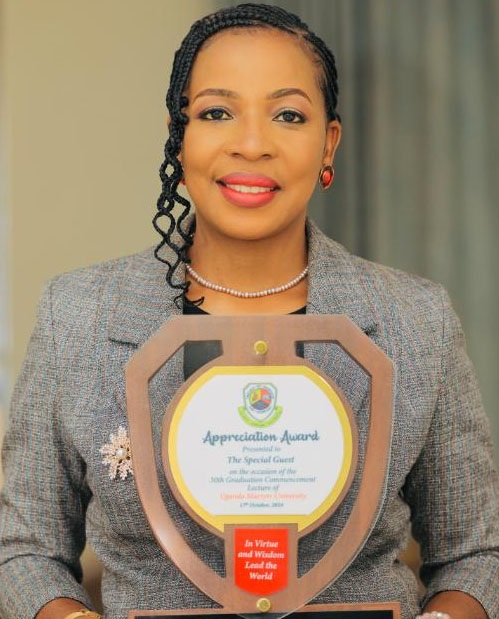
By Dr Ruth Aisha Biyinzika Kasolo
The urgency is clear. More than 70 per cent of Uganda’s labour force depends on rain-fed agriculture, while about 95 per cent of agricultural production relies on rainfall.
This leaves millions of households exposed to droughts, floods and other climate shocks. As climate change intensifies, crop failures can wipe out household incomes, increase food prices and push vulnerable families deeper into poverty.
Green growth offers a way of tackling these challenges while creating new economic opportunities. The UGGDS estimates that a transition to a greener economy could generate up to four million decent jobs and increase GDP by about 10 per cent compared with business as usual.
The first priority should be transforming agriculture. Smallholder farmers need access to solar-powered irrigation, water harvesting systems and climate-resilient farming technologies so that production does not collapse whenever rains fail.
Restoring degraded soils through agroforestry, organic manure and regenerative farming can also improve yields while protecting farmland for future generations.
Agriculture must also become a source of greater value rather than simply a provider of raw commodities. Waste such as coffee husks, maize residues and other agricultural by-products can be converted into organic fertiliser, animal feed, briquettes and other useful products. Such circular-economy enterprises can create additional income without requiring farmers to expand their land.
Clean energy is another major route out of poverty. Expanding off-grid solar systems in rural communities can provide affordable electricity for small businesses, irrigation schemes, cold storage and agro-processing. This would allow enterprises to operate beyond daylight hours and reduce the cost of productive activities.
At household level, reducing dependence on charcoal and firewood is equally important. Wider access to clean cooking technologies would reduce pressure on forests, improve household welfare and free up time that can be redirected towards education, farming and income-generating activities.
Uganda must simultaneously protect the natural capital on which much of its economy depends. Wetlands, forests, lakes and other ecosystems provide water, food, energy and protection against climate-related disasters.
Continued wetland encroachment and deforestation therefore represent not only environmental problems but also direct economic threats to poor households.
Sustainable tourism can provide another source of rural income. Communities living near national parks and reserves can benefit from low-impact ecotourism through employment, local enterprises, crafts, accommodation and other services, ensuring that conservation produces tangible economic benefits.
Financing, however, remains a major obstacle. About 78 per cent of Ugandans currently do not use green finance, even though many already practise forms of sustainable farming.
Climate finance therefore needs to be made simpler and more accessible to ordinary farmers, small businesses and young entrepreneurs.
Government can use institutions such as the Global Green Growth Institute and national climate-finance frameworks to attract international funding and private investment.
Young people can be supported through micro-grants, technical training and incubation programmes to establish businesses in recycling, renewable energy, carbon markets, sustainable agriculture and other emerging green industries.
The green transition should also be linked to the Presidential Initiative on Skilling the Girl and Boy Child. Vocational institutions can integrate green skills into carpentry, tailoring, metal fabrication, brick-making and other trades.
Young people can be trained in solar installation and maintenance, recycling, energy-efficient construction and environmentally friendly production.
Upcountry skilling centres can be connected to solar irrigation, agro-processing and value-addition projects, creating a direct pathway from training to employment. Government-backed SACCO revolving funds could further support graduates to establish green cooperatives and enterprises.
Uganda’s green-growth strategy should therefore not be viewed simply as an environmental programme. It is a poverty-reduction and jobs strategy.
By protecting natural resources, modernising agriculture, expanding clean energy, developing green skills and opening access to climate finance, Uganda can build an economy that is more productive and resilient.







With millions of livelihoods threatened by climate change, pursuing green growth is no longer a luxury. It is a practical route towards protecting incomes today while creating the jobs, enterprises and economic opportunities needed to lift up to 10 million Ugandans out of poverty..
The writer is a woman empowerment advocate and member of the board of the Presidential CEO Forum
About the Author