
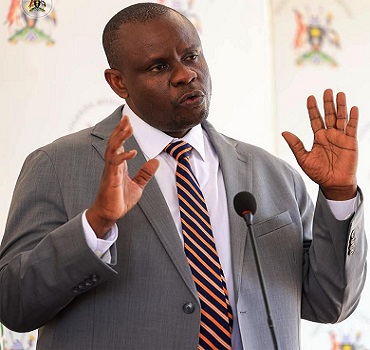
Balaam Barugahara Ateenyi
HABARI DAILY I Kampala, Uganda I The term of office for all Local Council I (LCI) and Local Council II (LCII) chairpersons officially expired on June 28, 2026, with the government directing that the outgoing leaders can only continue serving in a caretaker capacity until new office bearers are elected and sworn in.
The announcement was made by the Minister for Local Government, Balaam Barugahara Ateenyi, who also cautioned aspiring candidates against contesting for more than one elective position in the forthcoming Local Council elections.
Addressing the country ahead of the electoral exercise, Barugahara said the five-year mandate of the current LCI and LCII leadership had come to an end as stipulated under the law.
“The term of office for all Local Council I and Local Council II Chairpersons expired on 28th June 2026. They will continue to serve only in a caretaker capacity until newly elected leaders are sworn into office,” the minister said.
The clarification comes as the Electoral Commission rolls out the roadmap for fresh elections that will usher in new village and parish leadership across the country.
Barugahara emphasized that although the outgoing chairpersons remain responsible for handling essential administrative duties during the transition, they should not make major policy or financial decisions that would bind the incoming leadership.
He urged all eligible Ugandans to actively participate in the electoral process, describing Local Council elections as the foundation of Uganda’s decentralized governance system.
The minister also issued a stern warning to aspirants planning to contest in the elections, reminding them that the law does not permit an individual to seek more than one office simultaneously.
“A person shall not stand for election for more than one office during the forthcoming Local Council elections. Every candidate must choose the office he or she intends to contest,” Barugahara said.
According to the minister, the restriction is intended to promote fairness in the electoral process, eliminate confusion during nominations and polling, and ensure orderly management of the elections.
He advised political actors and independent candidates to familiarize themselves with the Electoral Commission guidelines before presenting their nomination papers.
“I therefore urge all aspiring candidates to carefully study the electoral guidelines and ensure that they comply fully with the legal requirements governing these elections,” Barugahara said.
The minister further appealed to local leaders, security agencies and residents to maintain peace throughout the election period.
“The success of these elections depends on the cooperation of all stakeholders. We expect campaigns and voting to be conducted peacefully, without intimidation, violence or any form of electoral malpractice,” he said.
Local Council elections are regarded as the bedrock of Uganda’s governance structure because LCI and LCII leaders are responsible for mobilizing communities, resolving minor disputes, coordinating government programmes and linking citizens to higher levels of government.
The forthcoming polls will also be significant because many of the current leaders have remained in office beyond their original mandate after delays in organizing fresh elections.
Barugahara called on citizens to turn up in large numbers to elect leaders of integrity who can effectively champion development at the grassroots.
“These elections provide communities with an opportunity to choose leaders who are committed to service delivery, accountability and local development. I encourage every eligible voter to participate,” the minister said.
He reiterated that the expiry of the current leaders’ term should not create uncertainty in local administration because caretaker arrangements are already in place pending the installation of newly elected officials.
With the electoral roadmap now underway, attention will shift to nominations, campaigns and polling, where thousands of Ugandans are expected to compete for leadership positions at village and parish level.
The government’s latest guidance, particularly on the expiry of the current office holders’ mandate and the prohibition against contesting more than one office, is expected to shape preparations for one of the country’s largest grassroots democratic exercises.







About the Author