
President Museveni
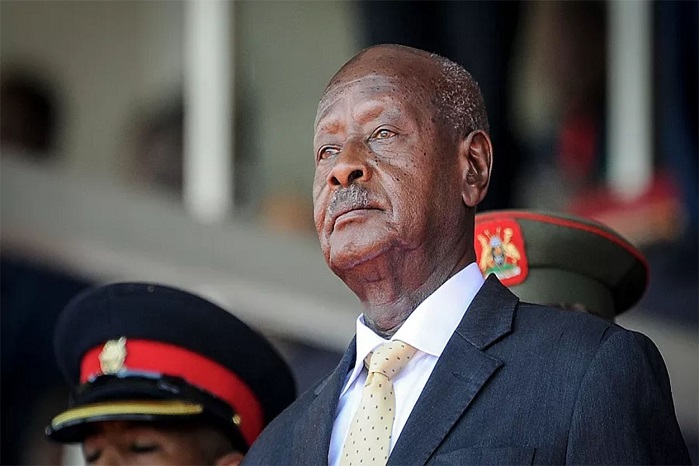
HABARI DAILY I Kampala, Uganda I President Yoweri Museveni has moved to calm growing public concern over Uganda’s proposed Sovereignty Bill, firmly stating that the legislation will not interfere with foreign investment, remittances, or private financial flows into and out of the country.
In a detailed address directed to “Fellow Ugandans, especially the Bazzukulu,” the President dismissed what he described as widespread misinformation surrounding the Bill, insisting that its intent had been misunderstood. “Of recent, I have noticed a lot of orwaari (noise, kelele), regarding the Sovereignty Bill. Which Sovereignty Bill is the rwaari about? The one I initiated in the Cabinet or another one?” he asked.
Museveni was categorical in rejecting claims that the Bill seeks to curtail foreign direct investment (FDIs), religious funding, or diaspora remittances. “The Bill will stop FDIs (Foreign Direct Investments), support for religious bodies from abroad, Remittances from Ugandans working abroad, etc., etc. Really!! That is not the Bill I initiated,” he emphasized.
Instead, the President explained that the proposed law is rooted in Africa’s long struggle for self-determination and is intended to safeguard Uganda’s independence in decision-making. He traced this history back to the colonial era, noting that the continent’s liberation was hard-won after centuries of exploitation. “The Bill I initiated, was about what we fought for and what the whole of Africa fought for ever since 1900 when the whole of Africa, except for Ethiopia, had been shamefully colonized,” he said, referencing the broader Pan-African struggle.
External interference
According to Museveni, the essence of sovereignty lies in a nation’s ability to determine its own policies without external interference. “It is that Sovereignty that we were fighting for. Sovereignty in what? In policy decision-making,” he stated, elaborating that this applies across political, social, economic, and diplomatic spheres.
He cited examples ranging from Uganda’s political structures, such as special representation in Parliament, to sensitive social debates and economic policies like privatization. On foreign policy, he pointed to decisions such as whether to take sides in global conflicts or remain neutral.
Invoking the words of Julius Nyerere, Museveni added: “As Mwalimu once said, Independence means the right to make our own mistakes if necessary and learn from them. Sovereignty means: ‘Please, muteleke (leave us alone), so that we make our own decisions.’”
The President stressed that the Bill is designed to prevent external actors from influencing Uganda’s internal policy choices through funding or other means. “To all and sundry, please do not interfere by word, action or money in that effort,” he said, warning that such interference could undermine national priorities.
At the same time, Museveni reassured citizens and investors that Uganda’s economic model remains firmly anchored in a liberalized, private-sector-driven system. “None of them says: Do not send to Uganda or take out of Uganda money you have earned legally anywhere in the World; do not send church donations to or from Uganda; do not receive or send out remittances from Ugandans working abroad. We run a free economy,” he stated.
Economic resilience
He underscored that the free movement of capital is a cornerstone of Uganda’s economic resilience. “The NRM cannot countenance the interference with the freedom of movement of capital and money into or out of Uganda because that is our insurance against the corrupt public servants and politicians and our main instrument for growth and social-economic transformation,” Museveni said.
The President credited this openness for enabling Uganda’s economy to thrive despite governance challenges. “Uganda has thrived in spite of those traitors because of that policy,” he added, in a pointed critique of corruption and political opportunism.
To illustrate the importance of independent decision-making, Museveni cited the revival of indigenous livestock breeds, particularly the Ankole cattle, which he said had been dismissed by colonial-era experts. He noted that these cattle are now internationally recognized, thanking Cyril Ramaphosa for supporting their promotion.
Let your light so shine
In response to the controversy, Museveni revealed that he has already engaged key government officials to ensure the Bill remains focused on its core objective. “I have talked to Hamson Obua and the Chairpersons of the relevant Parliamentary Committees to make the Bill concentrate on the Sovereignty of policy-decision-making and not to meander in the areas of the freedom of Private enterprise transfers or private money transfers or church donations,” he said.
The President also addressed those seeking to influence public opinion, urging them to adopt ethical approaches. Quoting the Bible, he advised: “Let your light so shine before men, that they see your good deeds and praise your Father in Heaven. Influence People by example and not by coercion or manipulation.”
Museveni concluded his message with a broader appeal for unity and respect for national autonomy. “Long live Africa,” he declared, reinforcing his long-standing Pan-African stance.
His remarks are expected to ease tensions and clarify the intent of the Sovereignty Bill, particularly among investors, religious institutions, and Ugandans in the diaspora who had expressed concern over potential restrictions. By drawing a clear line between safeguarding policy independence and maintaining economic openness, the President has sought to reassure both domestic and international stakeholders about Uganda’s direction.