
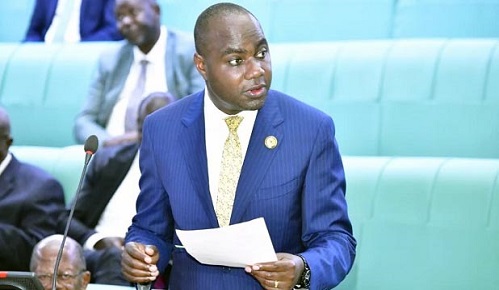
Uganda’s Finance Minister, Henry Musasizi
HABARI DAILY I Kampala, Uganda I Over three million people from approximately 667,000 households across 4,064 parishes are expected to benefit from the fourth phase of the Northern Uganda Social Action Fund (NUSAF IV), a Shs1 trillion government programme designed to reduce poverty, create jobs and strengthen household livelihoods across nine sub-regions of the country.
Running until December 2031, the programme targets vulnerable communities through livelihood support, investment capital, agricultural inputs, value-addition equipment and opportunities for young people to establish self-employment enterprises.
The intervention is expected to create 860,000 jobs and build resilience among 1.8 million vulnerable people, making it a major component of government efforts to improve household incomes and expand economic opportunities in communities that continue to face poverty and other development challenges.
Backed by the World Bank and the Government of Uganda, NUSAF IV is valued at approximately $276 million to $290 million, equivalent to a substantial public development investment intended to help vulnerable households become more economically self-reliant.
The programme covers Acholi, West Nile, Lango, Teso, Karamoja, Elgon, Bukedi, Busoga and Bunyoro, extending support beyond northern Uganda to other areas facing livelihood and development challenges.
Focus on Households Most in Need
The programme’s central ambition is to enable vulnerable households to improve their incomes through productive activities rather than depend solely on short-term assistance.
Its interventions are expected to provide communities with resources to strengthen agriculture, establish small businesses and improve their ability to withstand economic and environmental shocks.
For farming households, support with agricultural inputs and value-addition equipment is intended to improve production and create opportunities to earn more from their produce. Value addition can also help communities reduce post-harvest losses and access more profitable markets.
Young people are another important target group, with the programme seeking to create employment opportunities through skills development and support for self-employment enterprises.
The scale of the planned intervention means that local governments will play a critical role in identifying eligible beneficiaries, coordinating implementation and ensuring resources reach the intended communities.
Speaking during the induction of local government leaders and technical staff in Gulu City, James Ebitu, a senior World Bank official, urged local governments to uphold transparency and accountability throughout implementation.
Ebitu said support would take into account differing levels of vulnerability across the targeted areas, stressing the importance of directing resources to communities with the greatest needs.
His remarks highlight the challenge of implementing a programme across thousands of parishes, where differences in household circumstances require careful identification and prioritisation of beneficiaries.
Leaders Warn Against Mismanagement
While welcoming the intervention, local leaders have cautioned programme managers against repeating shortcomings associated with previous poverty reduction initiatives.
Pader District chairperson Alfred Akena said the programme presented an opportunity to improve livelihoods but warned against alleged diversion of funds and failures to reach intended beneficiaries under earlier interventions.
He called for stronger safeguards to ensure the resources allocated to NUSAF IV translate into tangible improvements in household welfare.
Akena also urged programme managers to incorporate climate change considerations into implementation and protect community land interests.
The concerns are particularly relevant for communities that depend heavily on agriculture, where changing weather patterns can undermine production, threaten incomes and deepen household vulnerability.
Ensuring that investments respond to local environmental conditions could therefore help beneficiaries sustain their economic activities beyond the programme’s implementation period.
Gulu City Mayor Julius Achire Labeja also called on those managing NUSAF IV to prioritise youth skills development and employment.
He emphasised the need to ensure that young people are equipped with practical skills and opportunities to participate in productive economic activities rather than remain excluded from the benefits of development programmes.
Government Demands Accountability
In a speech read by NUSAF IV head Dr Robert Limlim, the Permanent Secretary in the Office of the Prime Minister, Alex Kakooza, outlined the programme’s objectives and urged district leaders to integrate its activities into their development plans.
Kakooza warned against political favouritism, demands for unofficial payments and poor financial accountability, saying the programme’s success would depend on responsible management of public resources.
His message places local government officials at the centre of efforts to ensure that beneficiary selection and resource allocation are conducted fairly.
With more than three million people expected to benefit, any weaknesses in financial controls or beneficiary identification could undermine the programme’s ability to achieve its targets.
The government is therefore expected to rely on local administrative structures to coordinate activities, monitor implementation and ensure that assistance reaches the households for which it is intended.
The State Minister for Northern Uganda, Beatrice Akori, urged local leaders to use radio broadcasts and community engagement meetings to sensitise residents about the programme and explain how they can benefit.
Public awareness is expected to help communities understand eligibility requirements, available interventions and the procedures for accessing support.
It could also help residents identify and report irregularities, including demands for unofficial payments or attempts to manipulate beneficiary selection.
Building on Two Decades of Intervention
NUSAF was introduced in 2003 to support recovery and poverty reduction in northern Uganda. Its fourth phase builds on earlier interventions, with a broader emphasis on sustainable livelihoods, social protection and resilience among vulnerable households.
The new phase seeks to translate development funding into lasting improvements in incomes, employment and household security across the nine sub-regions.
Experts have however pointed out that the programme’s success will depend not only on the amount of money invested but also on whether resources reach the intended beneficiaries and generate sustainable economic opportunities.







About the Author