
Tighter traffic controls ahead of festive season
HABARI DAILY I Kampala, Uganda I As the festive season, which is usually accompanied by high death rates on Ugandan roads, draws near, government has intensified traffic enforcement operations, arresting 93 suspected drunk drivers in Kampala in an early-morning crackdown aimed at preventing avoidable road fatalities.
The suspects were arrested between 3:00am and 6:30am on Sunday, November 22, 2026, during a coordinated operation conducted across eight Kampala Metropolitan Police (KMP) traffic divisions under the ongoing Kawunyemu drink-driving campaign.
The arrests, followed by the arraignment of the suspects in court on Monday, November 23, form part of broader government efforts to prevent the usual surge in road crashes as thousands of Ugandans prepare to travel for Christmas and New Year celebrations.
Traffic Police spokesperson SP Michael Kananura said the operation was intended to deter motorists from driving under the influence of alcohol and strengthen compliance with road safety regulations.
The crackdown covered Kabalagala, Kira Division, Kira Road, Jinja Road, Katwe, Central Police Station (CPS) Kampala, Old Kampala and Wandegeya.
Kabalagala and Kira Division recorded the highest number of arrests, with 16 suspects each, followed by Kira Road with 15.
Jinja Road, Katwe and CPS Kampala registered 10 arrests each, while Old Kampala recorded nine and Wandegeya seven.
The geographical spread of the arrests demonstrates the scale of drink-driving enforcement across Kampala, particularly during early-morning hours when motorists are likely to be returning from entertainment establishments and social gatherings.
Nationwide operations
The Kampala operation is part of a wider nationwide traffic enforcement campaign through which police arrested 2,832 motorists for various traffic offences between November 15 and 22, 2026.
According to Traffic Police, mechanically defective vehicles accounted for the largest number of violations, with 1,034 motorists apprehended.
Another 413 drivers were arrested for careless overtaking, while 246 motorcyclists were found riding without valid driving licences.
Police also arrested 201 motorists operating without the required operator’s licences and 186 drivers using expired driving licences.
The figures demonstrate that government is targeting several dangerous road-use practices beyond drink-driving, including the operation of unroadworthy vehicles, reckless overtaking and disregard for licensing requirements.
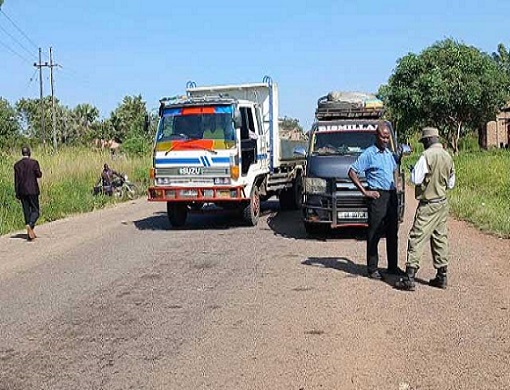
The enforcement strategy is particularly important as traffic volumes increase during the festive season, when commercial transport operators, private motorists and public transport vehicles experience heightened demand.
Police have consequently intensified roadside checks, sensitisation campaigns and operations targeting motorists whose conduct puts passengers, pedestrians and other road users at risk.
Fatalities raise concern ahead of Christmas
The crackdown comes against the background of worrying national road safety statistics.
According to the Uganda Police Annual Crime Report 2025, the country recorded 26,044 road traffic crashes, compared with 25,107 in 2024, representing a 3.7 per cent increase.
Fatal crashes increased from 4,434 in 2024 to 4,602 in 2025, while the number of people killed rose from 5,144 to 5,383.
This translates into approximately 15 people losing their lives on Ugandan roads every day.
The report also recorded 18,444 people sustaining serious injuries in 2025, compared with 17,013 in the previous year.
December recorded the highest number of crashes, with 2,443 incidents, reflecting increased travel demand, commercial activity and longer journeys associated with the festive period.
These figures provide the context for the renewed enforcement campaign, as authorities seek to prevent another December increase in road deaths.
Kampala itself remains a major concern. The Kampala Capital City Authority’s 2025 Road Safety Report recorded 407 deaths in road crashes, compared with 404 in 2024. Motorcyclists accounted for approximately half of the fatalities.
The figures highlight the need for stronger enforcement in the capital, where motorcycles, taxis, private vehicles and heavy commercial trucks compete for limited road space.
Responsible road use
Beyond arrests, government has continued to emphasise public awareness and individual responsibility as essential components of its road safety strategy.
Traffic Police have repeatedly warned motorists against speeding, reckless overtaking, dangerous driving, overloading and operating vehicles under the influence of alcohol.
The Kawunyemu campaign is particularly intended to discourage drink-driving by increasing the likelihood of detection and prosecution.
Driving under the influence of alcohol compromises motorists’ judgement, coordination and reaction time, increasing the likelihood of collisions that can kill or seriously injure innocent road users.
Police have urged motorists attending Christmas parties, weddings and other celebrations to arrange alternative transport instead of driving after consuming alcohol.
Drivers have also been encouraged to inspect their vehicles before embarking on long journeys, observe speed limits, maintain safe following distances and avoid night travel when fatigued.
Public transport operators have a responsibility to ensure that their vehicles are mechanically sound, properly loaded and operated by licensed drivers.
The government has also encouraged passengers to report reckless driving and avoid boarding vehicles whose operators disregard basic safety requirements.
Police seek a safer festive season
The latest arrests signal an effort by the authorities to move beyond road safety warnings towards more visible enforcement, particularly against motorists whose behaviour creates risks for other road users.
However, the effectiveness of the campaign will ultimately depend on sustained operations across the country rather than isolated crackdowns in Kampala.
With 5,383 people killed on Ugandan roads in 2025, the challenge facing government is to translate enforcement into a measurable reduction in fatalities.







About the Author