
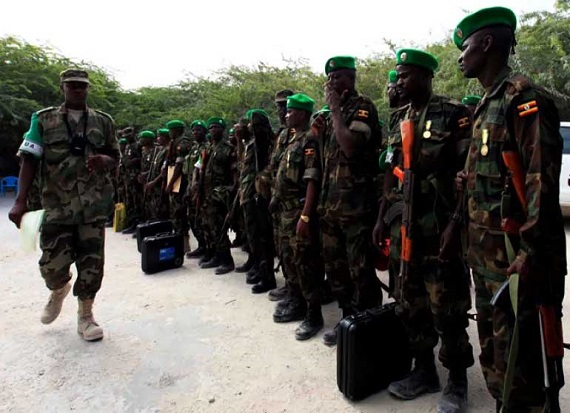
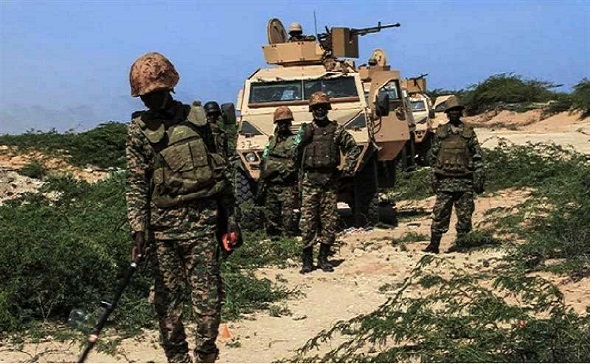
Ugandan troops en-route from Somalia
HABARI DAILY I Kampala, Uganda I Somalia’s political lifeline, including its current Government, is at stake as Uganda begins withdrawing its troops from the Horn of Africa country after nearly two decades of military involvement, raising fears that the departure of the African Union’s largest troop contributor could expose Mogadishu to renewed insurgency, political instability and a possible collapse of state institutions.
The phased withdrawal of Uganda People’s Defence Forces (UPDF) soldiers, which began in late October and early November 2026, marks a potentially defining moment for Somalia, whose survival as a functioning state has depended heavily on foreign military intervention, particularly Uganda’s contribution to fighting the al-Shabaab Islamist militant group.
Uganda, which first deployed troops to Somalia in 2007 under the African Union Mission in Somalia (AMISOM), has maintained the largest contingent in the subsequent AU security missions. Its soldiers have been instrumental in protecting Mogadishu, securing strategic government installations and pushing al-Shabaab out of several major towns.
However, with Kampala expected to complete its withdrawal by next year, Somalia faces the difficult task of assuming responsibility for its security at a time when its national army remains under pressure, international funding is uncertain and political disagreements threaten to undermine the government of President Hassan Sheikh Mohamud.
The immediate concern is that the departure of Ugandan forces could create security vacuums in strategically important areas, particularly Lower Shabelle, where UPDF battle groups have maintained positions against al-Shabaab.
Security analysts have warned that the Somali National Army (SNA), which is expected to take over positions previously occupied by Ugandan troops, may struggle to defend the territories while simultaneously confronting the militant group and managing internal political and clan-based conflicts.
The handover of military positions, including those in Barawe, represents a significant test of Somalia’s ability to sustain security gains achieved through years of international military assistance.
The risks are particularly serious because al-Shabaab remains a formidable insurgent force, controlling substantial rural territories and maintaining the capacity to launch deadly attacks against government installations and security personnel.
The militant group recently claimed to have killed hundreds of elite Somali soldiers in an attack, although the government acknowledged the incident without disclosing the number of casualties.
For Somalia, the possibility of losing strategically important towns could reverse years of military progress and threaten the government’s authority in Mogadishu.
Abdisalam Guleid, a former deputy director of Somalia’s National Security Agency, has warned that the country’s security situation is increasingly precarious as foreign troops prepare to leave.
He has drawn parallels with Afghanistan, where the withdrawal of United States and NATO forces in August 2021 was followed by the rapid takeover of Kabul by the Taliban.
“I don’t think Mogadishu will be able to defend itself. The Taliban style [takeover]… that’s the most likely scenario I can envision now,” Guleid warned.
His concerns reflect the central role Uganda has played in preventing the collapse of Somalia’s federal government since 2007.
Ugandan soldiers helped drive al-Shabaab out of Mogadishu and other important urban centres, while protecting critical infrastructure, including the airport, seaport, government institutions and diplomatic missions.
Their deployment subsequently became part of a broader international security arrangement involving troops from Burundi, Djibouti, Kenya, Ethiopia and Sierra Leone, alongside military support from countries such as the United States and Turkey.
The withdrawal therefore raises questions about whether Somalia’s security institutions have developed sufficient capacity to operate independently after years of depending on foreign military protection.
Political divisions complicate transition
Beyond the military implications, Uganda’s departure comes at a particularly sensitive political moment for Somalia, where President Mohamud’s administration is facing disagreements with opposition politicians and regional leaders over constitutional changes, presidential tenure and the country’s electoral system.
Somalia has been attempting to transition from an indirect electoral arrangement, in which clan elders select lawmakers who subsequently elect the president, towards a system of direct voting.
However, the proposed reforms have generated disagreements over the timing, implementation and legitimacy of the electoral process.
The dispute intensified after constitutional amendments supported by Mohamud extended the presidential term from four to five years, effectively postponing the next elections until 2027.
A subsequent Supreme Court ruling challenged the extension and directed political leaders to agree on an electoral roadmap within 30 days and conduct elections within three months.
The government’s rejection of the ruling, coupled with disputes surrounding the dismissal of the Chief Justice and other judges, has further complicated the political environment.
These disagreements threaten to divert the government’s attention from the security transition, potentially giving al-Shabaab and other armed groups opportunities to exploit political divisions.
Former security officials have also warned that clan-based militias aligned with rival political factions are increasingly challenging federal authority, with some reportedly fighting alongside al-Shabaab against government forces.
For a country that experienced the collapse of central authority in the early 1990s following the overthrow of President Mohamed Siad Barre, the possibility of renewed fragmentation carries particularly painful historical memories.
The withdrawal is also exposing the financial weaknesses underpinning Somalia’s security arrangements. The African Union mission, now operating as the African Union Support and Stabilisation Mission in Somalia (AUSSOM), has been affected by international funding constraints, forcing troop-contributing countries to reconsider the sustainability of their deployments.
The United States, which contributes approximately a quarter of the annual $500m budget for the United Nations Support Office in Somalia (UNSOS), had previously indicated that it would reduce its financial commitment, although Washington subsequently extended its support for another year.
The funding supports Somali security forces, AU peacekeepers and troop-contributing countries, including Uganda, making any reduction potentially disruptive to military operations.
Somalia’s dependence on external assistance is also reflected in its national budget. Finance Ministry figures indicate that donor grants account for approximately two-thirds of the country’s planned $1.36bn budget for 2026, yet only about $314m had been received during the first nine months of the year.
The funding uncertainty, combined with the withdrawal of foreign troops, creates a dangerous situation in which Somalia could be expected to assume greater security responsibilities without adequate financial and logistical resources.
There are also concerns that Uganda’s departure could encourage other contributing countries to reconsider their military commitments. Ethiopia, another major security partner, has reportedly considered withdrawing some of its forces, although the extent of any planned reduction remains unclear.
The possibility of simultaneous withdrawals would place additional pressure on Somali forces, particularly in areas where the AU mission has been central to containing al-Shabaab.
Museveni defends Uganda’s strategic commitment
In Uganda, President Yoweri Museveni has consistently defended the country’s military involvement in Somalia, presenting it as an investment in regional security, African solidarity and the protection of Uganda’s strategic interests.
Addressing leaders of troop-contributing countries at an extraordinary summit in Munyonyo in July 2026, Museveni rejected the suggestion that Somalia would be abandoned if Western countries reduced their support.
“If the international community wants to pull out, let them. All the problems we have solved here, we solved without their support. We got support from our brothers,” Museveni said.
He added: “Somalia will not be abandoned. We have the capacity. Whether others pull out or not, we shall stand.”
The President also explained that Uganda’s original decision to deploy troops in 2007 was driven by strategic considerations and regional solidarity, rather than pressure from foreign governments.
He said Uganda had an interest in preventing extremist groups from destabilising the region and had also wanted to stand with neighbouring Ethiopia.
Museveni’s position reflects his longstanding argument that African countries should develop the capacity to resolve their own security challenges instead of depending indefinitely on Western military and financial assistance.
However, the withdrawal raises questions about how that commitment will be sustained when Uganda itself is ending its military deployment and the AU mission faces funding difficulties.
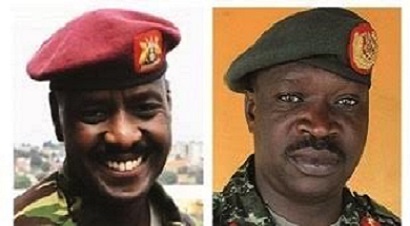
Chief of Defence Forces Gen Muhoozi Kainerugaba, who confirmed the beginning of the withdrawal on October 29, described the move as the culmination of two decades of military sacrifice.
“As we promised, we have started withdrawing UPDF from Somalia. After 20 years of a lot of blood and sacrifice, we are handing over security to our Somali brothers,” Muhoozi said.
On November 2, the UPDF’s Acting Director of Defence Public Information, Col Chris Magezi, announced that the first cohort of soldiers deployed under bilateral arrangements had already returned to Uganda.
He said the withdrawal would gradually cover all Ugandan forces, including those serving under AUSSOM, with the entire operation expected to be completed by the close of 2027.
The announcement effectively sets a deadline for ending Uganda’s nearly 20-year military commitment, although the immediate bilateral withdrawal and the longer AU drawdown are separate stages.
The withdrawal has also generated debate within Uganda’s political circles about the cost, purpose and achievements of the intervention.
During the original deployment, opposition politician and former Kira Municipality MP Ibrahim Ssemujju Nganda was among the vocal critics who questioned the military engagement, arguing that Ugandan soldiers were being exposed to a dangerous conflict with uncertain returns.
His criticism, including the argument that the UPDF could not succeed where the United States had struggled, attracted strong condemnation from government supporters, who considered the remarks insensitive to soldiers risking their lives abroad.
The debate illustrates how Somalia’s security crisis has also been a domestic political issue in Uganda, particularly concerning military casualties, expenditure and the government’s foreign policy priorities.
Uganda–Somalia diplomatic relations face test
Despite the military disengagement, Kampala has signalled that its relationship with Mogadishu will remain important, particularly as Somalia navigates its political and security transition.
On November 23, Museveni hosted Somali President Hassan Sheikh Mohamud at State House Entebbe, where the two leaders discussed restoring peace, strengthening government institutions and securing lasting stability in Somalia.
Museveni used the meeting to emphasise the importance of political unity, dialogue, democracy and peaceful competition, drawing from Uganda’s experience in building stable institutions.
“I shared Uganda’s experience on the importance of national unity, dialogue, democracy and peaceful political competition in building stable nations,” he said.
The meeting was significant because it demonstrated that Uganda’s military withdrawal does not necessarily signal an end to its diplomatic and strategic relationship with Somalia.
Mohamud, who has been seeking continued international support, faces the challenge of persuading regional and international partners to maintain assistance even as foreign troops reduce their presence.
For Uganda, maintaining diplomatic engagement could help protect the gains made through its military intervention while preserving economic, political and security cooperation with Somalia.
However, the withdrawal also presents an opportunity for Uganda to redirect military resources and personnel towards domestic security priorities after years of maintaining a costly overseas deployment.
Can Somalia survive without Uganda?
Not all observers believe Uganda’s departure will automatically result in the collapse of the Somali government.
Ugandan security analyst Freddie David Egesa argues that nearly two decades of international military assistance have helped Somalia establish institutions capable of gradually assuming responsibility for national security.
He views the withdrawal as an opportunity to assess the progress made by Somali security institutions and establish whether the country can defend itself without depending indefinitely on foreign soldiers.
Egesa also argues that the transition should compel Somalia’s political leaders to overcome their differences and take greater responsibility for the country’s future.
His position provides a more optimistic assessment of the withdrawal, suggesting that the departure of foreign troops could ultimately strengthen Somali sovereignty if accompanied by political unity and investment in national security institutions.
However, the International Crisis Group’s analyst Omar Mahmood has warned that the timing presents serious difficulties for the Somali army.
Somali forces must simultaneously fight al-Shabaab, occupy positions vacated by foreign troops and manage tensions involving regional administrations and rival political factions.
The situation in Lower Shabelle is particularly concerning because the region provides strategic access to Mogadishu and contains important military positions previously secured by Ugandan forces.
Residents in some areas have reportedly fled their homes amid fears of clashes involving government forces, local militias and political factions following changes in military deployments.
The African Union has consequently considered taking over several strategic positions around Mogadishu to prevent an immediate security vacuum as Ugandan troops depart.
But even this arrangement faces questions about funding, manpower and the long-term capacity of the mission to sustain operations.
For Somalia, the greatest danger is that al-Shabaab could exploit the transition, capture abandoned positions and use military victories to undermine confidence in the federal government.
A resurgence of the insurgency would also threaten neighbouring countries, particularly Kenya, Ethiopia and Uganda, which have security and economic interests in a stable Horn of Africa.
Uganda’s withdrawal therefore has implications beyond the bilateral relationship between Kampala and Mogadishu. It could reshape regional counterterrorism cooperation, influence the future of African peacekeeping and expose weaknesses in the continent’s ability to finance its own security operations.
Ultimately, Somalia’s survival will depend on whether its political leadership can establish consensus, strengthen its armed forces and replace foreign military protection with sustainable national security institutions.
For Uganda, the end of its deployment marks the conclusion of one of its longest and most consequential overseas military engagements. For Somalia, however, it represents the beginning of a potentially dangerous test of whether the state can stand independently after nearly two decades of relying on Ugandan soldiers to defend its political existence.
The success or failure of that transition could determine not only the future of President Mohamud’s administration but also the security and stability of the wider East African region.







About the Author