
Board Members of the Insurance Appeal Tribunal, led by Rita Namakiika Nangono, the tribunal’s Chairperson (5th L) presenting their 2024/25 Annual report to the minister former finance minister, Matia Kasaija (4th L) and the current Finance minister, Henry Musasizi (3rd L)
HABARI DAILY I Kampala, Uganda I The Insurance Appeals Tribunal is one of the institutions which have contributed tremendously towards reforming Uganda’s financial sector, particularly by strengthening accountability, improving consumer protection and creating a specialised mechanism through which insurance disputes can be resolved more quickly and fairly.
Established under Section 135 of the Insurance Act, 2017, the Tribunal became operational in 2022 and has since developed into an important pillar of Uganda’s insurance regulatory and dispute-resolution framework.
As it strives to uncover rot in the insurance industry, its caseload has shootup tremendously. Most of the rot arises from insurance companies that do not honor their obligations and indemnify their clients when they encounter problems while fully covered by respective policies.
Rita Namakiika Nangono, the Chairperson of the Insurance Appeals Tribunal, said that they are very approachable to hear such appeals, a clear indication of which is the rise of appeals.
“We have over the years registered a steady rise in the number of disputes coming before us, with appeals increasing from 10 in 2023/24 to 33 in 2025/26, a trend that its leadership says reflects both the growth of the insurance industry and increasing awareness of the specialised dispute-resolution mechanism.
The Tribunal became operational in 2022, following its establishment under the Insurance Act, 2017, and serves as an appellate body for disputes arising from decisions of the Insurance Regulatory Authority (IRA).
Nangono said that the institution has handled an increasing number of cases since its establishment, although its first year was largely devoted to setting up its operations.
She said that in 2024/25, the number of appeals more than doubled to 22, of which 20 were completed, leaving two pending decisions at the close of the financial year.
“The number increased further in 2025/26, when 33 appeals were registered. Of these, 22 had been completed by the end of the financial year.
Legal mandate
The Tribunal’s legal status is rooted in the Insurance Act, 2017, which established it as a specialised mechanism for resolving insurance disputes.
Nangono explained that the Tribunal is not a first-instance complaints body. “A policyholder or insurance industry player cannot simply walk into the Tribunal with an initial complaint. Instead, disputes must first pass through the IRA’s complaints mechanism.”
“If you are an insurance policyholder and you have a dispute with your insurer, you first have to lodge your appeal with the IRA. They have a complaints bureau,” she said.
After the regulator hears the complaint and makes a decision, an aggrieved party can appeal that decision to the Insurance Appeals Tribunal, she said.
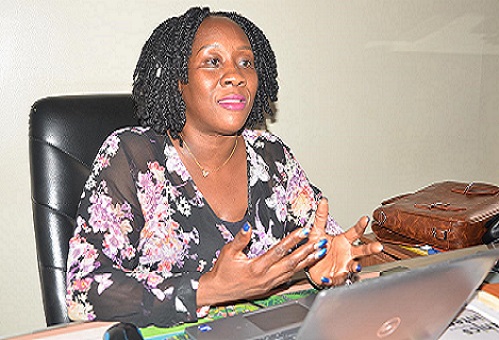
Rita Namakiika Nangono
The same applies to licensed players in the industry, including insurers, brokers and agents, who may challenge decisions by the regulator, such as suspension or revocation of a licence.
“The Tribunal can uphold, dismiss, vary or set aside an IRA decision, or refer a matter back to the regulator for further handling. Our decisions are legally binding, although parties dissatisfied with them have a right to appeal to the High Court,” she noted.
Five-member panel
The Tribunal consists of five members appointed by the Minister of Finance. The chairperson must possess qualifications that make them eligible for appointment as a High Court judge, while the other members bring specialised expertise, including legal, accounting and insurance knowledge.
The specialised composition reflects the technical nature of insurance disputes, which frequently involve complex policy terms, exclusions, claims procedures and disclosure requirements.
Nangono said the Tribunal’s creation has helped move Uganda beyond a predominantly court-based approach to insurance dispute resolution.
Historically, policyholders and insurers largely relied on courts to settle disagreements. But the 2017 reforms introduced the Complaints Bureau and the Tribunal to provide faster and more specialised avenues for resolving disputes.
“These are quicker. They are not intended to replace courts, but it is quick dispensation of justice,” she said.
Policy interpretation
The Tribunal is increasingly dealing with disputes involving the interpretation of insurance policy terms. Nangono said common disagreements concern what a policy covers, its exclusions, benefits, disclosure and alleged misrepresentation.
Some disputes arise because policyholders do not fully understand the products they purchase, while others stem from inaccurate information supplied to insurers.
She cited examples involving vehicle chassis numbers, the condition of insured vehicles and inexperienced drivers.
She also pointed to misunderstandings surrounding life insurance products, where some customers treat policies as ordinary savings schemes without appreciating their insurance conditions and maturity requirements.
These disputes, she said, underline the importance of clear communication between insurers and customers.
Digitalisation challenging
As insurance increasingly moves online, the Tribunal has experienced a new category of disputes involving electronic policies, data accuracy, privacy, cybersecurity and digital transactions.
“We are fast embracing electronic case management and encouraging digital filing, while investing in the capacity of our staff and members. The objective is to ensure technology improves access to justice rather than creating another barrier for people unfamiliar with digital systems.”
Nangono said the Tribunal wants to expand electronic hearings so that complainants do not have to travel long distances to its single station.
“Virtual proceedings could reduce costs and delays, particularly for policyholders outside Kampala.” she said, adding that they are also seeking greater public awareness, as many Ugandans remain unaware that the institution exists.
“We need stronger customer education for people to understand their rights, their obligations, and where they sit,” Nangono said, adding that filing fees are affordable and complainants are encouraged to represent themselves instead of hiring lawyers who are costly on most occasions.
Networking
The Tribunal is also working with the IRA, insurers, brokers, agents and the Judiciary to identify recurring problems and recommend improvements across the sector.
“Our future should involve asking what each dispute teaches the insurance industry, how similar conflicts can be prevented and how the system can be improved.”
Weaknesses in the industry
The Tribunal’s most significant contribution to reform may lie in what it learns from the cases brought before it.
Among the recurring problems identified are vague policy documents, unclear claims procedures, lengthy claims processes, inadequate claims support and poor customer service.
According to the Tribunal’s observations, some insurance policies contain ambiguous clauses that can make the intended protection difficult to enforce. In other cases, policyholders are not adequately guided on how and when to make claims.
The Tribunal has also observed that while some guidelines provide timelines based on the quantum of claims, they may not adequately address complex cases requiring investigations, including cross-border inquiries.
Intention not to pay
Nangono says insurers should investigate claims with the objective of determining whether they should be paid, rather than approaching investigations with a predetermined intention not to pay.
Poor communication is another source of conflict, with non-responsiveness to customers’ emails and refusal to engage clients further frustrating policyholders.
Turning disputes into reforms
Nangono further points out that these observations provide the Tribunal with an opportunity to influence industry-wide improvements rather than merely settle individual cases.
“One area requiring attention is policy wording. The Tribunal’s findings can encourage insurers to review policy documents, remove ambiguities, close gaps and ensure that contractual provisions are clear and legally sound,” she said.
Claims-handling practices can similarly be improved where recurring disputes expose unfair or unreasonable treatment of policyholders.
Its findings can further assist the regulator in identifying areas of non-compliance and designing stronger supervisory and regulatory measures.
This would particularly mean that the institution’s role would ultimately go beyond deciding who wins a particular dispute, to creating a conducive legal and financial environment for the insurance industry to flourish.
Insurance Industry Crosses Shs2 Trillion Mark
Uganda’s insurance industry is steadily growing, with Gross Written Premiums (GWP) crossing the Shs2 trillion mark for the first time in 2025, reflecting expanding business activity and rising demand for insurance services.
According to industry performance figures, total premiums reached Shs2.024 trillion in 2025, representing a 14.72% increase from Shs1.764 trillion recorded in 2024.
The growth continued into 2026, with the industry collecting Shs1.094 trillion in gross written premiums during the first six months, an increase of 7.68% compared with the corresponding period in 2025.
The Insurance Regulatory Authority of Uganda (IRA), which supervises the industry, attributes the sector’s expansion partly to the strong performance of life insurance, which has emerged as a major driver of premium growth.
Life insurance premiums surged by more than 30% to Shs524.14 billion in the first half of 2026, highlighting increasing activity in a segment that provides financial protection and long-term benefits to policyholders and their families.
Non-life insurance and microinsurance accounted for the remainder of the industry’s premiums, covering a range of risks involving property, motor vehicles, businesses and individuals.
The latest figures indicate that Uganda’s insurance market is expanding, although significant opportunities remain to extend coverage to more households and businesses.
Low insurance penetration
Despite crossing the historic Shs2 trillion milestone, insurance penetration remains below 1% of gross domestic product (GDP), suggesting that insurance services have yet to reach a large proportion of the population and the wider economy.
Low penetration presents both a challenge and an opportunity for insurers, who must find ways to make their products more accessible, affordable and relevant to Ugandans.
Building public trust, improving awareness of insurance benefits and developing products suited to different income groups could help expand coverage beyond existing customers.
The growth in premiums also comes as businesses and individuals increasingly seek financial protection against unexpected losses, health-related expenses, property damage and other risks.
However, rising premiums alone do not necessarily indicate that insurance coverage is becoming widespread. The proportion of people and businesses protected against financial risks remains an important measure of the industry’s broader contribution.







About the Author