
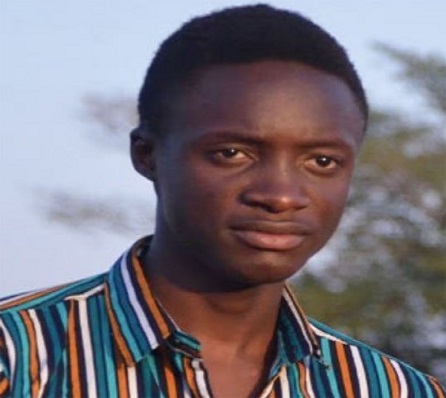
Hamza Muhaise
HABARI DAILY I Kampala, Uganda I There are many questions and no answers so far on the death of Ugandan rugby international player Hamza Muhaise, who collapsed and died during a training session in Nairobi, Kenya, on Wednesday.
Muhaise, 25, was taking part in what should have been another routine preparation session with his Kenyan club, Strathmore Leos, when tragedy struck, leaving the Ugandan and Kenyan rugby communities struggling to come to terms with his sudden death.
The circumstances surrounding his collapse remain unclear, with neither his club nor the rugby authorities providing details about what caused the young player’s death.
Was there an underlying medical condition that had gone undetected? Did Muhaise suffer a cardiac event or another medical emergency while training? Were there warning signs before he collapsed? And, perhaps most importantly, will a post-mortem examination provide answers to a death that has shocked those who knew him?
For now, these questions remain unanswered.
Muhaise’s death is particularly difficult to comprehend because he was still at an age when many athletes are reaching their peak. At 25, the Ugandan international had established himself as an important player for Strathmore Leos and had built a reputation as a versatile backline player.
The Nairobi-based club confirmed his death in an emotional statement, describing him as a beloved brother and mourning the void left by his passing.
“It is with great sadness that we announce the passing of our beloved brother Hamza. His loss has left a deep void in our hearts. We extend our deepest condolences to his family, friends, and loved ones during this difficult time. May his soul rest in eternal peace,” the club said.
The choice of the word “brother” reflected the relationship Muhaise had built with his teammates since joining the Leos in January 2024.
He quickly became an integral member of the squad, primarily playing at fly-half — the number 10 position that often places a player at the centre of a team’s attacking strategy.
From that position, Muhaise was responsible for helping direct the team’s attack, making decisions under pressure and connecting the forwards with the backline.
His versatility also allowed him to operate in other backline positions whenever the team required it.
Before moving to Kenya, Muhaise had played for Black Pirates RFC in Uganda, where he developed his career and earned recognition as an international-level player.
His move across the border to Strathmore Leos offered him another platform to compete at a higher level and become part of the Kenyan rugby scene.
His death has therefore affected two rugby communities — one in Uganda, where he began his career, and another in Kenya, where he had spent the past two years building his reputation.
The Uganda Rugby Association joined the tributes, expressing sympathy to his family, friends, teammates and coaches.
“Our thoughts are with Hamza’s family, friends, teammates, coaches, and the wider rugby communities of Sailors Rugby and Strathmore during this difficult time,” the association said in a statement on X.
Yet behind the condolences is an uncomfortable need for clarity.
Sudden deaths among young athletes have previously raised questions about medical screening, cardiac health, emergency preparedness and the availability of immediate medical intervention during sporting activities.
That does not mean Muhaise’s death was caused by any of these factors. Without medical findings, it would be premature to speculate about the cause.
But his death inevitably raises questions about how athletes are medically assessed before and during competitive careers, and whether there are conditions that can remain invisible until a player is placed under extreme physical exertion.
There are also questions about what happened immediately after Muhaise collapsed.
How quickly was medical assistance available? Was he taken to hospital? What emergency measures were attempted? Did he show any signs of distress before the collapse?
These details will be important not only to his family but also to the wider sporting community seeking to understand how such a tragedy could occur.
For now, however, the rugby fraternity is left mourning a young player whose career was still unfolding.
At Strathmore Leos, he was more than the player wearing number 10. He was a teammate, friend and brother.
In Uganda, he was an international whose journey had taken him from the local rugby scene to the Kenyan league.
His sudden death has cut that journey short.
Until medical authorities establish what happened, the questions will continue to hang over the rugby communities in both countries.
And for Muhaise’s family, teammates and friends, the greatest question may be the simplest one: How did a healthy-looking 25-year-old rugby player collapse during training and never rise again?
Whereas both the Kenya Rugby Union and Uganda Rugby released statements mourning the loss of the former Black Pirates RFC and Sailors RFC player, moments of silence were observed across regional games, including Kabeberi 7s matches and a Uganda-Zimbabwe U20 test match.







About the Author