
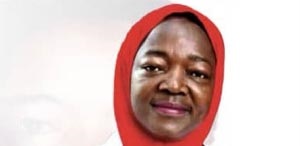
HABARI DAILY I Kampala, Uganda I For many years, she strived to save lives, restoring hope to patients whose injuries threatened to leave them permanently disabled. But after a prolonged battle with end-stage kidney disease, Dr Jamirah Namusoke, Uganda’s first female orthopaedic surgeon, has finally succumbed to an illness that had increasingly taken a toll on her health.
Namusoke died on November 6, 2026, following years of battling kidney complications that required regular dialysis. Her death was announced by family members, sending shockwaves through Uganda’s medical fraternity and the wider public.
She was laid to rest the same day at her ancestral home in Kasolo, Iganga District.
Her death came after an extended struggle with end-stage kidney disease, a serious condition in which the kidneys lose almost all their ability to perform their normal functions, including filtering waste products and excess fluids from the blood.
For Namusoke, the condition meant depending on regular dialysis to sustain her life as she continued serving patients and inspiring young medical professionals.
Desperate fight for a kidney transplant
Namusoke’s health struggles had become increasingly serious by 2023, when she was already battling advanced kidney disease and relying on dialysis.
By early 2026, her condition had deteriorated further, with additional complications threatening her already fragile health.
She reportedly developed acute chest syndrome, with doctors suspecting pulmonary embolism, a potentially life-threatening condition involving a blood clot blocking an artery in the lungs. She required blood-thinning medication as part of her treatment.
Her medical complications were compounded by fractures involving her pelvis and femur, making her condition even more difficult to manage.
Following medical assessments, doctors recommended an urgent kidney transplant abroad as the most viable option for improving her chances of survival.
The proposed treatment in Türkiye was estimated to cost approximately US$55,000, equivalent to about Shs200 million, covering the transplant and related medical care.
However, raising the money proved a daunting challenge for the public-sector doctor, whose financial resources could not meet the enormous cost of the procedure.
Her friends, medical colleagues and well-wishers subsequently launched an appeal to raise the required funds.
Among those who rallied behind the fundraising campaign was Prof Peter Waiswa of Makerere University’s School of Public Health, who joined others in appealing to the public to support the ailing surgeon.
Despite the appeals and efforts to secure treatment, Namusoke eventually lost her battle with the disease.
Her death has renewed conversations about the financial difficulties faced by medical professionals when confronted with expensive specialised treatment, particularly procedures that may require medical attention outside the country.
Surgeon who transformed Jinja Hospital
While her death has been attributed to kidney disease, Namusoke leaves behind a medical legacy that will continue benefiting thousands of Ugandans.
As head of the orthopaedic department at Jinja Regional Referral Hospital, she played a leading role in transforming the department into a specialised centre for treating patients with bone, joint and other musculoskeletal injuries.
She helped establish a dedicated operating theatre and orthopaedic ward, significantly strengthening the hospital’s capacity to handle complicated surgical cases.
Under her leadership, the department also developed into a training centre for postgraduate medical students, helping nurture the next generation of orthopaedic specialists.
One of the most remarkable chapters in her career involved British tourist Samuel Leeds, who sustained a severe knee injury in a rafting accident on the River Nile.
Namusoke performed an emergency operation that helped save his leg and restore hope following the accident.
Grateful for the treatment he received, Leeds later supported the construction of a 64-bed orthopaedic ward through his foundation.
The Shs1 billion Samuel Leeds Ward was officially opened at Jinja Regional Referral Hospital in October 2024, providing additional capacity for patients requiring specialised orthopaedic care.
The facility remains one of the enduring reminders of Namusoke’s professional dedication and the far-reaching impact of her work.
In its tribute, Jinja Regional Referral Hospital described her as more than a surgeon, remembering her as a life-saver whose professional excellence, dedication and compassion transformed lives.
From humble beginnings to medical pioneer
Namusoke’s journey into medicine began in 1995 when she started working as a dispenser at Entebbe Grade A Hospital.
She later enrolled at Makerere University, graduating with a medical degree in 2004, before working as a medical officer at Kibuli Hospital.
Determined to specialise in surgery, she pursued a Master of Medicine in Orthopaedic Surgery, which she completed in 2013.
In 2016, she joined Jinja Regional Referral Hospital, where she would make history as Uganda’s first female orthopaedic surgeon.
Beyond hospital work, she lectured at Kampala International University and encouraged young women to venture into surgery, a field traditionally dominated by men.
Her educational journey started at Bukoyo Primary School in Iganga District before she proceeded to Tororo Girls’ School and Nabisunsa Girls’ School.
A wife and mother, Namusoke combined her family responsibilities with a demanding medical career, demonstrating determination in a profession that requires extraordinary commitment.
Her death leaves a significant gap in Uganda’s medical fraternity. For many patients, she was the surgeon who gave them another chance at walking, working and living normal lives.
For the young women she mentored, she was proof that gender should never determine how far one can rise in medicine.
And for Jinja Regional Referral Hospital, her legacy is embedded in the operating theatre, specialised ward and training structures she helped establish.







About the Author