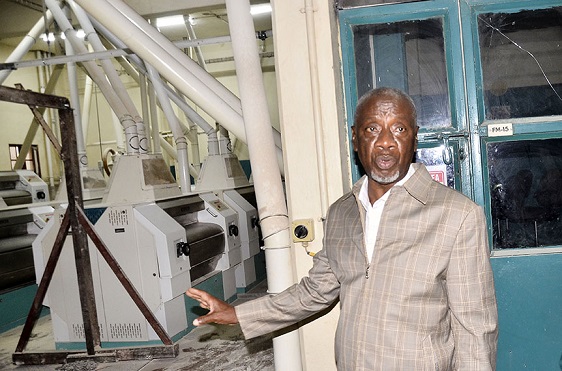
The managing director and co-founder of Ntake Group, Gaster Lule some machinery in flour milling section after an interview at his office in Nalukolongo Lubaga division Kampala. Photo by Ronnie Kijjambu
HABARI DAILY I Kampala, Uganda I The latest visible indicator that the standard of living is becoming increasingly expensive for Ugandan households is the impending increase in bread prices, with consumers expected to pay up to Shs6,500 for a one-kilogramme loaf starting Monday, November 2, 2026.
The Uganda Bakers Association (UBA) has announced a nationwide price adjustment, attributing the increase to skyrocketing production costs, particularly the rising prices of imported raw materials, fuel and transportation.
Under the new pricing structure, the factory wholesale price of a one-kilogramme loaf will increase from Shs5,000 to Shs5,500, while the recommended retail price will rise to between Shs6,000 and Shs6,500.
A 500-gramme loaf will also become more expensive, with its wholesale price increasing from Shs2,500 to Shs3,000 and the expected retail price rising to between Shs3,300 and Shs3,500.
The adjustment follows a meeting of association members to assess the growing financial pressures facing commercial bakeries and the industry’s ability to sustain production at existing prices.
UBA Chairman Canon Dr Gaster Lule Ntake said manufacturers had attempted to absorb the rising operational costs for as long as possible but had reached a point where maintaining the existing prices was no longer economically sustainable.
“The active members of Uganda Bakers Association had a general meeting to discuss salaries, the increase in the prices of raw materials and after lengthy deliberations and calculations, we resolved to increase on the whole sale price of the 1Kg bread from where it was to 5500 and we expect this loaf to be sold at Shs 6500,” Ntake said.
Heavy dependence on imported raw materials
One of the major reasons behind the increase is Uganda’s dependence on imported ingredients used in commercial bread production.
Approximately 80% of the raw materials required by commercial bakeries, including wheat flour, yeast and baking fat, are imported, exposing manufacturers to international price movements, supply disruptions and fluctuations in foreign exchange rates.
Wheat flour is particularly important because it is the primary ingredient in bread production. Any increase in its international price directly affects the cost of manufacturing a loaf.
Baking fat and yeast are equally essential to the production process, and their rising prices have added to the financial burden facing manufacturers.
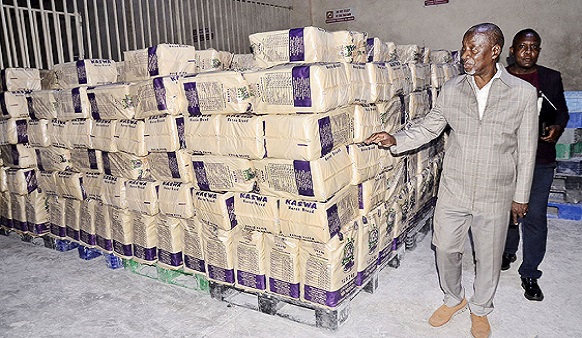
The strong US dollar against the Ugandan Shilling has further complicated the situation by increasing the amount of local currency required by importers to purchase essential baking ingredients.
Consequently, even when international commodity prices remain relatively stable, exchange rate movements can make imported materials more expensive for Ugandan manufacturers.
This dependence on foreign supplies leaves the local baking industry vulnerable to external economic developments over which individual manufacturers have limited control.
Fuel and transportation costs add to the burden
Besides imported ingredients, escalating fuel prices have emerged as another major contributor to the rising cost of producing and distributing bread.
Commercial bakeries depend heavily on diesel to operate factory machinery, generators and other equipment required to maintain continuous production.
Fuel is also a major expense in transporting finished products from factories to supermarkets, retail shops and other distribution outlets across the country.
Because bread is a perishable product with a relatively short shelf life, manufacturers must maintain regular distribution networks to ensure that consumers receive fresh supplies.
Higher diesel prices therefore increase both factory operating expenses and the cost of delivering bread to different markets.
The industry is also facing pressure from rising employee salaries and other operational expenses, making it increasingly difficult for manufacturers to maintain existing prices without affecting their financial sustainability.
Ntake appealed to consumers to understand the adjustment, saying the industry had little choice given the increase in the cost of essential inputs.
“This is all because of the increase in all our inputs, mainly wheat flour, baker’s fat, yeast and transportation have gone up. Bear with us because we also don’t have what to do,” he said.
Bakers seek to maintain quality standards
Another consideration behind the price adjustment is the industry’s commitment to maintaining the quality and standard measurements of bread supplied to consumers.
Ntake said manufacturers wanted to continue producing bread that meets the requirements of the Uganda National Bureau of Standards (UNBS), rather than compromise on ingredients, quality or prescribed weights to reduce production costs.
He emphasised that the association remained committed to ensuring consumers receive bread that meets the required standards despite the financial pressures affecting manufacturers.
“We wish to continue baking quality bread with the right measurements and standards as directed by UNBS,” he added.
The association has also urged retailers and shopkeepers not to exploit the price adjustment by charging consumers beyond the recommended retail ranges.
Households face another cost-of-living pressure
The increase is expected to place additional pressure on household budgets, particularly among families that rely on bread for breakfast and other daily meals.
It could also affect small retailers and businesses that depend on bread sales, as they adjust their prices and manage changing consumer purchasing patterns.
For households already struggling with the rising cost of essential goods and services, the adjustment represents another challenge in managing everyday expenditure.







About the Author