
Gen Muhoozi Kainerugaba
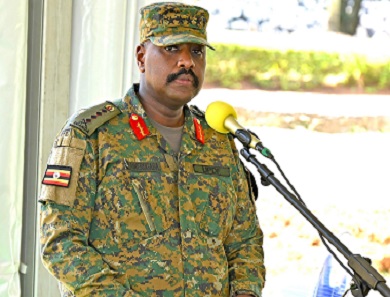
HABARI DAILY I Kampala, Uganda I General Muhoozi Kainerugaba, Uganda’s Chief of Defence Forces (CDF), has embarked on one of the most significant reorganizations of the Patriotic League of Uganda (PLU) since its formation.
He has done this by ordering a merger of rival factions while unveiling a new leadership structure designed to strengthen cohesion and sharpen the organization’s strategic focus.
According to individuals familiar with the restructuring, the primary objective is to resolve internal friction that had begun to undermine the civic movement and reposition it to support the country’s long-term development agenda.
The changes come after months of reports of disagreements within the organization, with some members accused of pursuing personal interests at the expense of PLU’s founding mission. Those tensions are widely believed to have influenced the decision to replace former Secretary General Denis Kabanda and introduce a broader leadership overhaul.
Rather than sidelining experienced leaders entirely, Muhoozi reassigned Kabanda to another role, a move that observers say was intended to preserve unity and avoid deepening divisions among the movement’s founding factions.
Political analysts note that organizations undergoing rapid expansion often face internal competition over influence and decision-making. By restructuring the leadership instead of allowing rival camps to develop independently, Muhoozi appears to be seeking to consolidate authority while ensuring that different interests remain represented within a single organizational framework.
Speaking during the announcement of the new leadership, Muhoozi indicated that the previous team had successfully accomplished its original mandate and that a fresh lineup was needed to address emerging challenges. His remarks suggested that the restructuring was less about individuals than about adapting the organization to a changing political and economic environment.
The overhaul also reflects a broader strategic shift. Rather than concentrating primarily on grassroots mobilization, the reorganized PLU is expected to play a more active role in supporting government priorities and monitoring the implementation of public programs.
Senior leaders within the new structure have been tasked with supervising various sectors and mobilizing citizens behind President Yoweri Museveni’s vision of expanding Uganda’s economy to a GDP of approximately US$500 billion by 2031.
The appointment of prominent national figures to key positions further illustrates the organization’s evolving direction. By assigning influential political and legislative leaders to specialized responsibilities, Muhoozi has strengthened central coordination while reinforcing discipline within the movement.
Analysts argue that such appointments are intended to improve communication between PLU, government institutions and local communities, enabling the organization to contribute more effectively to national development initiatives.
The decision to merge PLU’s factions is also viewed as a preventive measure against prolonged internal rivalry. According to sources close to the organization, maintaining parallel centres of influence risked creating mistrust among members and distracting the movement from its stated objectives. Integrating the different camps into a unified command structure is therefore expected to minimize competition and encourage collective responsibility.
Some political commentators have compared the restructuring to organizational reforms undertaken by large political movements seeking to transition from their formative stages into more institutionalized structures.
In such cases, leadership changes are often used to renew momentum, clarify responsibilities and strengthen accountability.







About the Author