
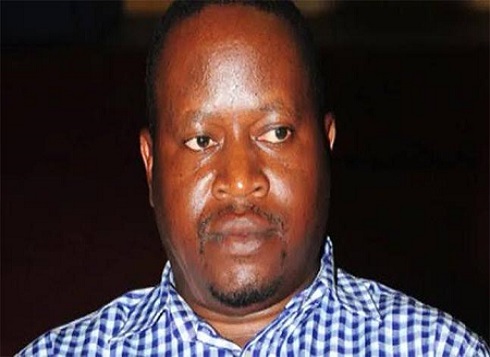
Richard Mwami
HABARI DAILY I Kampala, Uganda I MTN Uganda, Uganda’s biggest telecommunications company, has decided to legally contest the decision by the High Court judge ordering it to pay its former executive, Richard Mwami, Shs2.31 billion in damages for malicious prosecution, arguing that the ruling is based on errors of both fact and law.
Ina judgement dated June 26th 2026, Justice Isaac Bonny Teko of the Civil Division of the High Court ruled that MTN unfairly instigated Mwami’s prosecution despite forensic investigations clearing him of wrongdoing.
In a notice and memorandum of appeal filed through Kampala Associated Advocates, MTN is seeking to overturn the landmark judgment delivered by Acting Justice Isaac Bonny Teko, who held that the telecommunications giant maliciously instigated Mwami’s prosecution over a 2011 mobile money fraud case.
The High Court had found that MTN acted without reasonable and probable cause, relied on an illegally obtained confession and improperly used the criminal justice system to prosecute Mwami, who had initially reported suspicious mobile money transactions involving an estimated Shs16 billion. The court further held that the company remained the “moving force” behind the criminal proceedings even after its own internal forensic investigations had reportedly cleared him of wrongdoing.
Justice Teko consequently awarded Mwami Shs2.31 billion, comprising Shs1.81 billion in special damages, Shs400 million in general damages and Shs100 million in exemplary damages intended to discourage corporate abuse of the criminal justice system.
However, MTN argues that the trial judge reached conclusions that were unsupported by the evidence presented before the court.
One of the company’s principal grounds of appeal is that the judge wrongly concluded that MTN initiated and prosecuted the criminal case against its former employee. The company maintains that its role was limited to reporting suspected criminal conduct to the relevant authorities, after which responsibility for investigations and prosecution rested exclusively with the Uganda Police Force and the Office of the Director of Public Prosecutions (DPP).
According to MTN, the Constitution and other laws vest investigative powers solely in the police, while the authority to institute criminal proceedings belongs to the DPP. The company argues that both institutions exercise their constitutional mandates independently and cannot be directed, influenced or controlled by a private complainant.
On that basis, MTN contends that the High Court erred in attributing responsibility for the prosecution to the company when the ultimate decisions to investigate, arrest and prosecute were made by legally mandated state agencies.
The appeal also faults the trial judge for allegedly disregarding evidence showing that both the police and the DPP independently evaluated the available evidence before deciding to proceed with criminal charges against Mwami.
MTN further argues that the High Court improperly inferred malice from actions that were, in its view, legitimate efforts to report suspected fraud affecting the company’s operations. It insists that reporting suspected criminal conduct to law enforcement authorities cannot, on its own, amount to malicious prosecution.
Another major ground of appeal concerns the legal test for malicious prosecution. The company contends that the trial judge failed to correctly apply the established principles governing such claims, particularly the requirement that a claimant must prove both the absence of reasonable and probable cause and the existence of malice.
According to MTN, the evidence presented during the trial did not satisfy these legal requirements, making the award unsustainable in law.
The telecommunications company also argues that the High Court improperly shifted responsibility for decisions made by independent public institutions onto a private complainant. It contends that doing so undermines the constitutional independence of criminal investigators and prosecutors by suggesting that complainants can be held liable for decisions they neither make nor control.
MTN further warns that allowing the judgment to stand could create a dangerous legal precedent by exposing individuals and companies to substantial civil liability whenever criminal prosecutions fail, despite having merely reported suspected offences to law enforcement agencies.
The company argues that such a precedent would discourage victims of crime, businesses and members of the public from reporting suspected criminal conduct for fear of being sued if prosecutions do not result in convictions.