
Juma Witonze Kisekka
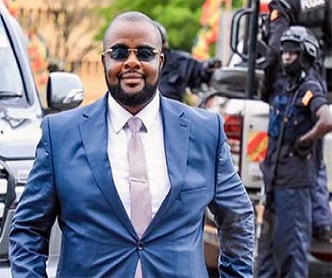
HABARI DAILY I Kampala, Uganda I Uncertainty shrouded this post, until President Yoweri Museveni appointed Juma Witonze Kisekka as the new State Minister for Internal Affairs, ending weeks of speculation following Parliament’s rejection of the earlier nominee, Dr. Lawrence Muganga, over questions surrounding his citizenship status.
Witonze, a diplomat, politician and a senior mobiliser within the Patriotic League of Uganda (PLU), now joins Cabinet after serving as the movement’s Chief Coordinator for the Greater Mpigi region. His elevation is being viewed as another significant boost for the PLU, which has steadily gained influence within government in recent years.
The appointment was communicated to Parliament through a presidential letter transmitted to the Appointments Committee on Monday, setting the stage for Witonze’s vetting before lawmakers.
A senior government official confirmed that the nomination had been formally received by Parliament.
“It is true. He has now been officially nominated as minister,” the official said, adding that the vetting process would be conducted as soon as possible before the President formally swears him into office.
Witonze is no stranger to national politics. Besides his mobilisation work for the PLU across the Greater Mpigi region, he has previously contested for election to the East African Legislative Assembly (EALA) and had recently expressed interest in contesting the forthcoming EALA by-election.
His appointment follows the collapse of Dr. Muganga’s ministerial bid after Parliament’s Appointments Committee raised concerns regarding his nationality.
The committee relied on a verification report from the Ministry of Internal Affairs indicating that Muganga was associated with Ugandan, Canadian and Rwandan citizenship.
During the vetting process, legislators reportedly sought documentary proof showing that Muganga had initiated formal renunciation of any foreign citizenships, as required under Ugandan law for those seeking ministerial office.
According to officials familiar with the proceedings, other nominees who faced similar questions over dual citizenship—including Adonia Ayebare, Calvin Echodu and Sharsti Kutesa Musherure—produced documentation demonstrating they had begun formal renunciation procedures with the relevant foreign authorities.
Muganga, however, reportedly did not present similar evidence.
Although he disputed allegations that he remained a Rwandan citizen, members of the committee insisted that only documentary proof from the relevant authorities would satisfy the constitutional requirements before they could recommend his approval.
The committee subsequently declined to endorse his appointment and referred the matter back to President Museveni, leaving the Ministry of Internal Affairs with a vacant State Minister’s position.
Following consultations within government, Museveni settled on Witonze as his preferred replacement.
The nomination also marks another milestone for the Patriotic League of Uganda, a political pressure group that has increasingly become influential in national mobilisation and governance. Witonze has been one of the organisation’s prominent coordinators in the central region, leading mobilisation activities throughout Greater Mpigi.
His appointment comes at a time when the Ministry of Internal Affairs is implementing major reforms aimed at improving the country’s citizenship management systems, national identity registration and passport issuance.
The ministry has also been central to government efforts to streamline access to national identity cards and strengthen verification processes for eligible Ugandans.
Under Uganda’s Constitution, all ministerial nominees must first be vetted and approved by Parliament’s Appointments Committee before taking the oath of office.
Parliament is expected to schedule Witonze’s appearance before the committee in the coming days. If approved, he will officially replace Muganga as State Minister for Internal Affairs and become the latest PLU official to join President Museveni’s Cabinet, reinforcing the movement’s growing presence in the country’s top leadership.